How to buy a house in Pennsylvania
Contributed by Tom McLean
Dec 16, 2025
•5-minute read

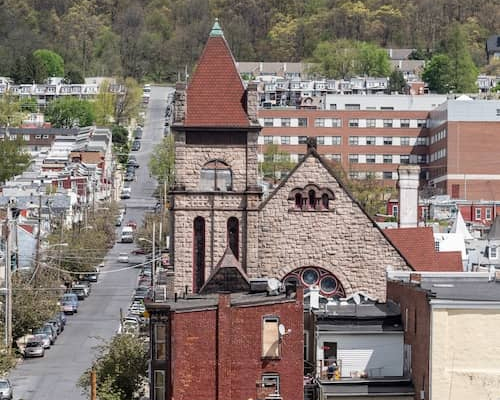
If you’re looking to relocate or purchase your first home, buying a house in Pennsylvania is affordable, with a steady number of homes available.
Pennsylvania also offers a blend of beautiful landscapes and urban amenities. You’ll find rolling Appalachian Mountains, lush forests, and countless outdoor escapes, all within driving distance of major metropolitan areas such as New York City, Baltimore, and Washington.
Pennsylvania’s housing market: At a glance
Here’s a snapshot of the market for buying a home in Pennsylvania, as of October 2025:
| Pennsylvania’s housing market | |
|---|---|
| Median home price, single-family | $307,500 |
| Median days on the market | 34 |
| Number of homes for sale | 44,590 |
| Peak selling seasons | Spring and summer |
| Most popular metropolitan markets | Philadelphia, Pittsburgh, and Bethlehem |
Understanding the housing market in Pennsylvania
Let’s dive deeper into Pennsylvania’s housing market trends.
Median home prices are $307,500
Home prices in Pennsylvania have steady increased over the past five years. As of October 2025, the median home price is $307,500, up from $262,600 in October 2022, a 17% increase.
That said, home prices can vary by:
- Property type. A home’s size, number of living units, age, condition, and features all affect what sales price it can command.
- Location. Some locations are in higher demand than others. For example, home prices in Pittsburgh ($250,000) and Philadelphia ($280,000) are lower than those in Doylestown ($615,000) and Gettysburg ($425,000). You'll need to decide between urban vs. rural areas.
- Market conditions. The supply and demand of homes for sale have a direct impact on a home’s fair market value.
To see how much home you can afford in your ideal neighborhood in Pennsylvania, enter your financial details into this affordability calculator from Rocket Mortgage®.
See what you qualify for
Market trends and inventory
In October 2025, 30.1% of homes in Pennsylvania sold above list price, a 1.5% year-over-year decrease.
Meanwhile, there were 44,590 homes for sale, up 6% from last year. This means buyers have a growing selection of homes to choose from, which can be a welcome change from the wider U.S. housing shortage, especially for a first-time home buyer in Pennsylvania.
Work with a licensed real estate agent or REALTOR® for help navigating the Pennsylvania housing market, especially if you are new to the state.
Spring and summer are peak shopping seasons
Pennsylvania’s peak home buying seasons are spring and summer, when warmer weather and the end of the school year make it easier for many to move. In contrast, winter and fall are less popular but may have lower home prices as a result. Ultimately, the best time of year to buy a house depends on your priorities.
Take the first step toward the right mortgage
Apply online for expert recommendations with real interest rates and payments
How to buy a house in Pennsylvania
Follow these steps to buying a home in Pennsylvania.
Step 1: Check your credit and set a budget
Pull your credit score and review your savings to ensure you have enough money for a mortgage down payment, closing costs, and other home buying expenses. From there, enter your financial details into this mortgage calculator from Rocket Mortgage to estimate your purchase budget.
Keep in mind that your credit score, income, savings, and debt can all affect whether you will qualify for a mortgage and under what terms.
Step 2: Decide on the type of financing you want
Next, weigh your home financing options. Conventional loans are the most common type of home loans. Government-backed loans are for specific buyers. The most common programs are offered by the Federal Housing Administration, Veterans Affairs, and the U.S. Department of Agriculture. Each has its pros and cons:
| Criteria | Conventional loans | FHA loans | VA loans | USDA loans | |
|---|---|---|---|---|---|
| Minimum down payment | 3% - 5% | 3.50% | 0% | 0% | |
| Minimum credit score | 620 | 580 with 3.5% down, some lenders allow a score of 500-579 with 10% down. | Flexible | Flexible | |
| Mortgage insurance | PMI is required if the down payment is less than 20% | MIP required | Up-front and annual VA funding fee may apply | Up-front and annual guarantee fee | |
| Income limit | None | None | None | Must be within the low- to moderate-income limit in the area | |
| Debt-to-income ratio | Up to 49% | Up to 50% (varies by lender) | Up to 41%, some flexibility | Up to 41%, some flexibility | |
| Other requirements | Strong credit history and steady income | Home must meet the FHA appraisal standards | Military service and Certificate of Eligibility required | Home must meet USDA standards and be in a rural area |
Rocket Mortgage currently does not offer USDA loans.
Step 3: Apply for mortgage preapproval
Preapproval is a lender's estimate of how much you can borrow and at what mortgage rate, based on a cursory review of the property and your personal finances. By obtaining mortgage preapproval from a lender, you can gain a clearer understanding of your purchase budget and show real estate agents and sellers you’re prepared to buy a home.
Step 4: Hire an agent or REALTOR® in Pennsylvania
A local real estate agent or REALTOR® can help you better understand the Pennsylvania housing market and guide you through the home buying process. To find a real estate agent in your target market, search online and check for positive reviews from past clients.
Keep in mind that Pennsylvania allows dual agency, which is when one agent represents both buyer and seller. However, both parties must provide written consent.
Step 5: Start house hunting
Now that you have an agent, start shopping for a home. You can look at listing sites like Redfin or the multiple listing service. Either way, your agent can help you identify potential candidates and attend open houses and virtual tours.
To narrow your search, pay attention to:
- School districts
- Local amenities
- Homeowners association fees
- Commute times
- Property taxes
- Other neighborhood information
Step 7: Make an offer and negotiate
Once you’ve decided on a house to buy, your agent can help you make an offer. Your offer should include any contingencies you want, such as meeting home inspection requirements and the appraisal contingency. Your agent also can help you determine how much earnest money to offer.
The seller will accept, reject, or counter your offer. Respond accordingly and remember that most home sales involve some back-and-forth negotiation.
Step 8: Continue with the mortgage closing process
If your offer is accepted, you can move on to underwriting and closing. This is when you complete all inspections, ensure the contingencies are met, apply for and receive mortgage approval, make your down payment, pay closing costs, and finalize the purchase.
Closing costs cover the fees associated with finalizing the transaction and are typically 3% – 6% of the purchase price, though some are negotiable.
FAQ
Here are answers to some frequently asked questions about buying a home in Pennsylvania.
Can I buy a house in Pennsylvania with 'bad' credit?
There's no such thing as "bad" credit, but if your credit score isn't high enough to qualify for a conventional loan, you may be able to buy a house with "bad" credit through a special loan program, such as an FHA loan.
How much do I need to earn per year to buy a house in Pennsylvania?
The amount you need to earn per year to buy a house in Pennsylvania depends on several factors. However, many lenders require you to earn enough that your mortgage payment and other recurring debt don’t amount to more than 36% of your income.
Is it cheaper to buy or build a home in Pennsylvania?
According to the Pennsylvania Association of Realtors, it is cheaper to buy vs. build a house in Pennsylvania.
The bottom line: There’s a home for you in the Keystone State
Whether you’re drawn to beautiful landscapes or urban amenities, Pennsylvania has something for everyone. By understanding the local market, exploring your financing options, and working with an experienced agent, you can navigate the home buying process with confidence.
When you’re ready to move forward, apply for a loan with Rocket Mortgage to start your journey with confidence.

Christian Allred
Christian Allred is a freelance writer whose work focuses on homeownership and real estate investing. Besides Rocket Mortgage, he’s written for brands like PropStream, CRE Daily, Propmodo, PropertyOnion, AIM Group, Vista Point Advisors, and more.
Related resources

7-minute read
Moving costs: How much will it cost you to move?
The cost of your move depends on where you’re going, the size of your home, and labor fees. Before you pack up, here’s what you should prepare for.
Read more
5-minute read
Renting vs. buying when relocating
Should you rent or buy a house when relocating? Weigh the pros and cons before deciding if you’re ready to buy.
Read more
8-minute read
How to move out: A guide to leaving your parents’ house
Getting ready to move out of your parents’ house? Learn how to transition to renting, build credit and real-life experience, and save for future housing g...
Read more