How to buy a house in Hawaii
Contributed by Sarah Henseler
Updated Sep 3, 2026
•11-minute read

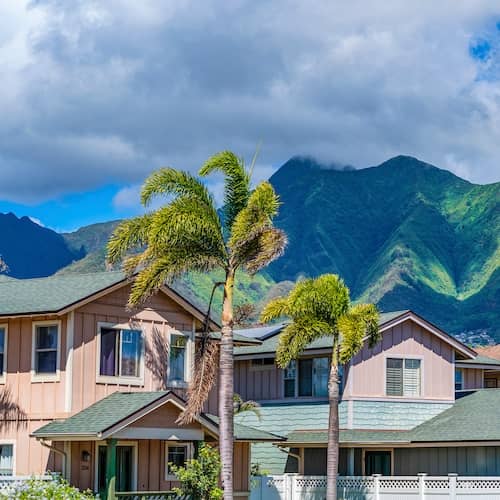
Buying a home in Hawaii means owning a piece of paradise, but you’ll pay a premium price. While the Aloha State’s real estate market offers island weather and a relaxed lifestyle, you’ll also have to work with the state’s high cost of living and considerable median home price. It’s important to consider both when deciding if buying property there is right for you.
This guide breaks down what you need to know about Hawaii’s real estate market, including the state’s neighborhoods, real estate market trends, and home buying process.
Key takeaways:
- The median home sale price in Hawaii is $747,600 - about 82% higher than the national median of $408,776 - driven by limited land availability, high demand, and strict development regulations.
- With fee simple (FS) properties, you own both the home and the land. With Leasehold (LH) properties, you own the structure but rent the land, which carries expiration risks.
- Eligible first-time buyers can leverage state-specific programs like the Hula Mae Mortgage Loan Program and Mortgage Credit Certificates (MCC) to reduce interest rates and lower out-of-pocket costs.
Hawaii housing market: At a glance
Here’s a quick overview of Hawaii’s housing market, as of June 2026. Whether you are a lifelong resident or relocating from the mainland, understanding local housing metrics helps you plan a realistic budget. You can find current information about Hawaii’s housing market at Redfin.com here.
|
Hawaii housing market |
|
|
Median home sale prices |
$747,660 |
|
Median days on the market |
90 |
|
Percentage of homes sold over list price |
17.3% |
|
Number of homes for sale |
8,377 |
|
Primary selling season |
Spring, summer |
|
Popular metropolitan areas |
Honolulu, Hilo, Waipahu |
See what you qualify for
Key real estate market trends in Hawaii
The Hawaiian real estate market operates on distinct economic drivers due to geography, land supply, and high consumer demand.
Home prices
It turns out that paradise is not cheap. As of June 2026, the median price of homes in Hawaii was approximately $747,660, while the national median home price was around $408,776. This makes homes in the Aloha State about 83% more expensive. According to recent data, Hawaii has the highest cost of living of all 50 states.
This higher home value reflects the limited supply of buildable land, a shortage of new home construction, many rules and regulations that slow development, and the high cost of supplies. Of course, the cost of housing varies by island and neighborhood.
You can use the home affordability calculator from Rocket Mortgage to compare the affordability of homes in different Hawaii ZIP codes. It can help you determine how much house you can afford and narrow your search.
Housing demand vs. inventory
Hawaii homes are expensive because demand is high. The popularization of remote work in recent years has also caused more people to move to the islands. The limited supply of homes and has also driven prices up and created a housing crisis. As of June 2026, there were 8,377 homes for sale in Hawaii – down 1.2% from the previous year. When you’re shopping for homes in Hawaii, or anywhere else for that matter, it’s helpful to know if the area is experiencing a buyer’s market or a seller’s market.
Home buying seasons
Yes, the seasons are mild in Hawaii. But there are still seasons, and they affect the housing market and dictate the best time of year to find a home. While you’ll likely see the greatest inventory in spring and summer, you’ll also have the most competition with other buyers.
In fall and especially winter, you may encounter a smaller number of homes for sale. But you’ll also have fewer buyers to contend with. You also might have a better chance at finding a bargain from sellers who want to wrap up sales before the holidays or the end of the year.
Take the first step toward the right mortgage
Apply online for expert recommendations with real interest rates and payments
What to know before buying property in Hawaii
Before starting your house hunt, it’s helpful to understand what makes Hawaii real estate different than buying property in other parts of the country.
Fee simple vs. leasehold properties
When browsing Hawaii real estate listings, you will see properties designated as either fee simple (FS) or leasehold (LH):
- Fee simple (FS): You own both the physical home and the land beneath it indefinitely. Most single-family homes and many condos in Hawaii are sold as fee simple.
- Leasehold (LH): You purchase the right to occupy the physical structure, but a separate landowner owns the underlying ground. You pay monthly ground rent to the landowner in addition to your mortgage. Leasehold properties are listed at significantly lower prices, but they carry risk. When the ground lease expires, ownership of the land and structure can revert to the landowner unless the lease is extended. Lenders also enforce stringent rules that restrict issuing mortgages on leaseholds with short remaining terms.
Condos, houses, and maintenance fees
Condominiums are a common entry point for Hawaii buyers, especially in urban centers like Honolulu. However, condos come with monthly homeowners association (HOA) maintenance fees that cover shared amenities, building insurance, water, sewer, and building reserves. Lenders factor these maintenance fees directly into your debt-to-income (DTI) ratio, which can reduce your overall mortgage borrowing limit. In Hawaii, these monthly dues can range from $350 to over $1,000 per month and average around $470 per month.
Repairs, job stability, and long-term plans
Island homeownership requires planning for unique environmental factors. Humidity, salt air, and heavy rainfall accelerate wear on roofs, solar panels, and exterior paint. Ensure you have stable local employment or remote income, a clear maintenance budget, and a long-term plan before making a purchase.
Find out how much you can afford
Your approval amount will give you an idea of the closing costs you’ll pay
Hawaii home buyer assistance programs
First-time home buyers and low-to-moderate-income families can utilize several local assistance programs to help make buying a home in Hawaii more affordable.
Hula Mae mortgage loan program
This is a loan program administered by the Hawaii Housing Finance and Development Corporation (HHFDC). The Hula Mae program offers eligible first-time home buyers lower mortgage interest rates and down payment assistance. To be approved, applicants must meet local household income limits, occupy the property as their primary residence, and complete a home buyer education course.
Down payment assistance programs
Local county housing agencies across Oahu, Maui, Hawaii County, and Kauai offer silent second mortgages or deferred loan programs to assist qualified buyers with upfront down payment and closing costs.
Mortgage Credit Certificate (MCC)
The MCC program allows eligible first-time buyers to convert up to 20% of their annual mortgage interest paid into a direct federal tax credit. This reduces your federal tax liability, which can boost your qualifying income for mortgage approval.
Hawaii HomeOwnership Center
The Hawaii HomeOwnership Center (HHOC) is a nonprofit organization providing home buyer education, financial counseling, credit repair guidance, and assistance program navigation for Hawaii residents.
Make an offer that will get accepted
Get a Verified Approval from Rocket Mortgage®
Top places to buy a house in Hawaii
Hawaii’s weather might not change a lot during the year, but the state does have a variety of communities. Here, we’ll explore some popular ones, but it pays to do research on finding a spot that aligns with your idea of where you should live.
Honolulu
- Population: approximately 341,868
- Median household income: approximately $106,195
- Median home price: $599,674
The county of Honolulu encompasses the entire island of Oahu. However, Honolulu is also a thriving city within the county, with a range of neighborhoods, from the very urban to sprawling suburbs and, of course, the famous high-rise apartments and iconic beaches of Waikiki. This desirable city is also often ranked as one of the most expensive places to live.
Pearl City
- Population: approximately 45,296
- Median household income: approximately $118,112
- Median home price: $639,652
With good public and private schools, a large mall and shopping center, and proximity to the beaches and city of Honolulu, Pearl City offers suburban living with a lot to do. It’s known as a safe, friendly community.
Hilo
- Population: approximately 44,186
- Median household income: approximately $81,779
- Median home price: $558,696
If your vision of paradise is black sand beaches, thick, verdant hills, and a wild blue ocean, then Hilo might be your spot. On the east side of the island of Hawaii, aka the Big Island, Hilo has less bustle and more rain than most spots on Oahu.
Waipahu
- Population: approximately 43,485
- Median household income: $103,895
- Median home price: $549,701
Located in the center of Oahu, Waipahu has strong suburban, family vibes. But just because it has no beaches doesn’t mean it’s a nature-free zone. There are plenty of spectacular hikes in the nearby Koolau Mountains, with waterfalls, such as the hidden Lulumahu Falls, and Waipio Falls Park.
Kailua
- Population: approximately 40,514
- Median household income: $88,211
- Median home price: $1,506,680
Located on the east side of Oahu with one of the island’s most stunning bays, Kailua is an upscale community with quiet suburbs and a laidback, ocean-centric lifestyle. Kailua also boasts well-reviewed golf courses as well as a moderate year-round climate thanks to the onshore trade winds.
Top places to buy a house in Hawaii
Hawaii’s weather might not change a lot during the year, but the state does have a variety of communities. Here, we’ll explore some popular ones, but it pays to do research on finding a spot that aligns with your idea of where you should live.
Honolulu
- Population: approximately 341,868
- Median household income: approximately $106,195
- Median home price: $599,674
The county of Honolulu encompasses the entire island of Oahu. However, Honolulu is also a thriving city within the county, with a range of neighborhoods, from the very urban to sprawling suburbs and, of course, the famous high-rise apartments and iconic beaches of Waikiki. This desirable city is also often ranked as one of the most expensive places to live.
Pearl City
- Population: approximately 45,296
- Median household income: approximately $118,112
- Median home price: $639,652
With good public and private schools, a large mall and shopping center, and proximity to the beaches and city of Honolulu, Pearl City offers suburban living with a lot to do. It’s known as a safe, friendly community.
Hilo
- Population: approximately 44,186
- Median household income: approximately $81,779
- Median home price: $558,696
If your vision of paradise is black sand beaches, thick, verdant hills, and a wild blue ocean, then Hilo might be your spot. On the east side of the island of Hawaii, aka the Big Island, Hilo has less bustle and more rain than most spots on Oahu.
Waipahu
- Population: approximately 43,485
- Median household income: $103,895
- Median home price: $549,701
Located in the center of Oahu, Waipahu has strong suburban, family vibes. But just because it has no beaches doesn’t mean it’s a nature-free zone. There are plenty of spectacular hikes in the nearby Koolau Mountains, with waterfalls, such as the hidden Lulumahu Falls, and Waipio Falls Park.
Kailua
- Population: approximately 40,514
- Median household income: $88,211
- Median home price: $1,506,680
Located on the east side of Oahu with one of the island’s most stunning bays, Kailua is an upscale community with quiet suburbs and a laidback, ocean-centric lifestyle. Kailua also boasts well-reviewed golf courses as well as a moderate year-round climate thanks to the onshore trade winds.
Steps for buying a home in Hawaii
Let’s walk through the home buying process in Hawaii.
1. Get your finances ready
The first step in the house hunting process involves preparing your finances and assessing your creditworthiness so you can qualify for a mortgage. Here’s a quick checklist:
Review your budget and use the simple mortgage calculator from Rocket Mortgage to determine the affordability of houses in Hawaii.
Check your credit score. To buy a house, you’ll need a score around 620 for a conventional loan and 580 or more if you plan on an FHA loan1. However, keep in mind that a higher credit score generally means a lower interest rate and lower monthly payments.
Ensure you have a decent debt-to-income ratio (DTI). Some lenders require that your DTI not exceed 36%, while other lenders allow for a DTI of up to 50%. And again, for the best rates, the lower the better.
Plan and save for a down payment and closing costs. And keep in mind that due to the high price of Hawaii homes, they will also be high.
2. Research home loan options
One of the most consequential decisions you’ll make is what type of home loan you’ll use to finance your home. Here’s an overview of the differences in your options.
- Conventional loans: These loans are open to all who can qualify. You’ll typically need a down payment of 20% if you want to avoid paying private mortgage insurance (PMI). Otherwise, you may be able to put down as little as 3% with certain lenders.
- Jumbo loans: These are loans that exceed the amount guaranteed by Freddie Mac and Fannie Mae. In Hawaii that amount is $1,299,500 for 2026. A loan amount higher than this would be a jumbo loan and could come with a higher interest rate and cost.
- FHA loans:2 These are government-backed loans designed for first-time and lower-income borrowers. You’ll need a credit score of at least 580, and mortgage insurance (MIP) is required. You’ll also need a down payment of at least 3.5%.
- VA loans:3 For eligible veterans and active-duty military, these loans can be secured with as little as no money down. They have more flexible requirements, but they do have a funding fee for most borrowers.
- USDA loans: For eligible rural areas, these government-backed loans have certain requirements for borrowers as well as the home. They must meet USDA standards of area type and low to moderate income, respectively.
Hawaii also has many assistance programs for first-time buyers and lower-income borrowers. These help with down payment and closing cost assistance, as well as guidance on how to navigate the home buying process.
3. Get preapproved
Getting mortgage preapproval, especially in a competitive housing market, can increase your success in buying the home of your dreams. It shows sellers you are both serious and qualified to buy their home. Preapproval also gives you an idea of what your mortgage rate in Hawaii and monthly payments will be.
To get preapproved, you’ll need to share things like proof of employment and income with a lender. They’ll check your credit and preapprove you for a certain loan amount.
4. Find a trusted Hawaii real estate agent
Because Hawaii is such a unique and isolated state, understanding the local market is vital. It’s also common to run into terms such as leasehold, which means you own the building but not the land where it sits, and fee simple when shopping properties in Hawaii. So you’ll want to find an experienced real estate agent. They have relationships with other local agents and have experience with the details of buying and selling in the area.
To find a real estate agent, start by asking for referrals and checking recent sales in the neighborhood you're considering. Redfin.com is also a trusted source to find a local real estate agent.
During your hunt for a real estate agent, you might see the term “dual agency.” This means an agent can represent both the seller and the buyer, but they must disclose it. If this comes up with a home you’re interested in, make sure you’re comfortable with it.
5. Start shopping for homes in Hawaii
It’s a good idea to begin your search using online sites like Redfin or combing the MLS. Your real estate agent can help you gain access. These are convenient and low-cost ways to get an initial feel for the market, especially if you live on the mainland.
Once you learn about various neighborhoods and have some prospects that meet your family’s needs, you can visit the state and attend open houses to get an up-close look at the market offerings or take advantage of virtual tours.
When shopping, consider factors such as:
- Education and job opportunities
- Local amenities like transportation, shopping, and medical services
- HOA fees and rules
- Commute times
- Property taxes, which vary by municipality
6. Make an offer and negotiate
When you find a home and are ready to make an offer, your real estate agent or real estate attorney will help you through the process. In Hawaii, sellers are obligated to disclose any material defects; this will factor into your negotiations.
If your offer is accepted, you’ll need to put up earnest money. This is a deposit showing that you’re serious about buying the property. Later, if the sale goes through, this money goes toward your down payment.
You’ll also want to get a home inspection and appraisal to make sure the condition of the property meets the lender’s requirements. It’s also advisable to have an appraisal contingency and an inspection contingency in your purchase agreement, so if there are any major problems and you need to back out of the deal, you’ll get your deposit back.
7. Close on your new Hawaii home
The last few days of closing on your home are busy ones. You’ll complete a final walk-through, finalize your loan underwriting process, and attend a closing meeting. At closing, you’ll sign a lot of paperwork, pay closing costs, and get the keys to your new home.
You might want a real estate attorney present at closing, but Hawaii doesn’t require one. You’ll also want to be prepared for closing costs, which can range from 3% to 6% of the purchase price of the home. Because Hawaii real estate is expensive, this can be a big number. Closing costs typically include loan origination fees, points, title insurance, escrow fees, recording fees, possibly property taxes, insurance, and some inspections.
FAQ
Here are some common questions about buying a house in Hawaii.
Is buying a home in Hawaii a good investment?
Buying a home in Hawaii can be a good investment, depending on many factors. You may want to look at how much homes have appreciated in the area that interests you. You can use this rent vs. buy calculator from Rocket Mortgage to see if the cost difference makes sense for you. It really comes down to your personal financial and life goals and whether the state’s lifestyle is for you.
Can I buy a house in Hawaii if I have bad credit?
Yes, you can buy a house with bad credit, but remember that the lower your credit score, the higher your interest rate may be. There are also minimum credit scores you’ll need to meet for certain loans. For conventional loans, the typical minimum credit score is 620. For FHA loans, it’s 580. Other loan types, like VA loans, have more flexibility.
How long does it take to buy a house in Hawaii?
How long it takes to buy a home can vary. It typically takes between 30 and 45 days to close on a home once you’ve made an offer. But the initial search could take considerably longer, especially if you are out of state.
How much are Hawaii’s property taxes?
Here’s some good news. Hawaii has the lowest effective tax rate of any state in the nation at 0.27%. The exact tax rate varies from county to county. There are also exemptions from property tax for many groups, based on age, disability, and other factors.
The bottom line: The Aloha State has your new home
Buying a home in Hawaii comes with some challenges, such as its distance from the mainland, the cost of living, and the high price of housing. But with the lowest property taxes in the nation and plenty of sun, beaches, and outdoor living, the lifestyle is appealing to many. If you plan carefully and save appropriately, a piece of paradise could be yours.
If you’re ready to buy a home in the Aloha state, you can reach out to a Rocket Mortgage Home Loan Expert to apply for a home loan.
1To qualify for this offer, you must meet all standard FHA eligibility requirements. In addition, your total mortgage payment, including taxes and insurance, cannot exceed 38% of your income, your debt-to-income (DTI) ratio cannot exceed 45%, and you must have 12 months of verifiable housing history immediately prior to your application, no late payments 30 days or greater in the last 12-months, and no derogatory marks on your credit report. Not available on jumbo loans. Asset statements may be needed, no more than 1 day of non-sufficient fund fees are allowed in the most recent 2 months prior to application. Additional restrictions/conditions may apply.
2Rocket Mortgage is not acting on behalf of FHA or HUD.
3Rocket Mortgage is a VA-approved lender, not endorsed or sponsored by the Dept. of Veterans Affairs or any government agency.
Rocket Mortgage is a trademark of Rocket Mortgage, LLC or its affiliates.

Terence Loose
Related resources

13-minute read
How to buy a house in 2026: A step-by-step guide
Learn how to buy a house in 2026 with 13 clear steps, from budgeting and preapproval to inspections, closing and getting the keys. Start here.
Read more

8-minute read
How to move to another state: A step-by-step guide
Learn how to relocate to another state with a step-by-step checklist for budgeting, packing, housing and legal tasks. Start planning your move today.
Read more

4-minute read
What’s the average mortgage payment in Hawaii?
What’s the average mortgage payment in Hawaii? Learn how to calculate your payment and find out how it compares to nearby states.
Read more