FHA loans in Texas
Contributed by Karen Idelson
Updated Oct 26, 2026
•13-minute read

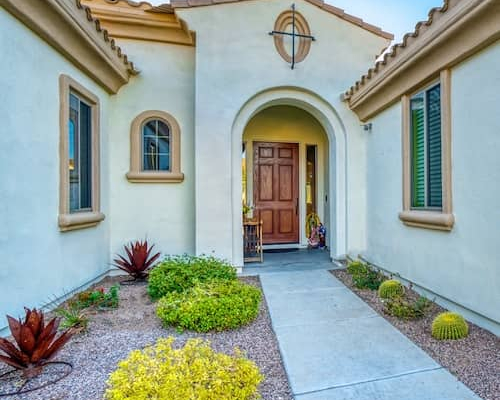
Texas is one of the nation’s most populous states, with close to 32 million residents, per estimates from the U.S. Census, and its housing is relatively affordable. The median home sale price in September 2026 was $329,054, according to Redfin, almost 17% below the national median of $393,895. Still, buying can feel out of reach if you have limited savings or a lower credit score.
An FHA loan can help. Backed by the government, it offers as little as 3.5% down, lenient credit requirements, competitive rates, and compatibility with down payment assistance programs. Here’s how FHA loans in Texas work, from property requirements and appraisal standards to the calculator math and your expected monthly payment on a $250,000 home.
Key takeaways:
- FHA mortgages are government-backed loans that permit flexible credit qualifications, including credit scores as low as 500. Down payments may start at 3.5% if you qualify.
- Prepare to pay both an upfront fee and ongoing annual mortgage insurance premiums, which typically remain for the life of your loan if you put down less than 10%.
- The home you purchase must serve as your primary residence, meet structural and safety standards via an FHA appraisal, and conform to certain loan limits within your Texas county.
What are FHA loans, and how do they work?
FHA loans are government-backed mortgages that offer borrowers low down payments, low closing costs, and easy credit qualification. FHA loans in Texas and across the country are insured by the Federal Housing Administration, which means the agency reimburses lenders if the borrower defaults. This backing helps lenders offer FHA loans to borrowers who may not qualify for a conventional loan.
FHA loans have specific rules that help make them more accessible than many conventional options. FHA loan requirements in Texas and elsewhere include steady income, a minimum credit score, a minimum down payment, property requirements, and a maximum loan amount that varies by county. FHA loan rates are competitive and often lower than for other loan types. FHA loan limits are set each year by the Department of Housing and Urban Development (HUD) and vary by county within each state, including Texas.
A Texas FHA loan can be used to buy various property unit types, from single-family homes to multifamily properties with up to 4 units, including houses, condominiums, and mobile or manufactured homes.
Properties must meet FHA guidelines, and borrowers must pay an upfront and an annual mortgage insurance premium (MIP). This insurance protects the lender if the borrower defaults and is part of what allows lenders to approve buyers with lower credit scores or smaller down payments.
See what you qualify for
FHA loan requirements in Texas
Requirements for FHA loans can vary by lender and by program. It’s always best to check with your lender to confirm the exact qualifications for your situation.
Read on to learn how to qualify for an FHA mortgage in Texas, including the minimum down payment, credit score, debt-to-income ratio, and income, plus appraisal and inspection requirements.
Credit score and down payment requirements
Rocket Mortgage and other lenders require a credit score of 580 or higher if you want to qualify for a down payment of as little as 3.5%. If your credit score ranges between 500 and 579, your minimum down payment is 10%. Review the full FHA loan down payment requirements for details.
Grants and gift funds can apply toward up to 100% of the minimum needed down payment for an FHA loan, so long as the funds come from an eligible donor – like a relative, employer, charitable organization, or government agency – and are properly documented via a paper trail and a signed gift letter stating that no repayment is expected.
Income, employment, and DTI rules
To qualify, you typically must provide a 2-year history of stable employment and verifiable earnings by furnishing tax returns, W-2s, and pay stubs.
You’ll also need an acceptable debt-to-income (DTI) ratio. Your DTI is the percentage of your gross monthly income spent on ongoing debt payments, which FHA lenders use to determine if you have the financial means to afford a new mortgage alongside your existing obligations. Currently, Rocket Mortgage requires a front-end DTI of 38% (the portion of monthly income going toward housing costs) and a back-end DTI of 45% (the portion covering housing costs plus all other debt payments), while other lenders stick to the standard limits of 31% front-end and 43% back-end. Higher DTIs may be allowed in cases with compensating factors, including a minimum credit score of 620. Some lenders can allow a DTI ratio up to 50% if you have strong compensating factors, including cash reserves, a minimal increase in housing costs, or residual income.
Note that eligibility standards can vary from lender to lender.
Primary-residence requirements
FHA financing requires that you live in the property as your primary residence. You must occupy the property within 60 days of closing.
Take the first step toward the right mortgage
Apply online for expert recommendations with real interest rates and payments
FHA property requirements in Texas
The home you plan to purchase must also meet FHA property eligibility, appraisal, and safety standards in addition to borrower qualification requirements. Let’s explore these in further detail.
Eligible property types
You can use an FHA loan to finance a primary residence that is either a:
- Single-family home (including townhouses)
- 1- to 4-unit multifamily property (although you, the borrower, must occupy 1 unit)
- FHA-approved condominium unit
- Manufactured home affixed to a permanent foundation
But eligibility isn’t automatic because the property must abide by strict FHA minimum property standards regarding health, safety, and structural soundness (more on this next). Also, the property type must satisfy additional criteria, like HUD project-approval lists for condos or strict self-sufficiency and foundation guidelines for multi-unit and manufactured housing.
FHA appraisal and safety standards
The property must meet the FHA minimum property standards, and the home must also be appraised by an FHA-approved appraiser. The purpose of an FHA appraisal is to evaluate a property’s fair market value while making sure it conforms to HUD’s minimum property standards for safety, health, and structural integrity. If any health, safety, or structural defects are present, approval depends on you or the seller completing necessary repairs and getting a satisfactory re-inspection before closing. If you’re buying a home that needs work, an FHA 203(k) rehab loan can bundle renovation costs into your mortgage. Rocket Mortgage does not currently offer FHA 203(k) loans.
How 2026 FHA loan limits work in Texas
There are limits on how much you can borrow with an FHA loan. These FHA loan limits change from year to year, and borrowing ceilings in Texas vary by county based on local housing prices. Areas with higher home values qualify for higher limits, while lower-cost counties stay closer to the national floor.
These maximums are based on median home prices in each county, up to 150% of the national conforming loan limit. Exceptions are made for homes in Alaska, Hawaii, Guam, and the U.S. Virgin Islands due to the higher construction costs.
Baseline and high-cost county limits
The FHA national low-cost area mortgage limits are set at 65% of the national conforming limit of $832,750 for a 1-unit property. Limits will differ by Texas county.
Use the HUD lookup tool to confirm your county’s current limit, then speak with a loan officer to see what you can qualify for.
Single-family and multi-unit limits
Limits differ by the number of residential units purchased. Currently, the baseline limit for a single-family home in most Texas counties is $541,287. Higher-cost counties have higher limits, such as $571,550 in Travis County (Austin).
FHA loan limits for 2- to 4-unit multifamily properties span from a low-cost floor of $693,050 for 2-unit buildings up to $1,041,125 for 4-unit properties. Limits are higher in higher-cost counties, and the exact amounts vary by county, so check the HUD lookup tool above.
FHA mortgage insurance in Texas
You’ll be required to pay mortgage insurance when you take out an FHA loan. This includes an upfront premium and an annual fee that safeguards the lender against financial losses if you default on the mortgage. This is a necessary part of FHA borrowing costs because it enables lenders to approve high-risk purchasers, including those with lower credit scores or smaller down payments, while keeping overall interest rates competitive.
Upfront mortgage insurance premium
First, you’ll pay a one-time upfront MIP of 1.75% of your loan amount. You can pay this via an out-of-pocket cash payment at closing or finance the amount directly into your total loan balance, which factors into your loan’s initial cost.
Annual mortgage insurance premium
You’re also on the hook for an annual MIP of between 0.15% and 0.75% of your loan balance, paid in monthly installments. This MIP is paid for 11 years if your down payment is 10% or more of the purchase price, or for the entire loan term if your down payment is less than 10%.
How MIP affects your payment
Your annual FHA MIP will be divided into 12 equal installments added directly to your principal and interest payment. This increases your total monthly housing costs and directly affects your ongoing affordability. Over the life of your loan, paying this annual fee over the years can add thousands of dollars to your total financing costs compared to conventional loans that don’t require long-term mortgage insurance.
FHA loan down payment assistance programs in Texas
In Texas, qualified borrowers may be permitted to combine FHA financing with third-party assistance for down payments or closing costs; however, availability and eligibility can vary. Here are 3 different down payment assistance programs worth exploring.
My First Texas Home program
The My First Texas Home program, provided by the Texas Department of Housing and Community Affairs (TDHCA), offers down payment assistance for first-time homebuyers and veterans. The program offers a 30-year loan and up to 5% in assistance toward closing costs or a down payment. If you qualify, the down payment loan may be forgivable after 3 years. You also must meet income thresholds.
Homes for Texas Heroes program
The Homes for Texas Heroes program, offered by the Texas State Affordable Housing Corporation (TSAHC), also provides affordable mortgages and down payment assistance for qualifying professions, such as professional educators, those working in nursing facilities, corrections officers, first responders, and active-duty military personnel.
If you meet the eligibility requirements, which include conforming to income thresholds and having a minimum 620 credit score, the program will work with you to find a participating lender. You will also need to complete a qualifying homebuyer education course. Veterans and service members may also want to compare VA loan options, which can offer benefits FHA loans don’t.
Home Sweet Texas program
TSAHC’s Home Sweet Texas Home Loan program gives the same type of assistance as Homes for Texas Heroes. However, it’s geared toward low-to-moderate-income purchasers who didn’t qualify for that program based on occupation. You’ll still need to meet certain criteria, like having at least a 620 credit score and being within qualifying income limits.
FHA loan calculator and payment examples
It’s worthwhile to better understand how interest rates, down payments, loan terms, MIP, property taxes, homeowners insurance, and other costs affect home affordability. Here’s a breakdown.
Monthly payment example for a $250,000 home
Let’s say you want to purchase a $250,000 home with a 3.5% down payment ($8,750) at an example FHA interest rate of 6.99%. That means your estimated monthly payment will total approximately $2,071. This estimate breaks down into $1,631 for principal and interest, $111 for the MIP, $229 for property taxes, and $100 for homeowners insurance. Just keep in mind that interest rates, local tax rates, and insurance premiums can vary by location and borrower profile, so these figures are strictly estimates.
Income needed for a $300,000 FHA purchase
Purchasing a $300,000 home with an FHA loan – assuming you’ll put 3.5% down ($10,500) and pay an example 6.99% annual interest rate – usually requires a gross annual income between $80,000 and $96,000. The lower end of the income range ($80,000) assumes you have minimal monthly debt and can use the maximum allowed DTI ratio, while the higher end ($96,000) ensures your FHA loan by itself remains within the standard benchmark of no more than 31% of your gross pay.
With this hypothetical, your total estimated monthly payment would be $2,486 ($1,958 principal and interest, $133 mortgage insurance, $275 property taxes, and $120 homeowners insurance), using standard FHA DTI guidelines: around $96,000 meets the benchmark 31% front-end ratio (housing costs only), while $80,000 fits the 43% back-end ratio if you have minimal existing monthly debt.
Keep in mind that your actual required income depends on your credit score, existing debt obligations, local tax and insurance rates, and automated lender approval.
What affects your FHA payment
Different variables can change these calculations and your monthly payment estimates. Case in point: If you negotiate a lower interest rate, purchase in a Texas county with higher property tax rates, or carry monthly credit card and debt payments, your needed household earnings will change accordingly. Your chosen FHA lender will scrutinize your complete financial picture, from your credit score and total debt, to come up with the exact loan amount and payment you qualify for.
Save money on an FHA loan today!
Lock in your low interest rate with a fast, online approval
Pros and cons of buying a home in Texas with an FHA loan
While getting an FHA loan for a home in Texas can pave the way for a more affordable path to homeownership, it can come with its downsides. Carefully consider the pros and cons of FHA loans before making a decision.
Pros
FHA loans are designed to make it more possible for homebuyers who may be struggling to get conventional loans. Specifically:
- Access to high-growth markets: Large cities like Austin, Dallas, and Houston have some of the most expensive housing in the state. If you want to purchase a home where the median home price has gone up quickly, then an FHA loan may help you do so.
- Compatible with other down payment assistance programs: Depending on the program, you may be able to take advantage of down payment grants or assistance programs with an FHA loan to make it even more affordable.
- Lower barriers in rural Texas counties: Conventional lenders may require a larger down payment, which could be a hindrance if you’re looking to purchase a home in a more rural area. An FHA loan requires a lower down payment and offers flexible credit standards that may make things easier, especially if you have a lower income.
Cons
While FHA loans do offer homebuyers more accessibility, you do have some trade-offs to think about, such as:
- Mortgage insurance payments: FHA loans require you to pay MIPs, which last throughout the life of your loan. These premiums could increase your monthly payment, especially if you plan on purchasing a home in more costly Texas counties.
- Foundation and soil issues: Many homes in Texas, particularly those in central Texas, are built on clay soil, which can cause foundation issues. An FHA home appraisal may flag this issue, which could complicate the homebuying process if there needs to be significant work done.
- FHA loan limits may be too restrictive: FHA loan limits are higher for certain areas in Texas. However, they may not be high enough for the pricier homes in areas like Austin, where the median home price is about $537,244. If the home you want to purchase exceeds the FHA loan limit, you’ll probably need to seek financing elsewhere. Additionally, occupancy restrictions (you must live in the home as your primary residence) and property standards add to the restrictive nature of this financing.
FHA loans vs. conventional loans in Texas
Before committing to an FHA loan, it pays to compare this financing option to a conventional mortgage loan.
Key differences
An FHA loan offers lower credit score thresholds (you need as little as a 500 score for a 10% down payment) and more flexible debt guidelines than a conventional loan. But it requires paying MIPs that typically last for the loan’s life and meeting strict appraisal safety standards.
Conventional loans, on the other hand, require higher minimum credit scores (often 620 or higher) and similar low down payments (starting at 3%). However, they feature more flexible property condition rules and permit you to remove private mortgage insurance once you reach a 20% home equity position.
Overall, FHA loans come with higher lifetime insurance costs for buyers with low down payments, while conventional loans boast lower ongoing costs and property flexibility for purchasers with stronger credit.
Which loan may be a better fit
Credit, available funds, property plans, and short- and long-term costs all make a difference here. An FHA loan may be a better choice if you have a credit score under 620, have limited cash set aside for a down payment, or desire more flexible income rules to qualify. A conventional mortgage is preferred if you have stronger credit, plan to remain in your home long term, or yearn to bypass paying permanent mortgage insurance after you build 20% equity.
If you already have an FHA loan, you can also refinance into a new one. An FHA Streamline refinance requires less documentation and may not need an appraisal1, while other FHA refinance options let you change your loan terms or tap your home equity.2 Note that some FHA loan borrowers later opt to convert to a conventional loan, often to eliminate the MIP.
How to apply for an FHA loan in Texas
Eager to proceed with an FHA mortgage in the Lone Star State? Read on to learn what’s involved.
Documents you’ll need
To apply for an FHA loan, you’ll need government-issued identification (such as a driver’s license or passport) and proof of a valid Social Security number to verify your identity. Necessary financial documents include:
- Recent pay stubs covering 30 days, along with W-2 forms and federal tax returns from the past 2 years.
- Bank and investment account statements from the last 60 days to verify saved funds and reserves.
- Statements for current loans, credit cards, child support/alimony obligations, or bankruptcy/foreclosure records if applicable.
Preapproval through closing
The FHA homebuying process starts with loan preapproval, which estimates your borrowing power, followed by full underwriting, where a lender validates your financial documentation. Then, an FHA-approved appraisal will confirm the property’s condition, safety, and fair market value. Expect this process to take between 30 and 45 days, although individual timelines can vary based on underwriting complexity, lender processing, and how quickly property inspections are finished.
FAQ
We’ve covered a lot, but here are some other important details about FHA loans in Texas.
What would disqualify you from an FHA loan in Texas?
There are several factors that would make you ineligible for an FHA loan in Texas. Some reasons include insufficient credit history or a credit score below 500, inability to verify a steady income source, or a property that fails to meet FHA loan standards.
To increase your odds of loan approval, maintain good credit as much as possible, save up now for the down payment, and ensure you can prove you have steady income.
Is it hard to get approved for an FHA loan in Texas?
The chances of being approved for an FHA loan in Texas tend to be better compared with other types of home loans. That’s because this government-backed loan is designed for those with limited savings or lower credit scores. The difficulty will depend on whether you and your property meet FHA requirements and the lender’s standards.
What are today’s FHA mortgage rates?
At the time of this writing, average fixed rates for a 30-year FHA mortgage loan were 6.87%. Keep in mind that rates change and vary by borrower and lender. Check up-to-date mortgage rates online at the Rocket Mortgage FHA loan rates page.
The bottom line: Using an FHA loan to buy a home in Texas
An FHA loan can be a viable option if you’re looking for a way to fast-track your homeownership journey. These types of mortgages offer lower minimum down payment amounts and less strict credit requirements, which could provide better access to homes even in high-growth areas.
As with all types of major financial decisions like taking out a loan, make sure you fully understand what your responsibilities are as a borrower, including important qualification, cost, property, and assistance considerations. Carefully compare options and verify current loan limits, rates, payment estimates, and program eligibility before applying.
Ready to buy a Texas home? Apply today for a home loan with Rocket Mortgage.
2 Refinancing may increase finance charges over the life of the loan.

Erik J Martin
Erik J. Martin is a Chicagoland-based freelance writer whose articles have been published by US News & World Report, Bankrate, Forbes Advisor, The Motley Fool, AARP The Magazine, USAA, Chicago Tribune, Reader's Digest, and other publications. He writes regularly about personal finance, loans, insurance, home improvement, technology, health care, and entertainment for a variety of clients. His career as a professional writer, editor and blogger spans over 32 years, during which time he's crafted thousands of stories. Erik also hosts a podcast (Cineversary.com) and publishes several blogs, including martinspiration.com and cineversegroup.com.
Related resources

4-minute read
FHA loan limits: How much can you borrow in 2026?
FHA loan limits are designed to cap how much you can borrow with an FHA loan. Learn more about how these loan limits work and what the limits are for 2026.
Read more

8-minute read
FHA loans: 2026 requirements, limits, rates, and types
FHA loans can help buyers qualify with flexible credit and low down payment options. Learn FHA requirements, limits, costs and how to apply.
Read more

10-minute read
FHA loans in California
Homes are expensive in California, but an FHA loan can help aspiring homeowners afford a home with a low down payment and flexible credit requirements.
Read more