What is a single-family home?
Contributed by Sarah Henseler
Updated Sep 2, 2026
•10-minute read

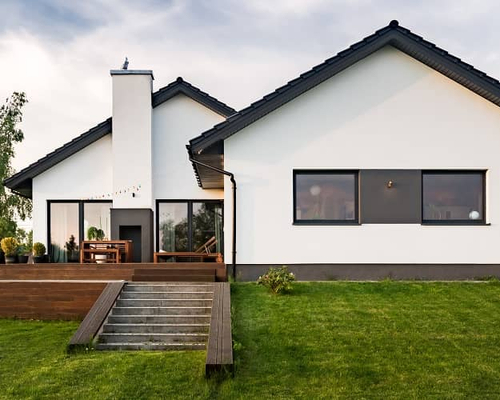
A single-family home is a residential property built for one household, with its own entrance, utilities, and land, and no shared walls with another dwelling. It's probably the housing type many people picture when someone says “the classic American home”: a private yard, a driveway, and a structure that belongs to one owner.
Single-family homes as we know them became the dominant U.S. housing type after World War II, when returning veterans and growing families drove demand for private yards and room to spread out. Builders answered with suburban subdivisions and zoning rules – including minimum lot sizes – that helped lock that pattern in for decades. Detached homes have stayed the most common form of real estate ever since, though more cities are now revisiting those older zoning codes to allow other housing types.
Key takeaways:
- Single-family doesn’t always mean detached. Some townhouses and homes with ADUs can still qualify as single-family properties depending on their structure and classification.
- More privacy often means more responsibility. Single-family homeowners generally have greater control over their property but take on more maintenance, utilities, and potential HOA costs.
- Financing depends on more than the home type. Down payments, loan options, and requirements vary based on the mortgage program, borrower finances, and how the property is legally structured.
Single-family home definition
A single-family home is usually a stand-alone dwelling unit designed for one household, sitting on its own lot, with its own entrance, utilities, and ownership of both the structure and the land. It’s not just a listing description buzzword, but actually the same term the U.S. Census Bureau uses to classify housing types for national construction data.
There's no single required size or layout, but most newly built single-family homes follow a similar pattern: three bedrooms and two full bathrooms is the most common configuration, and the median completed home runs about 2,150 square feet. Older homes and custom builds can run smaller or considerably larger, depending on the local market.
So what actually makes a home “single-family,” compared with other types of dwellings? A few criteria tend to matter most:
- One dwelling unit. The structure holds a single, self-contained living space, not multiple separately metered units, and typically has just one kitchen serving one household.
- Its own entrance and utilities. The home doesn't share a front door, water line, or HVAC system with a neighboring unit.
- Ownership of the home and land. The buyer owns the structure and the lot it sits on, not just the interior walls, and that includes the yard, driveway, and any outbuildings.
- No shared common areas. Unlike a condo or co-op, there's often no jointly owned lobby, hallway, or amenity space.
The U.S. Census Bureau further breaks down single-family homes into detached or semi-attached:
- Single-family detached homes: These stand alone on their own lot with open space on all sides, including classic styles such as ramblers and bungalows. Most single-family homes in the U.S. fall into this camp.
- Single-family semiattached homes: Properties such as townhouses or row homes can still count as single-family if each unit is separated from its neighbor by a wall that runs from the ground to the roof and doesn't share heating, cooling, or utility systems with the one next door.
A home with an accessory dwelling unit (ADU), such as a basement apartment, converted garage, or backyard cottage, might still count as single-family, too, as long as it keeps the same address and shares utilities with the primary residence. The ADU is often treated as a secondary space on the same lot rather than a separate dwelling, so it likely won’t change the property's classification.
See what you qualify for
The pros and cons of single-family homes
Single-family homes offer more space and privacy than most attached housing types, but that freedom can come at a price, both up-front and over time. It's worth weighing the trade-offs before deciding whether this type of real estate fits your budget and lifestyle.
Pros of single-family homes
- Space and storage: Single-family homes typically offer more bedrooms, closets, garages, and basements than condos or apartments, giving growing households room to store belongings and spread out.
- Room for expansion: Owners can often add square footage, finish a basement, or build an addition, subject to local permits, something rarely possible in a condo or apartment.
- Privacy: Without shared walls, floors, or ceilings, single-family homeowners generally deal with less noise from neighbors.
- Freedom to customize: Owners can usually renovate without approval from a shared board, though most structural, electrical, and plumbing work still requires local permits. For example, a fixer-upper can be a way to build equity while shaping the home to fit your needs.
- Fewer shared rules: Many single-family homes aren't governed by a homeowners association (HOA) at all, giving owners more say over how their property looks and functions.
Cons of single-family homes
- Higher purchase price: Detached homes generally cost more than condos or townhouses in the same area, which can be a bigger hurdle for first-time buyers. Using a home affordability calculator can help set more realistic budget expectations.
- No communal amenities: Unlike many condo or townhouse communities, single-family homeowners are less likely to get a shared pool, gym, or clubhouse unless they pay for one themselves.
- Higher utility and upkeep costs: Heating, cooling, and maintaining a larger structure and yard could potentially cost more than maintaining a single unit in a multifamily building.
- Full maintenance responsibility: Owners are solely responsible for the roof, HVAC system, landscaping, and any repairs, with no shared maintenance staff to call.
- Potential HOA costs: Some single-family homes sit in HOA-governed communities, which can mean monthly dues on top of a mortgage payment.
Take the first step toward the right mortgage
Apply online for expert recommendations with real interest rates and payments
Legal, zoning, and HOA considerations
Where a single-family home sits can shape how it's used, modified, and even classified, since zoning ordinances and HOA rules vary by city, county, and community. It pays to check local rules before assuming a property can be renovated, rented out, or expanded the way you picture.
Zoning regulations
Local zoning ordinances determine where single-family homes can be built and what can be done with them, including lot size minimums, setback requirements, and permitted additions such as ADUs. Many cities historically zoned large portions of residential land exclusively for detached single-family homes, a practice HUD has identified as a barrier to affordable housing in some markets. Some jurisdictions have since revised those rules to allow duplexes or ADUs on previously single-family-only lots, giving owners a way to add a rental unit or space for aging parents without changing the home's single-family classification.
Zoning codes can also define who's allowed to live together as a household. Under the Fair Housing Act, local governments can limit the number of unrelated people living in a single-family home, but those limits must be applied evenly and can't be used to single out specific groups.
Do HOAs affect single-family homes?
Yes, an HOA can affect a single-family home if the property sits within a covenant-restricted community – in other words, a neighborhood with legally binding rules – even though fees are more commonly associated with condos and townhouses.
In fact, research suggests roughly a third of U.S. housing units now fall under some type of community association. An HOA can set rules on exterior paint colors, landscaping, and fencing, and charge monthly or annual dues. Sometimes these fees cover services such as community road maintenance, while other associations might charge more for other shared amenities or services. Before you buy, ask whether the home is subject to an HOA and read through its covenants, conditions, and restrictions.
Financing a single-family home
Financing a single-family home works much like financing most other primary residences: the loan options, down payment requirements, and closing costs mostly come down to the loan type and your own finances.
Types of mortgages
The right loan for a single-family home depends on your credit, income, and how much you have saved for a down payment. Conventional loans with fixed or adjustable rates tend to work well for buyers with stronger credit and steady income. Government-backed types of mortgages, including FHA, VA, and USDA loans, can make single-family-home ownership more attainable for qualifying buyers, including military members and veterans.1, 2 Jumbo loans cover single-family homes priced above standard conforming loan limits, or the maximum amount Fannie Mae or Freddie Mac can buy or guarantee.
Down payments and loan requirements
Down payment requirements for a single-family home vary by loan type, running anywhere from 0% to 20% or more of the purchase price. Conventional loans backed by Fannie Mae or Freddie Mac can require as little as 3% down.3 FHA loans require a minimum 3.5% down payment for borrowers with qualifying credit scores. Eligible VA borrowers with full entitlement can often finance 100% of the purchase price with no down payment at all. Put down less than 20% on a conventional loan, though, and you'll typically pay for mortgage insurance until you build enough equity.
Preapproval process
Mortgage preapproval shows sellers you're a qualified buyer and gives you a suggested loan approval amount before you start touring single-family homes, helping you focus your search on homes that align with your financing. Lenders typically request documents such as recent tax returns, W-2 forms, pay stubs, and identification to verify your income and creditworthiness.
Closing costs and fees
Closing costs for a single-family home typically run 3% – 6% of the purchase price, not including the down payment. These fees cover services such as the appraisal, title insurance, escrow, and lender charges, and they can run higher on detached homes than on lower-priced condos or townhouses, simply because they're calculated as a percentage of a bigger sale price. Budgeting for closing costs early can help you have a better idea of your total cash-to-close amount, not just what you’ll need for the down payment.
Alternatives to single-family homes
More recently, rising construction costs and affordability pressure have started to reverse the decades-long trend toward bigger houses, pushing buyers and builders toward smaller floor plans and more energy-efficient designs. If a single-family home doesn’t fit your needs or budget, several other types of houses and dwelling types are worth a look.
Multifamily homes
A multifamily home contains two or more separate housing units in one building, letting an owner live in one unit and rent out the rest. This option can appeal to buyers looking for rental income alongside a place to live. That's different from a single-family home with an ADU or in-law apartment: a multifamily property has two or more separately deeded or metered units by design, while an ADU is a secondary space on the same lot as a single primary dwelling. Properties with two to four units might still qualify for the same residential mortgage programs as a single-family home, including FHA and VA financing, as long as the owner occupies one unit.
Condominiums
A condo gives you ownership of your individual unit, while common areas and exteriors are jointly owned and maintained by an association. Comparing a condo versus a house often comes down to whether you'd rather pay condo association dues for lower personal upkeep or take on more maintenance for more privacy. Condo buyers should also expect the building itself to carry its own approval requirements, since lenders offering FHA and VA loans might require the condo project to meet eligibility guidelines before they'll finance a unit inside it. Association dues typically run higher than a single-family HOA fee because they cover building-wide costs such as the roof, shared insurance, and, in some buildings, elevators.
Townhouses
A townhouse sits between a condo and a single-family home, offering private ownership of the structure and land with shared walls and often a smaller footprint than a detached house. Some townhouses actually meet the single-family attached criteria covered earlier, but ownership can vary. Some townhouses include ownership of both the structure and land, while others are legally structured as condos or sit within HOA-governed communities, which can affect maintenance responsibilities and financing. If the townhouse has owned land and structure, it will likely be treated as a one-unit residential property eligible for conventional, FHA, and VA loans.
Modular homes
Modular homes are built in sections at an off-site facility, then assembled on-site on the home's permanent foundation. Like other forms of prefab construction, they can cost less than traditional site-built construction while still qualifying for many of the same mortgage products.
Because they're built to the same state and local building codes as a site-built single-family home, rather than the separate federal code that applies to manufactured homes, modular homes typically qualify for conventional and government-backed financing alike. Once installed on a permanent foundation, they're generally indistinguishable from traditional construction and can appreciate in value the same way a site-built home does.
Manufactured and mobile homes
A manufactured home is built entirely off-site and shipped to its final location, rather than assembled on a permanent foundation the way a single-family or modular home is. These homes are regulated under a separate federal building code, and the manufactured loan options and appraisal process work differently, too. If you're considering this route, it helps to know the difference between single-wide and double-wide manufactured homes, whether the home is titled as real property, and how both compare with traditional site-built homes.
Apartments
Apartments are rental units within a larger multifamily building, offering flexibility and minimal maintenance responsibility for renters who don't want the long-term commitment of ownership. Because most apartment buildings have five or more units, the U.S. Census Bureau classifies them separately from smaller multifamily properties, and that scale pushes financing into commercial loan territory rather than a standard residential mortgage. That's part of why apartments are usually leased unit by unit rather than purchased individually the way a condo is.
FAQ
Here are the answers to some common questions about single-family homes.
What's the difference between a single-family home and a multiple-family home?
A single-family home has one dwelling unit for one household, while a multifamily home contains two or more separate units, each with its own entrance and utilities, that can house different households under one roof or property. An ADU or in-law unit doesn't change that math: since it's a secondary space on the same lot rather than a separately deeded unit, a home with an ADU is still classified as single-family, not multifamily.
What is the difference between a single-family home and a townhouse?
A single-family detached home stands alone with no shared walls, while a townhouse shares one or more walls with neighboring units but can still qualify as single-family if each unit has its own ground-to-roof wall separation, entrance, and utilities.
Who can live in a single-family home?
Any household can live in a single-family home, including families, couples, and solo households. That includes renters as well as owners: a landlord can lease a single-family home to one tenant household without changing its classification. Just know that local zoning ordinances may cap the number of unrelated adults who can share one residence.
Are single-family homes a good investment option in the United States?
Single-family homes have historically been a solid long-term investment. Middle-income homeowners gained more than $120,000 in wealth from home price appreciation alone over the past decade, according to the National Association of REALTORS®. That said, returns still depend on location, market timing, and how long you plan to hold the property, so past appreciation is no guarantee of what comes next.
The bottom line: Single-family living can mean more space and freedom, but also higher costs and upkeep
A single-family home isn’t automatically the best fit just because it offers more space or privacy. The better question is whether the added control, maintenance, costs, and property rules line up with how you want to live and what you can comfortably afford. If they do, get in touch with a Rocket Mortgage Home Loan Expert to help you find financing that fits your next move.
1 Rocket Mortgage is not acting on behalf of FHA or HUD
2 Rocket Mortgage is a VA-approved lender, not endorsed or sponsored by the Dept. of Veterans Affairs or any government agency.
3 The 3% down payment option is only available on certain conventional loan products and is not available in all states. Additional terms and conditions may apply.
Rocket Mortgage is a trademark of Rocket Mortgage, LLC or its affiliates.

Ashleigh Potter
Ashleigh Potter is a PNW-based content writer at Rocket Mortgage and Redfin with more than five years of experience in digital marketing, content, and editorial strategy. She aims to help readers understand the nitty-gritty of home buying, selling, and lending – so big topics feel a little less overwhelming.
Related resources
15-minute read
20 popular types of houses and home styles
We rounded up the most common types of houses and provided their key features, pros, cons and photos so you can find the home style that best fits you.
Read more
14-minute read
Townhouse vs. house: Key differences and pros and cons
Read more
5-minute read
What is a bungalow house?
A bungalow is typically a single-storied house with a low-pitched roof. Learn what separates other types of houses from bungalows and the history behind them...
Read more