Townhouse vs. house: Key differences and pros and cons
Contributed by Karen Idelson
Updated Sep 3, 2026
•14-minute read

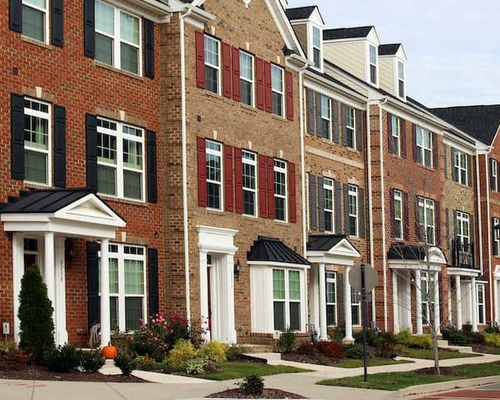
Choosing between a townhouse and a single-family home means weighing more than just price – it's about finding the right fit for your lifestyle, budget, and future plans. While single-family homes have long been considered the traditional choice, townhouses offer an alternative that appeals to many buyers. Understanding how these two property types differ, along with their distinct advantages and drawbacks, can help you make the decision that's right for you.
Key takeaways:
- A townhouse is an attached, multi-level home. Townhouses typically share one or more walls with neighboring units and are often part of a planned community, which can shape both daily living and ownership responsibilities.
- Lower maintenance often comes with shared rules. Many townhomes are governed by a homeowners association, which may handle exterior upkeep and amenities but can also impose fees and restrictions.
- Townhouses balance affordability and convenience. They’re usually less expensive than single-family homes and can be a good fit if you want community features and a lower-maintenance lifestyle, even if that means less privacy.
What is the difference between a townhouse and a single-family home?
The main difference between a townhouse vs. a house is the foundational structure. Single-family homes are generally detached, with no shared walls. Those who own single-family homes have ownership of both the house and land, as well as maximum privacy and control.
What is a townhouse, exactly? Townhouses are attached homes, often multistoried, and part of planned communities. Townhomes usually use homeowners associations (HOAs) to manage rules, shared spaces, and amenities.
Structure and layout
Single-family homes are entirely detached from any neighboring structures and can include larger yards for pets, kids, and entertaining, while townhouses usually have limited private outdoor space.
Detached houses also provide more privacy and noise reduction. The floor plans for townhouses are compact and designed more efficiently, with multiple stories, but that also means inhabitants share at least one wall, reducing privacy.
A townhouse is intentionally designed to be space-efficient, especially in areas where land is expensive or limited. Townhomes are attached properties, meaning they share at least one structural wall with an adjacent unit. To make up for a smaller horizontal footprint, townhouses typically feature narrow layouts that extend vertically across two or three stories.
This vertical living approach efficiently separates spaces, often placing the kitchen and living areas on the main floor and bedrooms on the upper levels. Unless you purchase an end unit, you will typically only have windows on the front and back of the home.
Ownership and responsibilities
When you buy a house, you usually purchase the physical structure and the entire parcel of land it occupies. You gain ownership interest. This traditional model grants you complete ownership, but it also means you are completely responsible for the upkeep of both the home and the land. From replacing the roof to fixing the foundation, the financial and physical burden rests on your shoulders.
Purchasing a townhouse also means you own the interior of the unit and the plot of land directly underneath it. However, because townhouses are attached and built in continuous rows, they are typically part of a planned community overseen by a homeowners association (HOA). The HOA assumes responsibility for the upkeep of shared areas, and in return, you must pay monthly fees and adhere to community guidelines.
Those with an HOA may not have control over the following:
- Paint colors
- Window styles
- Patio decor
- Fencing
- Landscaping
- Roofing
- Solar panels
Check with any potential HOA where you plan to purchase about any restrictions but remember that single-family homes may exist in a neighborhood with HOA restrictions.
See what you qualify for
Townhouse vs. house comparison chart
When deciding between townhomes and single-family houses, it’s important to consider structural and legal differences as well as factors that affect daily living.
Here’s a quick comparison table to help you make a decision:
|
Factors |
Town house |
Detached single-family home |
|
Maintenance responsibility |
Often less maintenance; some HOAs handle landscaping, snow removal, or exterior upkeep |
Owner responsible for all indoor and outdoor maintenance |
|
HOA involvement |
Many town houses are part of HOAs with rules and services |
Newer homes more likely to be part of an HOA, but older neighborhoods might not |
|
Space and privacy |
Usually smaller and closer to neighbors |
Typically more space and distance from neighbors |
|
Location |
Often closer to urban areas and city conveniences |
Can be in suburban or more spacious neighborhoods |
Space, yards, and privacy
Size is a major differentiating factor between single-family homes and townhouses. In many cases, single-family homes are larger. According to 2025 Census data, the median size of a completed single-family home was 2,142 square feet. These detached properties also often have yards that offer space for gardening, entertaining, or letting children and pets play.
For comparison, typical townhouses often range from 1,300 to 1,500 square feet. Outdoor space is usually limited to a patio, a small deck, or an enclosed courtyard. Single-family homes typically offer more privacy and space, but townhomes can offer other perks.
Location and lifestyle
Townhouses are very popular in urban settings and dense suburban areas where walkability is a priority for buyers. Their smaller footprint allows developers to build them close to city centers, public transit, and commercial districts. If you want to buy a home in a place where coffee shops and restaurants are just a stroll away, a townhouse can place you right in the heart of the action.
Single-family homes require more land, making them a staple of traditional suburban neighborhoods and rural communities. They cater to a lifestyle that values tranquility, privacy, and wide-open spaces, though this often means relying on a car for daily errands and commuting.
HOA rules and control of home appearance
A single-family home without an HOA gives you more control over the property and what you do with it. You can paint your siding, build a custom fence, or park an RV in your driveway without having to ask for permission.
Townhouse living requires you to surrender some of that autonomy. To preserve the cohesive look of the neighborhood and protect property values, townhouse HOAs enforce strict covenants, conditions, and restrictions (CC&Rs). You will likely face rules dictating what color you can paint your front door, what types of window coverings you can use, and whether you can install exterior features like satellite dishes or solar panels.
Take the first step toward the right mortgage
Apply online for expert recommendations with real interest rates and payments
Pros and cons of buying a town house
Use this list of pros and cons to carefully consider whether a townhome fits your needs.
Advantages of townhomes
The advantages of townhomes include:
- Accessibility of various amenities: Town houses often have access to community spaces or amenities connected to an HOA, which may include parks, pools, and community gyms.
- Renovation potential: Unless the HOA rules say otherwise, owners have the freedom to change anything in the interior or exterior of their homes.
- Affordability: Townhomes tend to be more affordable than single-family homes since they’re attached and often lack the yard space that detached homes usually include. This layout can potentially get you more interior space for your money. Learn more with our home affordability calculator.
- Less maintenance: Since they often lack a large yard and attach at the sides to other units, town houses may require much less exterior upkeep than other homes. If your townhome is part of an HOA, you may not have to do any exterior maintenance.
Disadvantages of townhomes
On the other hand, you might consider the following potential disadvantages:
- Less privacy: Since townhomes share walls with the residences next to them, you’ll sacrifice a little privacy to live in one. When you live in close quarters, loud neighbors may become an issue.
- HOA fees and restrictions: Many town house communities are part of an HOA or subject to HOA fees. This can be a downside for potential home buyers who don’t like the idea of feeling regulated, so it’s important that you’re comfortable with all HOA rules.
- Potentially diminished resale value: In some areas, townhomes may sell for less than single-family homes or may only market to a smaller pool of potential buyers. Before buying a town house, you may want to examine the real estate market where you live to help determine if you’re purchasing a worthwhile investment.
- Not as much living space: While town houses typically have multiple floors, they’re usually not as large in terms of square footage. Living in a multilevel home can also present mobility and accessibility issues, especially for older home buyers.
Get approved to buy an investment property
Rocket Mortgage® lets you get started, sooner
How much does a townhouse cost compared to a house?
When evaluating the types of houses available, it’s important for buyers to look beyond the initial listing price to truly understand affordability.
Purchase price and down payment
Are townhouses cheaper than single-family houses? Often yes, because they sit on smaller lots and utilize shared structural walls, townhouses are generally much cheaper to buy than traditional detached houses. On average, townhouses cost about $70,000 to $90,000 less than detached single-family homes.
This substantial difference means that buyers can enter the market with a smaller down payment, making townhouses an attractive option for those trying to transition from renting to owning.
Monthly mortgage payment, taxes, and insurance
A lower purchase price means you will be taking out a smaller mortgage, which naturally leads to a more affordable monthly payment. Property taxes for townhouses are typically also lower because they are assessed on a smaller parcel of land.
Home insurance can also be less expensive for a townhouse. If the townhouse HOA carries a master insurance policy that covers the building's exterior and roof, you may only need an HO-6 "walls-in" policy to cover your personal belongings and the interior structure. This is generally cheaper than an HO-3 policy, which is required for insuring an entire detached property inside and out.
HOA fees and maintenance costs
While townhouses offer savings on the purchase price and property taxes, you must factor in mandatory HOA fees. These monthly dues cover the community's exterior maintenance, home repairs, lawn care, and snow removal. HOA fees for townhouses and condos often range from $200 to $400 a month, depending on the amenities provided.
When considering your budget, be sure to balance these recurring fees against the unpredictable costs of maintaining a single-family home. Experts generally suggest saving 1% to 4% of a house's total value annually to cover maintenance and repairs.
Pros and cons of buying a single-family home
Single-family houses have their pros and cons to consider as well, which we’ll discuss below.
Advantages of single-family homes
Read on for the advantages of single-family homes:
- Stronger value appreciation: Historically, single-family homes have often appreciated faster than attached homes in many markets. Appreciation varies considerably by location and time period.
- Potential rental income: Detached homes may offer opportunities to rent out rooms, basements, or accessory buildings for extra income.
- Provide complete privacy: Detached homes have no shared walls, reducing noise and offering more personal space, which also extends to outside areas, unlike townhomes.
- Potential for accessory structures: Single-family lots often allow additions like garages, sheds, pools, or accessory dwelling units (ADUs) that may not be possible with condos or townhouses.
Disadvantages of single-family homes
Read on for the potential disadvantages of traditional homes before you make a final decision:
- Higher maintenance: Traditional homes often require more upkeep, repairs, and higher utility costs than condos or townhouses because you usually can’t rely on an HOA to fix your home exterior.
- Fewer shared amenities: Traditional homes rarely include pools, gyms, or other community features, which means you might have fewer “perks” right in your community.
- Higher price: Detached homes often have a higher purchase price, which can make them harder for first-time buyers to afford. For example, townhouses cost about $70,000 – $90,000 less than detached single-family homes.
- Lower sense of community: Detached homes might not be as conducive to a feeling of community compared to HOA communities. Townhome living involves sharing walls, so you likely can’t continue your daily life without meeting your neighbors. You’re likely more isolated in single-family homes.
Which home type fits your life stage?
Your current chapter in life can play a big role in determining whether a townhouse or a single-family home is the right fit for your life and financial goals.
First-time home buyers
For first-time buyers transitioning from renting, a townhouse can be the right bridge. A more affordable price point makes it easier to save for a down payment and qualify for a mortgage. Having an HOA manage exterior repairs removes much of the stress and unpredictability associated with first-time homeownership, helping you save for your first-time home buyer expenses.
Families
Growing families typically lean toward single-family homes. The larger square footage provides much-needed bedrooms, bathrooms, and living spaces, while private, fenced-in backyards offer safe spaces for children and pets to play.
Downsizers and empty nesters
If your children have moved out and you no longer need a big house with a demanding yard, a townhouse can be appealing. Empty nesters often love the "lock-and-leave" convenience of a townhouse. This means you can travel often without worrying about property maintenance and enjoy community amenities to stay active and social.
Townhouse vs. house vs. condo, apartment, duplex, and rowhouse
If you’re trying to decide which type of house is the best fit for your budget and lifestyle, here’s a breakdown of how they compare.
House vs. townhouse vs. condo
The primary differentiator between these three types is how ownership is defined. A house gives you ownership of a standalone structure and its land, and a townhouse gives you ownership of an attached multi-story unit and its land. In a condo, you only own the interior airspace of your unit, while the exterior and land are owned jointly by all the condo owners. The condo vs. house debate typically comes down to how much privacy and land ownership you need. Condo loans take into consideration different things than a single-family home loan.
Townhouse vs. apartment
When comparing a townhouse to an apartment, it is important to remember that an apartment is typically a single-level unit in a larger residential building that you lease from a landlord. A townhouse is a multi-story property that you purchase, allowing you to build equity and benefit from property appreciation over time.
Townhouse vs. duplex
The biggest difference between a townhouse and a duplex lies in the building's overall structure. A duplex is a single, freestanding building divided into exactly two separate living units. Duplexes are popular for buyers looking to live in one unit and rent out the other. A townhouse, however, is one unit within a continuous row of three or more attached homes, usually owned individually.
Rowhouse vs. townhouse
Townhouses and rowhouses can be thought of interchangeably, but there is a subtle architectural distinction. A row house refers to a style of identical, attached homes lined up flush along a city street, often seen in historic urban areas, and they rarely have an HOA. A townhouse functions similarly but can feature varied architectural designs and staggered layouts and is more likely to be part of a modern development managed by an HOA.
Should you buy a townhome or a single-family home?
There’s no one-size-fits-all answer as to whether you should buy a townhome or single-family home. Townhouses are ideal for buyers seeking affordability, low-maintenance living, and community amenities. On the other hand, single-family homes suit those who prioritize privacy, space, control, and long-term investment potential. Which appeals to you more?
Your budget
One of the biggest factors to help you decide between townhomes vs. single-family homes is your budget which will be based on many factors. How much can you afford to put toward a mortgage? If you’re not sure, consider using our home affordability calculator.
Don’t forget to consider other costs you’ll pay along with your mortgage, such as property taxes, homeowners insurance, maintenance, and HOA fees. Knowing your full financial picture will help you pick a home that comfortably fits within your budget.
Your home autonomy
How much control would you like to have over home appearance and modifications? In other words, would you rather have an HOA making rules and putting potential restrictions on what you do with your home, or do you prefer to have complete autonomy over your home? Consider the pros and cons of townhomes we listed earlier in the article before you decide.
Your lifestyle
It’s also important to consider your preferred lifestyle. Do you like weekends of yard work and DIY projects, or would you rather enjoy low-maintenance living with community amenities? You can outsource yard work and projects, but it might be more expensive to do that than pay HOA fees.
Ultimately, your lifestyle preferences can help determine which property type is best.
Your privacy
How much personal space do you prefer? If you envision living in the country with no neighbors, it’s probably obvious that you belong in a single-family home versus living in a community setting with shared spaces. On the other hand, if you crave community and have always wanted to enjoy shared spaces like a community pool, your ideal space might just be a townhouse. Your privacy preferences could ultimately help you decide where you want to live.
Your long-term goals
Thinking long-term about your future goals is key to understanding what you should do about your immediate housing choices. For example, considering your preferences for space and needs 10 years from now could also help you with your home shopping.
Will family growth, hobbies, guests, or work-from-home setups affect your long-term goals and your decisions about where to live? Understanding any future plans ensures the home continues to suit your lifestyle.
FAQ
Still have lingering uncertainties about whether a townhouse or single-family home will work best for your needs? Let’s look at a few frequently asked questions.
What are the disadvantages of a townhouse?
The main disadvantages of a townhouse include a lack of total privacy due to shared walls, limited personal outdoor space, and the requirement to pay mandatory monthly HOA fees. Townhouse owners must follow strict community rules regarding exterior modifications, and the narrow, multi-level layouts can pose mobility challenges.
Why would someone buy a townhouse instead of a house?
In terms of the initial purchase price, down payment, and property taxes, it is usually cheaper to live in a townhouse. However, buyers must factor in the recurring HOA fees. While these fees cover exterior maintenance, exceptionally high HOA dues can sometimes make the monthly carrying costs of a townhouse comparable to those of a single-family home.
Is it cheaper to live in a townhouse or a house?
In terms of the initial purchase price, down payment, and property taxes, it is often cheaper to buy a townhouse. However, buyers must factor in the recurring HOA fees. While these fees cover exterior maintenance, exceptionally high HOA dues can sometimes make the monthly carrying costs of a townhouse comparable to those of a single-family home.
Is a townhouse different from a rowhouse?
A rowhouse and a townhouse are very similar in that they’re both attached homes in a row. Rowhouses are usually older, while townhouses often come in modern developments with HOAs that handle exterior maintenance and community amenities. Learn more about the types of houses to learn more about your entire range of options.
Can you finance townhouses and rowhouses?
Yes, you can usually finance both with conventional mortgages. You can take advantage of different types of conventional mortgages, such as those with fixed-rate loans, where interest rates stay the same, or adjustable-rate mortgages (ARMs), which means interest rates vary over the life of the loan.
Contact a Home Loan Expert to discuss loan options you may qualify for.
Is a townhome or a single-family home a better investment?
Townhomes and single-family homes can both be good investments. Single-family homes often build more equity, while townhomes in strong rental markets can generate steady income with less maintenance. You could even consider keeping the townhome as an investment property after using it as a starter home if you later move to a traditional home. That way, you’d have two properties, but you’d also need to consider the pros and cons of being a landlord. If you plan to rent, confirm local zoning and lender rules, insurance, and tax implications.
The bottom line
Deciding between a townhouse and a single-family home requires you to balance your budget, goals, and priorities. A single-family home typically offers more space, privacy, and control, making it ideal for those who want total autonomy and room to grow. A townhouse offers an accessible, community-oriented, and low-maintenance lifestyle, ideal for those who value convenience and affordability. Once you know what kind of lifestyle you want, the right choice will become clear.
When you’re ready to start your application, you can look into your home financing options at Rocket Mortgage.
This article is for informational purposes only and is not intended to provide, and should not be relied on for, medical, legal, financial, or tax advice. You should consult with a qualified professional for advice specific to your situation. Consumers should independently verify that any services, products, or programs referenced meet their needs and comply with applicable requirements.

Rory Arnold
Rory Arnold is a Los Angeles-based writer who has contributed to a variety of publications, including Quicken Loans, LowerMyBills, Ranker, Earth.com and JerseyDigs. He has also been quoted in The Atlantic. Rory received his Bachelor of Science in Media, Culture and Communication from New York University.
Related resources
8-minute read
Duplex vs. townhouse: What’s the difference?
A duplex shares one wall, while a townhome usually shares two. Find all the differences between duplexes and townhouses and see which style seems best for you.
Read more
15-minute read
20 popular types of houses and home styles
We rounded up the most common types of houses and provided their key features, pros, cons and photos so you can find the home style that best fits you.
Read more
5-minute read
Condo vs. house: Which is best for you?
Trying to decide between buying a condo or a house? Learn the key differences in cost, maintenance, lifestyle, and more to make the right choice for you.
Read more