Duplex vs. townhouse: What’s the difference?
Contributed by Sarah Henseler
Dec 2, 2025
•8-minute read

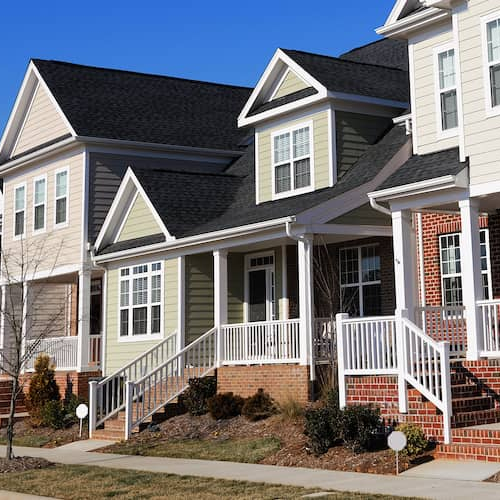
As you search for the right house to live in, it’s important to know and understand the various styles of homes available to you. Duplexes and townhouses are two types of homes that provide slightly different ways of living. Their differences – sometimes a source of confusion – are worth exploring.
In this article, we’ll define duplexes and townhouses and discuss the key differences between the two housing arrangements.
Key takeaways:
- Duplexes and townhouses serve different ownership goals: A duplex contains two separate living units and may offer rental income potential, while a townhouse is a single-family home that shares walls with neighboring properties.
- Maintenance and responsibilities differ: Duplex owners are typically responsible for the entire structure and property, whereas townhouse owners may share exterior maintenance and common area costs through an HOA.
- Financing and lifestyle considerations matter: Duplexes can appeal to buyers interested in investing or offsetting costs with rent, while townhouses often suit buyers seeking lower maintenance and a more traditional residential setup.
What is a duplex?
A duplex is a structure with two homes that are connected, but with separate entrances for its respective residents. Duplexes can be single story or multistory, and the two sides of the multifamily property are often identical, or at least similar, in style and size.
It’s important to note that even though these houses are semi-detached, or share a wall or a floor and ceiling, they’re separate in all other features. Residents will have their own utilities and interior rooms, and they might even have their own driveway and side yard, depending on the location and size of the duplex.
See what you qualify for
What is a townhouse?
A townhouse is a home that’s usually connected to two other townhomes – one on either side of each wall. Townhouses are one to three stories high. Since both of the side walls are shared, the windows and doors tend to be located on the front and back of the house.
Some townhomes are located at the end of a row of townhomes. If that’s the case, you’ll share a common wall with only one home, giving you a couple of extra windows or a door, depending on the style of the home.
Take the first step toward the right mortgage
Apply online for expert recommendations with real interest rates and payments
Townhouse vs. duplex: What are the key differences?
| Feature | Duplex | Townhouse |
|---|---|---|
| Purchase price |
|
|
| Outdoor space |
|
|
| Windows and doors |
|
|
| Exterior |
|
|
| Shared walls |
|
|
| Maintenance and upkeep |
|
|
| Common fees |
|
|
Purchase price
Generally speaking, duplexes and townhouses are less expensive than single-family homes.
According to Federal Reserve data, the median sale price of a home in the U.S. hovers at $410,800. And while duplexes are typically more expensive than a townhouse, you won't have to worry about HOA fees, which is an ongoing cost. Currently, the average HOA fee across the nation is $259, which adds up to $3,108 a year.
Sure, it's true that duplexes are usually more expensive up front. That said, if you rent out one of the units, it could generate income that you could put toward your monthly mortgage.
Outdoor space
While the amount of outdoor space around a home can vary with the land it sits on, a duplex home will most likely give you the most outdoor space since only one wall is shared. This means that duplexes might have a private yard in the front, back, and/or side of the house. This often depends on the surrounding land the structure is built on.
Since a townhome usually has two shared walls, homeowners will have limited outdoor space compared to a duplex. The outdoor space available for a townhouse is limited to the front and back of the home only. In some cases, townhouses allow for an outdoor deck, which can be placed off a second floor. This allows residents to experience the outdoors without needing a big yard.
Number of windows and doors
Another difference between a duplex and a townhouse is that duplexes typically have more windows and doors because only one of the interior walls is shared with the neighbor. This leaves three walls to hold various windows and doors for residents.
A standard townhouse often has windows and doors only on the front and back of the home. This leaves the resident with fewer windows and doors than a standard single-family home. As mentioned earlier, a townhouse at the end of a row of townhomes is going to have only one shared wall, which can give the residents more windows on the other side wall.
Exterior look
The exterior of a duplex is unique in that it looks like a regular home that’s mirrored on one side. This gives the structure the appearance of two homes, complete with separate entrances for each resident. Since one wall is shared, the house appears to be split in half, even though it’s not.
On the other hand, the exterior of a townhouse isn’t split in any way. Townhouse exteriors are often similar because a homeowners association (HOA) decides the style and design of all the homes. All the townhouses in a row will usually have a similar color and are made with similar building materials.
Number of shared walls
Even though only one of your interior walls is shared with your neighbor in a duplex, you might still be able to hear them depending on the thickness of that interior wall and what’s on the other side (a child’s bedroom, a room with a TV, a music room, etc.).
With a townhouse, the two side walls will most likely be shared with others, potentially resulting in an even louder living environment. But this, too, depends on the thickness of the walls and how much noise your neighbors make. That said, if you don’t mind hearing neighbor noise from time to time, sharing walls shouldn’t be an issue for you.
Maintenance and upkeep
With any kind of home, it’s important to understand the maintenance and upkeep necessary to keep the house in good condition. Since a duplex has only one shared wall, you’ll pretty much have the same maintenance responsibilities you’d have with a single-family home, especially if there’s yard space on all three sides of the house.
When living in a townhouse, you can expect significantly less maintenance and upkeep since the only outdoor space you’ll typically have is a small front yard and/or backyard. Regular home maintenance may still be necessary, but an HOA will typically handle the exterior maintenance. Your HOA is usually responsible for cutting the grass, landscaping, and various other forms of upkeep. This can be helpful for first-time home buyers, especially those who don’t have a lot of experience taking care of a home.
Extra fees
Before deciding whether you should buy a duplex or a townhouse, make sure you’re aware of any extra costs and fees associated with the house. Duplex owners may not have to pay for an HOA. However, you might have to personally perform all home maintenance and upkeep instead of relying on a property management company or an HOA to handle it.
On the other hand, townhouses usually come with HOA fees that you’re responsible for paying every month. HOAs take care of tasks like trash collection, landscaping, and maintaining common areas like parking lots and pools. Keep in mind that all HOAs are different and may not cover the same services.
Should you live in a duplex or a townhouse?
To best help you land on a decision, here are questions you should consider when it comes to living in a duplex or a townhouse:
- What's your budget?
- What are your privacy concerns?
- Do you prefer more privacy or are you comfortable with two shared walls?
- What's your preference for noise levels from neighboring units?
- How important is having a yard?
- How much do you value a unique exterior appearance?
- How much of the maintenance, repairs, and yard work do you want to tackle?
- What is your budget, comfort level and willingness to pay additional costs like HOA fees?
Deciding between a duplex and a townhouse is personal, so it’s worth considering numerous factors before deciding whether either type of home appeals to you.
Generally, if you prefer a setting similar to a single-family home, a duplex is probably a better option. But if you prefer less outdoor maintenance and are OK with having minimal outdoor space, a townhouse might work best for you.
Lastly, the cost of a home is a big consideration when deciding whether to purchase a property. The cost of duplexes and townhouses can vary with the real estate market, location, size, the home’s condition, and other factors. It's best to work with a skilled real estate agent who can help you compare prices in the market you’re shopping in.
FAQ about duplexes and townhouses
Here are some of the most commonly asked questions about duplexes and townhouses:
What’s the biggest difference between a duplex and a townhouse?
The most significant difference between a duplex and a townhouse lies in the building structure itself. A duplex is a single building that has two housing units next to each other with a shared wall and more windows and doors. A townhome is one of many in a row of side-by-side houses that share one or more walls.
How are townhouses and duplexes similar?
Duplexes and townhouses both are types of attached housing: they share one or more walls or floors with another residence. The two house types also have private entrances for the respective homeowners.
Is a duplex or a townhome a better investment?
Whether a duplex or townhouse is a good real estate investment depends on several factors, including your local housing market and current financial situation. If you’re thinking about buying an entire duplex (as opposed to a single unit), for example, it may be worth the investment if you plan to use it as an investment property.The bottom line: Duplexes and townhomes offer different options
Duplexes and townhomes offer options that go beyond a single-family home – and typically with a lower price tag. However, there are core differences between the two. So you'll want to do your homework so help you land on the best choice for you. You can get a Verified Approval from Rocket Mortgage®. That way, you can know how much home you can afford before home shopping.
Participation in the Verified Approval program is based on an underwriter’s comprehensive analysis of your credit, income, employment status, assets and debt. If new information materially changes the underwriting decision resulting in a denial of your credit request, if the loan fails to close for a reason outside of Rocket Mortgage’s control, including, but not limited to satisfactory insurance, appraisal and title report/search, or if you no longer want to proceed with the loan, your participation in the program will be discontinued. If your eligibility in the program does not change and your mortgage loan does not close due to a Rocket Mortgage error, you will receive the $1,000. This offer does not apply to new purchase loans submitted to Rocket Mortgage through a mortgage broker. Rocket Mortgage reserves the right to cancel this offer at any time. Acceptance of this offer constitutes the acceptance of these terms and conditions, which are subject to change at the sole discretion of Rocket Mortgage. Additional conditions or exclusions may apply.

Jackie Lam
Jackie Lam is a seasoned freelance writer who writes about personal finance, money and relationships, renewable energy and small business. She is also an AFC® financial coach and educator who helps creative freelancers and artists overcome mental blocks and develop a healthy relationship with their finances. You can find Jackie in water aerobics class, biking, drumming and organizing her massive sticker collection.
Related resources
6-minute read
Investing 101: How to buy multifamily property
Are you interested in multifamily investing? Learn about investing in multifamily real estate, loan options, and how to buy a multifamily property.
Read more
5-minute read
Condo vs. house: Which is best for you?
Trying to decide between buying a condo or a house? Learn the key differences in cost, maintenance, lifestyle, and more to make the right choice for you.
Read more

13-minute read
How to buy a house in 2026: A step-by-step guide
Learn how to buy a house in 2026 with 13 clear steps, from budgeting and preapproval to inspections, closing and getting the keys. Start here.
Read more