How to finance manufactured and mobile home loans
Contributed by Sarah Henseler
Updated Aug 10, 2026
•13-minute read

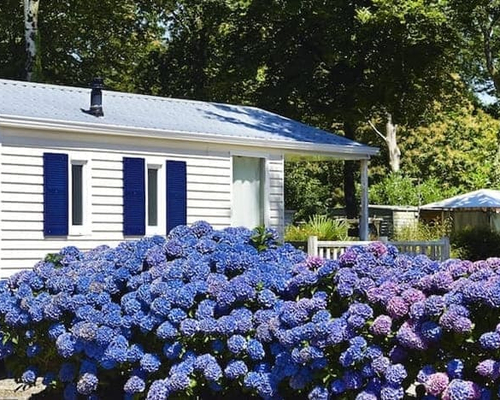
As traditional home prices keep climbing, manufactured and mobile homes can sometimes be a more affordable path to homeownership, with savings averaging 40% – 60% less than comparable site-built homes. But finding financing can take more legwork than it would for a site-built house.
That’s because manufactured and mobile home loans depend on more than your credit score and down payment. Lenders are also looking at the home’s age, foundation, title status, and whether you own the land the home is placed on. Here’s how manufactured home financing works, what lenders look for, and which loan options may be available.
Key takeaways:
- Mobile home loans depend heavily on whether the home is titled as real property or personal property, which is often tied to land ownership.
- Conventional, FHA Title II, and VA loans typically work best when the manufactured home and land are financed together.1, 2
- FHA Title I, chattel loans, and some specialty lenders may offer options for home-only financing or homes on leased land.
What's the difference between a manufactured home and a mobile home?
People will use “mobile home” and “manufactured home” to mean the same thing, but lenders usually use the terms in distinct ways. A mobile home in the context of real estate refers to a factory-built home constructed before June 15, 1976, before federal safety and construction standards were created. A manufactured home is a quality-controlled, factory-built home constructed on or after that date, and it must meet the HUD Code, which sets federal standards for construction, energy efficiency, and safety.
Mobile homes that were manufactured before the June 15,1976, date don’t meet the HUD Code and generally won’t qualify for most of the loan options covered in this guide. So even though many people still say “mobile home,” most homes bought and sold today are technically manufactured homes.
Before you settle on a loan type, know that manufactured and mobile homes have their own advantages over traditional homes, but also have come with a few trade-offs worth planning around:
- Lower purchase price than a comparable site-built home, which can mean a smaller loan and lower monthly payment
- Faster build and move-in timelines, since the home is constructed in a factory rather than on-site
- Fewer lenders and loan programs to choose from compared with site-built homes, especially if you're on leased land
- Depreciation risk if the home isn't titled as real property, since homes on leased land can lose value over time instead of building equity
Financing mobile and manufactured homes can also come with more requirements and different loan options than a traditional home.
See what you qualify for
Manufactured and mobile home loan requirements
Manufactured homes have unique construction standards, so lenders follow specific rules to make sure a home qualifies for financing. Here's what you'll generally need to qualify for a mobile or manufactured home loan with Rocket Mortgage.
|
Requirement |
Details |
|
Credit score |
Minimum 620 |
|
Debt-to-income ratio (DTI) |
Maximum 50% |
|
Minimum down payment |
Usually 5% |
|
Title |
Land and home need to be tied together and converted to real property |
|
Foundation |
Permanent foundation, with towing hitch, wheels, and axles removed |
|
Age of the home |
Built on or after June 15, 1976 |
|
Number of units |
Single-unit properties only |
While those are the Rocket Mortgage manufactured home loan requirements, in general, lenders will want to look at the following:
Credit and DTI requirements
Lenders will look closely at your credit score and debt-to-income ratio, or DTI, when you apply for manufactured home financing. The stronger your credit and the lower your existing debt, the more loan options you’re likely to have.
Property and foundation requirements
The home itself also has to meet certain standards. To qualify for standard financing, a manufactured home generally needs to meet the HUD Code, the federal construction and safety standard that took effect on June 15, 1976. Homes built before that date usually don’t qualify for the same loan options.
Lenders will also want to see that the home is permanently attached to the property. That means it needs to sit on a permanent foundation, with the towing hitch, wheels, and axles removed. In other words, the home has to be set up as a long-term residence, not something that can be moved again.
Title and real property requirements
For more conventional manufactured home loans, the home and the land it sits on usually need to be treated as one piece of real estate, otherwise known as real property conversion. If the home is still titled separately from the land, you may not qualify for those loan options. In that case, you may need a different type of financing, which we’ll cover next. Fannie Mae requires it for both its Standard MH and MH Advantage® loan programs.
Take the first step toward the right mortgage
Apply online for expert recommendations with real interest rates and payments
How land ownership affects your financing options
Whether you own the land under your home is one of the biggest factors in what kind of loan you can get for a manufactured home. That’s because land ownership plays a major role in whether a manufactured home is titled as real property or as personal property, and affects everything from your loan options to your interest rate, repayment terms, and borrower protections.
- If you own the land, you may have more mortgage options. A manufactured home that’s permanently attached to land you own can often be titled as real property. That may open the door to conventional loans, FHA Title II loans, VA loans, or other standard mortgage options if the home also meets lender and property requirements.
- If you lease the land, your options may be more limited. Homes in manufactured home communities or mobile home parks are often treated as personal property rather than real estate. That can make home-only financing, such as an FHA Title I loan or chattel loan, more likely than a standard mortgage. HUD does require certain protections for some leased-land arrangements, including an initial lease term of at least 3 years and at least 180 days’ written notice if the lease is ending.
- If you’re comparing home-only vs. home-and-land financing, look past the monthly payment. Home-and-land financing may give you access to more traditional mortgage terms, while home-only financing can be easier to use when you don’t own the land. But the tradeoff includes higher rates, shorter loan terms, fewer borrower protections, and less equity-building potential over time.
How to finance a mobile or manufactured home
Once you know your land situation, you can narrow down your financing options. Not all lenders offer every option below, and availability depends on your credit, your down payment, and the property itself.
Quick overview of loans for mobile homes
|
Loan type |
Best for |
Land required? |
Key thing to know |
|
Conventional loan |
Borrowers buying a qualifying manufactured home as real property |
Usually yes |
Home must meet program and lender requirements |
|
FHA Title I loan |
Home-only financing or leased-land situations |
No |
Can finance the home, lot, or both, depending on the situation |
|
FHA Title II loan |
Buying the home and land together |
Yes |
Home must be real property and meet FHA/HUD standards |
|
VA loan |
Eligible military borrowers |
Usually yes |
May allow no down payment if VA and lender requirements are met |
|
Construction-to-permanent loan |
New manufactured homes that need delivery and installation |
Usually yes |
Can cover setup before converting to permanent financing |
|
Chattel loan |
Homes on leased land or titled as personal property |
No |
Often faster, but usually costlier than a mortgage |
|
Specialty lender |
Borrowers who don’t fit standard mortgage rules |
Varies |
Compare rates, terms, and protections carefully |
Conventional loans
A conventional loan may be a good fit if you’re buying a manufactured home that looks and functions more like a site-built home. A few programs may apply: Freddie Mac’s CHOICEHome® program, and Fannie Mae’s MH Advantage® program, both of which are designed for manufactured homes with certain site-built features.
This option works best when the home is permanently installed and titled as real property. Fannie Mae’s MH Advantage program may allow down payments as low as 3% for eligible borrowers, while its Standard MH program starts down payments at 5%.3
FHA Title I loans
FHA Title I loans can help finance the manufactured home itself, or the home along with a leased lot, without requiring you to buy the land. The home needs to be your primary residence, and the loan is made through an FHA-approved lender.
This loan type can be useful if you’re buying a home in a manufactured home community or placing the home on leased land. It can finance the home itself, a developed lot, or the home and lot together. But not every FHA lender offers Title I financing, so you’ll want to ask whether the lender works with FHA loans for mobile or manufactured homes before you apply.
|
FHA Title I loan purchase type |
What it can finance |
Maximum loan amount |
|
Single-wide |
Purchase or refinance of a single-section manufactured home |
$105,532 |
|
Double-wide |
Purchase or refinance of a multi-section manufactured home |
$193,719 |
|
Single-wide + lot |
Purchase or refinance of a single-section manufactured home and the lot it sits on |
$148,909 |
|
Double-wide + lot |
Purchase or refinance of a multi-section manufactured home and the lot it sits on |
$237,096 |
|
Lot only |
Purchase and development of a lot for a manufactured home |
$43,377 |
FHA Title II loans
An FHA Title II loan can finance a manufactured home and the land together. This loan program is closer to a traditional mortgage, so the home usually needs to be titled as real property, placed on a permanent foundation, bigger than 400 square feet (often at least double-wide), and meet HUD property standards.
This can be a good option if you already own the land or plan to buy the land and the home at the same time. It can also be more accessible than conventional financing for some borrowers because FHA loans tend to have more flexible credit guidelines and lower down payment requirements.
VA loans
Eligible active-duty service members, veterans, qualifying surviving spouses, and certain National Guard and Reserve members may be able to use a VA loan to finance a manufactured home. VA loans might not require a down payment as long as the sales price doesn’t exceed the home’s appraised value.
In order for a manufactured home to qualify for a VA Loan, the structure will need to be attached to a permanent foundation, meet VA, HUD, and local building standards, have at least 700 square feet of interior floor space, and be treated as real estate under state law. Many VA lenders also won’t finance manufactured homes that were previously installed at another location, so ask your lender about manufactured home eligibility early in the process.
Construction-to-permanent loans
If you’re buying a brand-new manufactured home that still needs to be delivered, installed, and placed on a foundation, you might be able to use a construction-to-permanent loan. Depending on the lender and loan program, it may cover the home, land, site preparation, delivery, installation, and related improvements before converting into a permanent mortgage.
The finished home usually needs to meet the same standards required for long-term mortgage financing, and the loan type can involve more paperwork than financing an existing home because the lender may need to review the construction contract, site plans, land details, and installation. If you’re buying new, ask early whether the lender finances manufactured home construction, what costs can be included, and whether the loan converts automatically once the home is complete.
Chattel loans
A chattel loan is a loan for the home itself, not the land. Instead of financing real estate, the lender treats the manufactured home like personal property, similar to how an auto loan treats a car. Pew Research reports that about 35% of manufactured home purchase loans are chattel loans, and that these loans generally carry higher interest rates, shorter repayment terms, and fewer consumer protections than a standard mortgage. If you fall behind on payments, the home can be repossessed rather than foreclosed on, which can leave you with less time and fewer options to get caught up.
However, chattel loans might close faster and involve less paperwork than a standard mortgage because there’s no land title to convert. If you later buy the land, attach the home to a permanent foundation, and convert the title to real property, you may be able to refinance out of a chattel loan and into a standard mortgage with better terms.4 But with the smaller loan amount, the potential savings might not outweigh the cost of refinancing.
Personal loans
A personal loan could be an option if you’re buying a lower-cost manufactured home that doesn’t qualify for mortgage or chattel financing. Because personal loans are unsecured, you don’t need to use the home or land as collateral if you fail to make the payments.
The process for a personal loan can be faster, but often have higher interest rates, shorter repayment terms, and lower borrowing limits than mortgage or chattel financing. That can make them harder to use for a larger manufactured home purchase, but a personal loan could be a fallback option if no other financing routes are available.
Specialty lenders
If the above loan types don’t work for your situation, you may be able to work with a lender that specializes in mobile or manufactured home financing – such as manufactured home dealers. These lenders may offer more flexibility for older homes, leased-land homes, single-wide trailers, home-only financing, or borrowers who can’t qualify for conventional, FHA, VA, or personal loans.
That flexibility can be more pricey, however, so compare rates, fees, repayment terms, and borrower protections before moving forward. Make sure you also understand what happens if you miss payments or want to refinance later.
Costs to consider before financing a manufactured home
The loan itself is only one part of the cost of buying a manufactured home. Before you apply, it helps to understand what you’ll need upfront and what may be added to your monthly housing costs.
- Down payment: Some loan programs allow low down payments, but the amount depends on the loan type, lender, and whether the home qualifies as real property.
- Closing costs: These can include lender fees, title costs, appraisal fees, and other expenses needed to finalize the loan.
- Delivery and installation: New manufactured homes need to be transported to the site, placed on a foundation, and connected to utilities.
- Site preparation: You may need to pay for grading, permits, septic, water, sewer, electrical work, or other improvements before the home can be installed.
- Lot rent or land costs: If you don’t own the land, you may pay monthly lot rent. If you’re buying land with the home, that cost may be included in your financing.
- Insurance and taxes: Your ongoing costs may include homeowners insurance, personal property taxes, real estate taxes, or both, depending on how the home is titled.
- Community fees: Homes in manufactured home parks or communities may come with monthly fees for shared amenities, maintenance, or services.
A manufactured home may cost less than a comparable site-built home, but the total cost depends on more than the purchase price. Looking at the loan, land situation, setup costs, and monthly fees together can give you a more realistic idea of what you’ll pay.
How to buy a mobile or manufactured home in 3 steps
Buying a mobile or manufactured home can take more work financing other types of homes, since not every lender offers financing options due to the lower sales price and risk of depreciation. However, approval is still possible, especially if you pay attention to these steps.
1. Check your credit score and DTI ratio
Your credit score affects both your approval odds and your interest rate. Start by pulling your free credit report from Experian®, Equifax®, or TransUnion®. Look for errors, dispute anything incorrect, and work on paying down debt and making payments on time.
2. Save for a down payment
Plan to save at least 5% of the home's purchase price. On a $150,000 home, that's a down payment of $7,500. A larger down payment can lower your monthly payment and your interest rate, and it may open up more loan options depending on the total cost of the home you're buying.
3. Prepare to apply for a mortgage
When you're ready, you'll provide financial information, verify your income and assets, and authorize a credit check. From there, you'll get a Loan Estimate showing your loan type, interest rate, monthly payment, and closing costs. Try a mortgage calculator beforehand to get a sense of what your payment might look like.
Having these on hand before you apply can speed things up:
- Recent pay stubs and W-2s, or 2 years of tax returns if you're self-employed
- Bank and asset statements
- Details on the home, including the manufacturer, model, and HUD Code label
- Proof of land ownership or a copy of your lease, if the home is on leased land
- Photo ID and Social Security number
Because manufactured home files require extra documentation on the property itself, gathering these upfront can help your loan move through underwriting faster.
Save money on an FHA loan today!
Lock in your low interest rate with a fast, online approval
FAQ
Is it harder to get a loan on a manufactured home?
It can be. Financing is available, but manufactured home loans can sometimes be harder to get approved for than loans on site-built homes because there are more stipulations and the risk of depreciation. According to the CFPB, manufactured home loans, but chattel loans in particular, face higher denial rates than mortgages on site-built homes. Owning the land, having a credit score of 620 or better, and titling the home as real property can all improve your odds of approval.
Can you get a 30-year mortgage if you’re older?
Yes, because under the Equal Credit Opportunity Act, lenders can't deny a mortgage based on age. Qualification comes down to the same factors as any other borrower: income, debts, credit score, and down payment. A lender may ask about your income sources, including retirement or Social Security income, but age itself isn't a qualifying factor.
Can you still get financing if you're purchasing a single-wide home?
You can, but not every lender offers it as an option. Some lenders set specific property standards, minimum square footage, or loan types for single-wide homes, so it helps to work with a lender familiar with manufactured housing. Rocket Mortgage, for example, doesn't allow single-wide homes for cash-out refinances, so the type of transaction you're pursuing can also affect your options.
Do you need homeowners insurance to purchase a mobile or manufactured home?
If you're financing a manufactured home, your lender will typically require insurance before closing. The type of policy depends on how the home is titled. Homes classified as real property often use a standard homeowners policy, while homes titled as personal property may require a manufactured home or mobile home insurance policy instead. Your lender can tell you what type of coverage is required for your loan.
Can you finance a mobile home with 0% down?
You can buy a manufactured home with 0% down if you qualify for a VA loan, but your lender may have stricter requirements. While the VA doesn't require a down payment for eligible borrowers when the loan amount doesn't exceed the home's reasonable value, some lenders require a down payment for manufactured homes even though the VA program itself does not. Even with no down payment, you'll still need to budget for closing costs and the VA funding fee unless you qualify for an exemption.
The bottom line: Manufactured and mobile home loans can open the door to homeownership
Manufactured and mobile homes can create a more affordable path to owning a home, and understanding your loan options can make the process a lot less confusing. Whether you own the land, are buying it together with the home, or are financing a home on a leased lot, there's likely a financing option that fits. If you're ready to take the next step, you can start the mortgage approval process with Rocket Mortgage to explore your manufactured home loan options.
1 Rocket Mortgage is not acting on behalf of FHA or HUD
2 Rocket Mortgage is a VA-approved lender, not endorsed or sponsored by the Dept. of Veterans Affairs or any government agency.
3The 3% down payment option is only available on certain conventional loan products and not available in all states. Additional terms and conditions may apply.
4 Refinancing may increase finance charges over the life of the loan.
Rocket Mortgage is a trademark of Rocket Mortgage, LLC or its affiliates.

Ashleigh Potter
Ashleigh Potter is a PNW-based content writer at Rocket Mortgage and Redfin with more than five years of experience in digital marketing, content, and editorial strategy. She aims to help readers understand the nitty-gritty of home buying, selling, and lending – so big topics feel a little less overwhelming.
Related resources

7-minute read
Kit homes: What you should know before buying
Kit homes are mail-order homes delivered in parts and built right on your property. Explore the pros and cons of building one and how much it could cost you....
Read more
5-minute read
Modular vs. manufactured homes: What's the difference?
Modular and manufactured homes are both factory-built, but they have some key differences. Uncover the distinctions between modular and manufactured homes.
Read more
5-minute read
What is a prefab home?
Read more