Fixed-rate mortgage benefits and options
Contributed by Karen Idelson
Updated Jul 20, 2026
•8-minute read

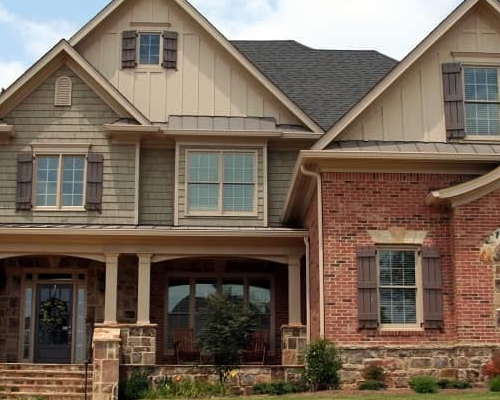
Fixed-rate mortgages are the most popular type of home loan option and are chosen by 90% of buyers. One of the top perks of a fixed-rate mortgage is that your interest rate changes so you’ll always have a predictable monthly mortgage payment. You can easily estimate these payments and see what fits your budget by using a mortgage calculator. However, this loan type isn’t always ideal for every borrower and every situation. Let’s get into how fixed-rate mortgages works and the current mortgage rates you can expect to find.
What is a fixed-rate mortgage?
A fixed-rate mortgage is a home loan with an interest rate that is set when you first take it out and never changes. As a result, you’ll have a predictable monthly payment throughout the life of the loan. Changes in the market won’t affect your rate or monthly payment, which can keep your housing costs stable and help you budget for the future.
Current fixed-rate mortgage rates and types of loans
Curious what mortgage rate and possible points you can expect to pay on a fixed-rate loan? Here are our current mortgage rates for purchase and refinance loans as of May 28, 2026:
|
Purchase rates |
|||
|
Loan type |
Rate |
APR |
Points |
|
30-year fixed |
6.875% |
7.148% |
1.75 |
|
20-year fixed |
6.625% |
7.01% |
2 |
|
30-year FHA |
5.99% |
6.831% |
1.875 |
|
30-year jumbo fixed1 |
5.875% |
6.107% |
2 |
|
30-year VA |
5.99% |
6.397% |
2 |
|
Refinance rates |
|||
|
Loan type |
Rate |
APR |
Points |
|
30-year fixed |
6.25% |
6.525% |
1.75 |
|
20-year fixed |
5.875% |
6.215% |
1.625 |
|
30-year FHA |
5.75% |
6.605% |
1.875 |
|
30-year jumbo fixed |
5.875% |
6.106% |
2 |
|
30-year VA |
5.75% |
6.259% |
2 |
See what you qualify for
How does a fixed-rate mortgage work?
When you take out a fixed-rate mortgage, you lock in your interest rate at the beginning of the mortgage process. Once you are approved for the loan, this interest rate will remain the same for your entire loan repayment term, unless you choose to refinance along the way. That means your principal and interest payments will remain the same each month. There may still be variations in what you owe for homeowners insurance and property taxes.
Fixed-rate loan fundamentals
Most fixed-rate mortgages are amortizing loans, which means part of your monthly payment will go toward paying down the principal balance and part will go toward interest. The amount you owe each month for your combined principal and interest payment won’t change, but the amount that covers principal and the amount that covers interest will shift over time.
In the first few years of making mortgage payments, most of each payment goes toward paying off interest. That’s because your loan balance is still high, so you owe more interest. As you pay down the loan, your loan balance will decrease and you’ll owe less interest, so more of your payment will go toward the principal.
Other mortgage payment factors
Many buyers pay their property taxes and homeowners insurance using an escrow account. That way, those costs get built into your mortgage payment. Once your property tax and homeowners insurance bills are due, they’ll be paid out of that account on your behalf.
Another cost that may need to be included in your monthly payment is mortgage insurance. If you make a down payment of less than 20% on a conventional loan, you’ll need to pay for private mortgage insurance (PMI). PMI protects the lender if you default on your loan. You can cancel this coverage once you have 20% home equity.
When you’re figuring out how much house you can afford, it’s important to make sure you’re including these expenses in your mortgage payment.
Fixed-rate payment example
Let’s say you have a 30-year fixed-rate mortgage with a monthly payment of $2,463. Each month, you’ll pay $1,889 to cover principal and interest. When you begin paying off your mortgage, $1,575 of the $1,889 payment may go toward interest, with just $314 going toward the principal.
For the purpose of this example, we used estimations for property taxes, homeowners insurance, and private mortgage insurance. These figures can change depending on your location and provider.
- Property taxes and insurance: $354
- PMI: $221
By the end of the loan’s amortization schedule, you’ll pay significantly more principal than interest. By your last mortgage payment, you’ll be putting $1,879 down to wipe out the principal and paying only $9 toward interest – a complete reversal of how you started.
You can use the Rocket Mortgage amortization calculator to see how much of each payment will go toward principal and interest as you pay off the loan.
Take the first step toward the right mortgage
Apply online for expert recommendations with real interest rates and payments
How are fixed-rate mortgages different from adjustable-rate mortgages?
An alternative to a fixed-rate mortgage is an adjustable-rate mortgage (ARM). With an ARM, you’ll likely pay a lower interest rate during the introductory period, which can vary in length from one ARM to another. The fixed introductory period typically lasts anywhere from 3 - 10 years. After the fixed-rate introductory period, the rate on an ARM can adjust up or down based on market conditions.
Whether you should go with a fixed-rate mortgage or an ARM will depend on several factors:
- ARMs are risky: The big risk with an ARM is that if interest rates go up, so can your monthly payment. It’s possible that your monthly payment could increase so much that you become unable to afford it. If mortgage rates are fairly low when you’re approved for the loan, you may be better off with a fixed-rate mortgage.
- ARMs are cheaper up front: Fixed-rate mortgages typically have a slightly higher rate than ARMs starting out. However, once an ARM’s low introductory rate period ends, your rate may increase, causing your monthly payments to go up.
- ARMs can make sense for shorter home stays: An ARM’s low introductory rate can be very tempting, especially if you don’t plan on living in a home for a long time. If you plan on selling your house before the rate adjusts, you can save money with an ARM.
Find out if a 30-year fixed loan is right for you
See rates, requirements and benefits
What are your fixed-rate mortgage options?
Most mortgage types come with a 15- or 30-year repayment term, though Rocket Mortgage® offers a YOURgage®2 loan that lets you customize your term anywhere from 8 – 29 years. Let’s explore the different types of fixed-rate mortgage options you’ll have to choose from.
Conventional loans
A conventional mortgage is issued by a private lender and is the most common type of home loan. It’s not backed by a government agency but does meet federal requirements that allow the lender to sell it to Fannie Mae or Freddie Mac.
Government loans
Federal Housing Administration (FHA) loans, Veterans Affairs (VA) loans, and U.S. Department of Agriculture (USDA) loans are all backed by the federal government. Because this guarantee reduces risk for lenders, government-backed loans have more lenient requirements than conventional loans.
30-year fixed
A 30-year fixed-rate mortgage, whether in the form of a conventional loan or a government-backed loan, is the most popular financing option for borrowers. You can keep monthly payments lower by choosing this term. In most cases, you’ll have a higher interest rate the longer your repayment term.
15-year fixed
Choosing a 15-year mortgage repayment term can help you save on interest compared with a 30-year mortgage. A 15-year fixed-rate loan typically comes with a lower rate than a 30-year loan because you’re paying the money back sooner. You’ll also be paying fewer years of interest. However, you’ll need to be prepared for a higher monthly payment since you’ll be paying back the loan in half the time.
How can I qualify for a fixed-rate mortgage?
If you think this mortgage option might be right for you, then here’s how you can qualify for a fixed-rate loan with Rocket Mortgage.
Check your finances
The first step toward getting a fixed-rate mortgage is figuring out what you can afford. To get a conventional loan, you’ll need a down payment of at least 3%3 of the purchase price. If you’re purchasing a $350,000 home, that means you’ll need at least $10,500 to make a down payment. The other major upfront cost of buying a home is closing costs, which range from 3% - 6% of the purchase price.
Consider your financial history
Your credit report and financial history also will affect your eligibility for a fixed-rate mortgage and the terms. Fannie Mae and Freddie Mac no longer have a minimum credit score threshold in their conventional loan eligibility guidelines, though historically you’d need a credit score of at least 620 for this type of mortgage. To get an FHA loan with Rocket Mortgage, you’ll need a credit score of at least 5804.
Find a lender
There are many different banks and lenders that offer mortgages, though they each set their own eligibility requirements. Since a mortgage is a long-term financial commitment, you’ll want to choose a lender that’s reputable. Learn more about working with Rocket Mortgage.
Get preapproved
A preapproval from a lender will tell you how much they estimate you can borrow to buy a home. While this is not a guaranteed offer, preapproval gives you a ballpark range of how much you can afford to spend. It also shows sellers that you’re serious about buying and likely can secure financing.
Consider loan terms
Fixed-rate mortgages come with different loan terms. For example, you’ll need to decide if you’d prefer a 30-year loan term or 15-year loan term. A longer term can help you keep your monthly payment low but will cost you more interest overall. A shorter term can help you save on interest, but you’ll need to be able to afford a higher monthly payment.
Loan terms also vary depending on the lender, and one lender might offer you a lower interest rate than another. Be sure to shop around and compare offers so you can choose the loan terms that fit best for you.
Lock your interest rate
If you’ve chosen your lender and you’re happy with the interest rate they’ve offered you, then you might decide to get a mortgage rate lock. A rate lock allows you to lock in your interest rate while you close on the home. That way, if interest rates increase between the offer and closing, you’ll get to keep the original lower rate. However, if interest rates don’t change or even decrease during this time frame, it wouldn’t be worth it to get the rate lock.
Close on your loan
During the underwriting process, the lender will review your finances to confirm that you can afford your mortgage. If everything checks out, you’ll be cleared to close on your house. On closing day, you’ll sign all the documentation, make your down payment, pay your closing costs, and officially close on your mortgage.
The bottom line: A fixed-rate mortgage is ideal if you prioritize predictability
A fixed-rate mortgage offers the comfort and security of knowing exactly what your principal and interest payments will be for the entire life of your loan. That’s because your interest rate is set when you take out the loan and never changes. This predictability can help you plan and budget for your future.
If you are ready to secure a stable and predictable home loan, you can start your mortgage application with Rocket Mortgage today.
1 Rate pricing and closing costs dependent on loan qualification requirements and factors including but not limited to credit, income, assets, down payment, product selection and loan amount. This is not a commitment to lend.
2 Not available on FHA, VA or adjustable rate mortgages. Available for fixed rate conventional products only.
3 The 3% down payment option is only available on certain conventional loan products and is not available in all states. Additional terms and conditions may apply.
4 To qualify for this offer, you must meet all standard FHA eligibility requirements. In addition, your total mortgage payment, including taxes and insurance, cannot exceed 38% of your income, your debt-to-income (DTI) ratio cannot exceed 45%, and you must have 12 months of verifiable housing history immediately prior to your application, no late payments 30 days or greater in the last 12-months, and no derogatory marks on your credit report. Not available on jumbo loans. Asset statements may be need, no more than 1 day of non-sufficient fund fees are allowed in the most recent 2 months prior to application. Additional restrictions/conditions may apply.

Rory Arnold
Rory Arnold is a Los Angeles-based writer who has contributed to a variety of publications, including Quicken Loans, LowerMyBills, Ranker, Earth.com and JerseyDigs. He has also been quoted in The Atlantic. Rory received his Bachelor of Science in Media, Culture and Communication from New York University.
Related resources

10-minute read
9 tips for getting the best mortgage rate
There are many ways to secure a great mortgage rate, even with ongoing market volatility. Here are 9 ways to get the best mortgage rates available to you.
Read more

5-minute read
Can you break a fixed-rate mortgage?
A fixed-rate mortgage has many benefits, including a reliable payment for the entire term. If you want to end your contract prematurely, it may cost you.
Read more

8-minute read
15-year vs. 30-year mortgage comparison
Which loan term fits your budget? Comparing 15-year vs. 30-year mortgage options shows significant differences in rates, payments, and total interest paid.
Read more