Buying a home in Alaska
Contributed by Maggie McCombs
Updated Sep 11, 2026
•7-minute read

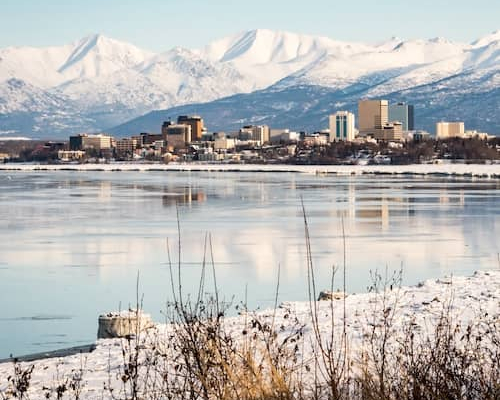
Alaska has a welcoming spirit, rich history, and breathtaking landscapes like fjords, towering mountain ranges, and long stretches of pristine coastline and untamed wilderness. While home prices can vary widely by region, buying a house in Alaska can be a great choice if you’re looking for open space and natural beauty.
Additionally, buying a home in Alaska comes with unique challenges, from long winters and higher heating costs to very different housing markets across the state. Understanding those differences before you start shopping can help you avoid costly surprises and choose the right place to buy.
Key takeaways:
- While the statewide median is lower than the national average, prices can differ significantly between cities like Anchorage and more rural areas.
- Spring and summer typically bring more inventory and competition, while fall and winter may offer fewer choices but less pressure from other buyers.
See what you qualify for
Alaska housing market at a glance
As of May 2026, the median home price in Alaska is $420,506, reflecting a 2.6% increase year-over-year. That’s slightly higher than the current national median sales price of $398,771.
| Alaska’s housing market | |
|
Median home price, single-family |
$420,506 |
|
Median days on the market |
30 |
|
Number of homes for sale |
$2,501 |
|
Peak selling seasons |
Spring and summer |
|
Most popular metropolitan markets |
Anchorage, Lakes, Kenai |
Understanding the housing market in Alaska
Before you start house hunting, it’s a good idea to understand Alaska’s housing market and how home prices can vary throughout the state.
Median home prices by city
You’ll find some areas that are both more and less affordable than Alaska’s state average. Prices vary significantly based on location, access to amenities, and job centers.
- Anchorage: As Alaska's largest city, Anchorage maintains a median home price of $427,744. Its diverse neighborhood options and proximity to major employment hubs make Anchorage a competitive market where average homes typically sell for above asking price and are under contract within 8 days.
- Fairbanks: Located in the interior region, Fairbanks features a much lower median price tag of $268,539, down 9% year-over-year. Still, Fairbanks remains a competitive market as the average listing is under contract in roughly 45 days.
- Tanaina: Sitting roughly 50 miles outside of Anchorage, Tanaina has a median sale price of $434,740. Homes typically sit on the market 2 weeks with 99.8% sale-to-list price.
Neighborhood, home size, unique features, and proximity to major cities also influence home prices in Alaska. You can use the Rocket Mortgage home affordability calculator to help compare prices to see which cities may fit your budget best.
| Most competitive Alaska markets |
|
|
City |
Median sale price |
|
Anchorage |
$427,744 |
|
Lakes |
$449,731 |
|
Kenai |
$364,282 |
|
Tanaina |
$434,740 |
|
Wasilla |
$437,738 |
|
Farm Loop |
$506,697 |
|
Fishhook |
$542,675 |
|
North Lakes |
$449,731 |
|
Knik-Fairview |
$420,748 |
|
Butte |
$504,698 |
Market trends and inventory
Alaska has seen a 4.3% decrease in total homes for sale compared to last year, and the number of homes sold fell by 0.55%. At the same time, the number of newly listed homes increased by 7.5% since the previous year.
Each city in Alaska differs slightly, so working with an experienced local real estate agent can help you navigate the market. Because available housing stock is limited, buyers need to act decisively when a well-priced home hits the multiple listing service (MLS).
Spring and summer are peak shopping seasons
During the spring and summer months in Alaska, more homes tend to hit the market, and buyer demand is generally higher. Looking for a home in the early fall through winter may mean fewer competing buyers and the potential for better prices, though inventory could be more limited. Ultimately, the best time to buy a home is when you’re financially and emotionally ready.
Take the first step toward the right mortgage
Apply online for expert recommendations with real interest rates and payments
Where Alaska buyers shop most
Understanding regional differences helps you choose the community that fits your lifestyle and financial goals.
Anchorage vs. Mat-Su Valley
Many buyers weigh the choice between living in Anchorage or commuting from the Matanuska-Susitna (Mat-Su) Valley. Communities like Wasilla and Palmer offer larger lot sizes, newer construction, and slightly lower average price-per-square-foot metrics than central Anchorage. However, buyers must also factor in a potentially longer commute.
Fairbanks, Juneau, and Ketchikan basics
Let’s look at some other popular Alaska markets:
- Fairbanks: Homes in Fairbanks require heavy insulation and high-efficiency heating systems to sustain extreme temperature shifts. However, Fairbanks also boasts a fantastic view of the northern lights.
- Juneau and Ketchikan: Located in Southeast Alaska, the climate requires homes to prioritize moisture control, roof integrity, and foundation waterproofing.
- Kenai Peninsula: Popular for outdoor recreation, markets like Kenai and Soldotna see significant demand for both primary residences and vacation properties.
How to buy a home in Alaska in 7 steps
Now that you know about Alaska’s housing market, we’ll guide you through the steps of buying a house in the state.
Step 1: Check your credit and set a budget
Before beginning your home search, examine your finances, such as your credit score, DTI, and potential budget. You can use the Rocket Mortgage mortgage calculator to see what you could afford each month and how much you should save for your down payment and closing costs.
- Check your credit score
- Find out your debt-to-income ratio (DTI)
- Save for a down payment
- Plan for closing costs and additional fees
- Finalize your budget
Step 2: Decide on the type of financing you want
There are various home loans available if you’re buying a home in Alaska.
- Conforming conventional loans. These loans typically require a minimum 3% down payment, and are offered by private lenders.1 You’ll have to pay private mortgage insurance (PMI) if your down payment is lower than 20%.
- Jumbo loans. These are conventional loans that exceed conforming loan limits. They usually require a higher credit score, down payment, and additional cash reserves.
- FHA loans. These are government-backed loans through the Federal Housing Administration. These loans offer lower down payments depending on your credit score.
- VA loans. These loans are for qualifying service members and surviving spouses and require no down payment. They are backed by the Department of Veterans Affairs.2
- USDA loans. These loans are for home buyers in qualifying rural areas, with no down payment requirement. They are backed by the U.S. Department of Agriculture. Rocket Mortgage currently doesn’t offer USDA loans.
Step 3: Apply for preapproval
Mortgage preapproval gives you a clear idea of how much you can borrow when buying a home in Alaska. Having preapproval early in your search can help you stand out, especially in competitive areas, because it shows you are likely able to secure financing.
During the preapproval process, lenders review your credit score, income, and assets to determine which loans you may qualify for, your potential interest rate in Alaska, and the loan terms. The process typically takes just a few days.
Step 4: Find a real estate agent in Alaska
Choosing a local real estate agent in Alaska makes the home buying process smoother, as they have a deep understanding of the area. You can find a great real estate agent through sites like Redfin or through your family and friends.
Some real estate agents might be dual agents, who represent buyers and sellers in the transaction. However, dual agency is illegal in Alaska, so it’s important that your agent only represents buyers.
Step 5: Start house hunting
After finding a few cities that fit your home buying goals, it’s time to look at homes for sale. Work with your real estate agent to look at homes for sale on the MLS and sites like Redfin to narrow down the homes you want to see in person.
Key factors to consider:
- Proximity of the neighborhood to jobs, amenities, and schools
- Major roads, highways, and public transit,
- HOA fees and potential costs
- Costs of property taxes in the city
Step 6: Make an offer and negotiate
Your real estate agent will guide you through making an offer on a house in Alaska. You’ll work together to decide how much to offer, which contingencies to include, and how much to put down as an earnest money deposit. This deposit shows the seller you’re committed to purchasing the home and is typically 1% - 3% of the purchase price, later applied toward your down payment.
Step 7: Begin the closing process
Now that your offer is accepted, you’ll:
- Submit your earnest money
- Officially apply for a mortgage
- Read through the closing documents
- Schedule the appraisal and inspection
- Prepare for closing day
- Have a final walkthrough
In Alaska, closing costs are typically 3% – 6% of the home’s purchase price. Closing costs can cover loan origination fees, home inspection costs, mortgage points, insurance, property taxes, and escrow fees.
Alaska housing and loan options
Alaska buyers can take advantage of state-specific home buyer programs designed to improve affordability. The Alaska Housing Finance Corp. offers low-interest loan options, taxable and tax-exempt bond financing, and interest rate reduction programs for first-time buyers, veterans, and low-to-moderate-income families. These state incentives can be combined with standard mortgage loans to lower monthly payments.
What to know before you move to Alaska
Buying a home in the Last Frontier comes with unique environmental and logistical realities:
- Heating system quality. Heating fuel costs can run high during long winters. Inspecting furnace age, fuel oil tanks, wood stoves, or natural gas connections is essential.
- Property access. Ensure the property has dedicated, year-round public road maintenance or established private snow-plowing agreements.
- Environmental hazards. Testing for indoor radon gas levels is strongly recommended across many interior and south-central regions.
- Property Taxes. Alaska has no state sales tax or individual state income tax, making local property taxes the primary funding source for local municipalities. Statewide average effective property tax rates hover around 0.94%.
FAQ
Here are some common questions about buying a home in Alaska.
What is the 3/3/3 rule in real estate?
The 3/3/3 rule is a budgeting guideline that suggest buyers hold 3 months of emergency reserves, 3 months of mortgage payments, and compare at least 3 similar homes to verify the price is fair
How much are property taxes in Alaska?
The effective property tax for Alaska is 0.94%, but local property taxes differ.
Do I need a real estate agent to buy a home in Alaska?
A real estate agent can help you find your dream home and navigate the home buying process, but you technically don’t need one to buy a home in Alaska.
How long does it take to close on a house in Alaska?
In Alaska, it typically takes 30 to 60 days to close on a home. Loan approval and home could affect this timeline.
Are there any specific factors that could affect the home buying process?
Some regions in Alaska are high-risk flood zones, so your lender could require you to carry flood insurance.
The bottom line: There’s a home in Alaska waiting for you
Buying a home in Alaska offers unmatched access to natural beauty, space, and unique communities. By understanding regional pricing, choosing the right loan program, and preparing for winter upkeep, you can navigate the purchase process with confidence.
Home prices in Alaska are generally comparable to the national median. By working with a trusted real estate agent and preparing your finances, you can feel confident buying a home in Alaska.
If you’re ready to buy a home in Alaska, start the mortgage approval process with Rocket Mortgage today.
1The 3% down payment option is only available on certain conventional loan products and is not available in all states. Additional terms and conditions may apply.
2Rocket Mortgage is a VA-approved lender, not endorsed or sponsored by the Dept. of Veterans Affairs or any government agency.
Rory Arnold
Rory Arnold is a Los Angeles-based writer who has contributed to a variety of publications, including Quicken Loans, LowerMyBills, Ranker, Earth.com and JerseyDigs. He has also been quoted in The Atlantic. Rory received his Bachelor of Science in Media, Culture and Communication from New York University.
Related resources

13-minute read
How to buy a house in 2026: A step-by-step guide
Learn how to buy a house in 2026 with 13 clear steps, from budgeting and preapproval to inspections, closing and getting the keys. Start here.
Read more
10-minute read
Checklist for buying your first house
The process of buying a home can be complicated, especially for first-time buyers. Make it simpler with this house buying checklist.
Read more

8-minute read
A guide to first-time home buyer programs, loans and grants
If you’re new to homeownership, first-time home buyer assistance programs can help you with down payments and more. Discover some of your options.
Read more