How much house can I afford on $80K?
Contributed by Sarah Henseler
Updated Jan 23, 2026
•5-minute read

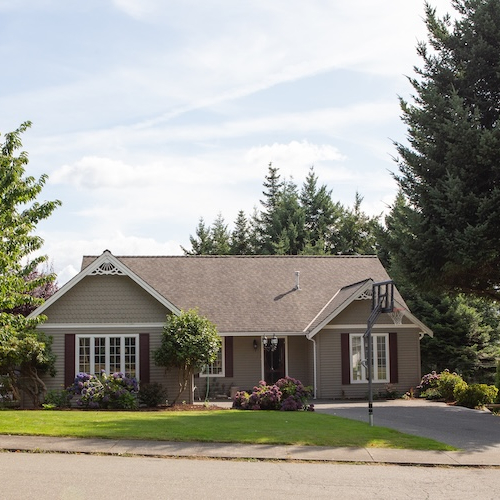
If you're earning $80,000 a year, you're earning significantly more than the national average, which the Social Security Administration reports is $63,932.
If you're wondering, how much house can I afford with an $80k salary, the answer is that you should be able to buy a home in many markets, depending on how much you have saved for a down payment and closing costs, as well as your debt load and credit.
However, you may need to look for homes in less expensive markets, as the national median home sale price is $410,800 as of the second quarter of 2025.
Key takeaways
- An $80,000 salary is above the national average. Earning $80,000 per year puts you well above the U.S. median income, which can strengthen your home‑buying potential.
- An $80,000 income may support a home priced between $160,000 and $370,000. Your actual budget depends on factors like your credit score, down payment amount, existing debt and local housing market conditions.
- Lenders evaluate your full financial profile to decide affordability. They look at your credit, down payment, closing costs, debt‑to‑income ratio, mortgage rates and location to determine how much you can comfortably borrow.
The answer: Between $160,000 and $370,000
A home buyer with an $80,000 salary can comfortably afford to buy a home costing $160,127 with a 6.375% interest rate, according to the Rocket Mortgage affordability calculator, assuming $16,000 in cash to buy, $1,250 in monthly debts, and a credit score over 720.1
Of course, your financial details, such as debt payments, available cash, and credit score, may affect the amount of home you can afford. But with an $80,000 salary, you'll likely find a home purchase price range of $160,000 to $370,000.
Take a look at the home affordability calculator to get a ballpark estimate of how much home you can afford in your situation.
See what you qualify for
'I make $80K a year – how much house can I afford?'
When buying a home, lenders look far beyond your income to consider your entire financial picture. Some details that can significantly affect your home purchase budget include your credit and current debts.
However, before seeking mortgage preapproval from a lender, it's a good idea to determine how much you feel comfortable spending on a home purchase. The following guidelines can help you estimate what a responsible mortgage payment would be for you.
The 28% rule
The 28/36 rule suggests that buyers spend no more than 28% of their income on housing. In this front-end ratio, you would include all your housing costs, such as your mortgage payment, property tax, homeowners insurance, homeowners association fees, and more.
The back-end ratio, or the 36% guideline, suggested that buyers spend no more than 36% of their income on all debt payments, including housing costs.
For example, let's say you earn $80,000 per year, or $6,667 per month. The 28% rule suggests spending no more than $1,866 per month on housing costs. Additionally, the 36% rule suggests spending no more than $2,400 on all debt payments, including housing, student loans, car loans, and other similar expenses.
Of course, you could go beyond the guardrails of this rule. But if you choose to stretch your budget, it could be easier to get into trouble keeping up with your mortgage because you’ll have less room for error in your budget.
Mortgage breakdown with an $80K salary
Applying the 28% rule, we can see how much home you can afford with various loan terms, interest rates, and down payment amounts.
The following table illustrates how the down payment, loan term, and interest rate affect the amount of house you can afford. This reflects principal and interest only and does not include property tax, homeowners insurance, mortgage insurance, or HOA fees.
| Home price | Down payment | Interest rate | Monthly payment |
|---|---|---|---|
| $300,000 | 10% ($30,000) | 6.0% | $1,619 |
| $300,000 | 10% ($30,000) | 6.5% | $1,706 |
| $300,000 | 10% ($30,000) | 7.0% | $1,769 |
Where you live will have a big effect on how much you can afford. It might be easy to find homes you can afford in Detroit, Birmingham, Memphis, or St. Louis. However, finding a home within this budget in San Francisco, Los Angeles, or New York City may be more challenging.
Take the first step toward the right mortgage
Apply online for expert recommendations with real interest rates and payments
Factors influencing how much house you can afford
Many factors come into play when determining how much home you can afford. For example, if you have a salary of $80K but significant debt, you may not be approved at all or get a lower approval amount than expected.
Some of the critical details include:
- Credit: Having better credit will help you secure better interest rates.
- Down payment: Making a larger down payment reduces your loan amount. While most lenders don't require a 20% down payment, opting to put 20% down can help you avoid the expense of private mortgage insurance.
- Closing costs: Closing costs vary but typically add up to 3% – 6% of your loan amount and must be paid in addition to your down payment.
- Debt-to-income (DTI) ratio: Lenders often prefer that borrowers maintain a DTI below 36%, although ratios as high as 43% are sometimes allowed. For someone with an $80,000 salary, a 36% DTI means their monthly debts shouldn’t exceed $2,400.
- Mortgage rates: Lower interest rates make borrowing more affordable. If market rates are high, you could buy mortgage points at closing to reduce your interest rate.
- Mortgage terms: A 30-year fixed-rate mortgage gives you a lower monthly payment but costs more in interest. A 15-year mortgage is less expensive overall, but the monthly payment will be higher.
- Taxes and insurance: Property taxes and homeowners insurance depend on factors like home size and ZIP code. They can add up to a significant monthly expense.
- Location and amenities: The market you plan to buy in has a significant effect on your options. For example, the median list price in Los Angeles was $1.2 million in 2025, while the median list price was $269,900 in Tulsa, Oklahoma.
Mortgage options with an $80K salary
When considering a home purchase, it’s important to explore different mortgage types. The right fit could make for a smooth purchase process. Explore some of your choices below.
Loan types
Different financing options are available to you when you're making $80,000 a year. Here are the main types of mortgages you can qualify for.
- Conventional loans: These mortgages are not backed by a government agency. They allow you to buy a home with as little as 3% down. But if you put down 20% or more, you won't have to pay PMI.
- FHA loans: Loans backed by the Federal Housing Administration can be a good option if you have a lower credit score. You have to pay an up-front and annual mortgage insurance premiums.
- USDA loans: The U.S. Department of Agriculture offers these loans to low- to moderate-income borrowers purchasing homes in qualifying rural areas. No down payment is required, but you must pay an up-front and annual guarantee fee. Rocket Mortgage currently doesn’t offer USDA loans.
- VA loans: This mortgage loan, backed by the U.S. Department of Veterans Affairs, is available to veterans, military personnel, and eligible spouses.2 It offers 100% financing with no down payment or mortgage insurance required for eligible borrowers, but there’s an up-front VA funding fee.
First-time home buyer programs
If this is your first home purchase, you can get a helping hand through first-time home buyer programs. Program details vary, but each offers a way to help new buyers make the leap into homeownership. Depending on your situation, you may be eligible for assistance with closing costs, down payments, and other related expenses.
For example, One+ by Rocket Mortgage offers to cover up to 2% of the home purchase price as a down payment for eligible borrowers who can put down at least 1%.3 This program could easily help you save thousands of dollars on your home purchase.
The bottom line: You can afford a home with an $80K salary in some markets
In many markets, it is possible to buy a home with an $80,000 salary. But you'll need to look beyond your salary to consider other details, like significant debts and your credit score, to get a better idea of what you could genuinely afford to spend on a home purchase. Additionally, you'll need to realistically consider how far your home purchase budget will stretch in your location. In some places, this might be a tight budget. But in others, it might be more than enough.
If you are ready to move forward with a home purchase, start your mortgage application today with Rocket Mortgage.
1 30-year Fixed-Rate Loan: An interest rate of 6.375% (6.948% APR) is for the cost of 1.789 point(s) ($2,678.19) paid at closing. On a $149,703 mortgage, you would make monthly payments of $933.96. Monthly payment does not include taxes and insurance premiums. The actual payment amount will be greater. Payment assumes a loan-to-value (LTV) of 97.00%.
Mortgage rates could change daily. Actual payments will vary based on your individual situation and current rates. Some products may not be available in all states. Some jumbo products may not be available to first time home buyers. Lending services may not be available in all areas. Some restrictions may apply. Based on the purchase/refinance of a primary residence with no cash out at closing. Refinancing may cause finance charges to be higher over the life of the loan. We assumed (unless otherwise noted) that: closing costs are paid out of pocket; this is your primary residence and is a single family home; debt-to-income ratio is less than 30%; and credit score is over 720, or in the case of certain Jumbo products we assume a credit score over 740; and an escrow account for the payment of taxes and insurance. The lock period for your rate is 45 days. If LTV > 80%, PMI will be added to your monthly mortgage payment, with the exception of Military/VA loans. Military/VA loans do not require PMI. Please remember that we don’t have all your information. Therefore, the rate and payment results you see from this calculator may not reflect your actual situation. Rocket Mortgage offers a wide variety of loan options. You may still qualify for a loan even if your situation doesn’t match our assumptions. To get more accurate and personalized results, please call to talk to one of our mortgage experts. One point is equal to one percent of the loan amount.
2 Rocket Mortgage is a VA-approved lender, not endorsed or sponsored by the Dept. of Veterans Affairs or any government agency.
3 Client will be required to pay a 1% down payment, with the ability to pay a maximum of 3%, and Rocket Mortgage will cover an additional 2% of the client’s purchase price as a down payment, or $2,000. Maximum grant amount is $7,000. Offer valid on primary residence, conventional loan products only. Maximum loan amount of $350,000. Cost of mortgage insurance premium passed through to client effective January 2, 2024. Offer valid only for home buyers when qualifying income is less than or equal to 80% area median income based on county where property is located. Not available with any other discounts or promotions and cannot be retroactively applied to previously closed loans or loans that have a locked rate. This is not a commitment to lend. Rocket Mortgage reserves the right to cancel/modify this offer at any time. Additional restrictions/conditions may apply.
Rocket Mortgage is a trademark of Rocket Mortgage, LLC or its affiliates.

Sarah Sharkey
Sarah Sharkey is a personal finance writer who enjoys helping readers make informed financial decisions. She lives in Florida with her husband and dogs. When she's not writing, she's outside exploring the coast.
Related resources

6-minute read
How much do you need for a down payment on a house?
You might’ve heard you should make a 20% down payment on a house. However, it depends on several factors. Here’s how to determine the amount you ...
Read more

10-minute read
What are closing costs and how much will you pay?
Closing costs can add thousands to your home purchase. Learn what’s included, who pays, and how to estimate your costs before you buy.
Read more

6-minute read
The pros and cons about buying a house
Buying and owning a home has many advantages, but it’s not for everyone. Consider the pros and cons of buying a house before you decide to apply for a ...
Read more