What’s the average mortgage payment in Vermont?
Contributed by Sarah Henseler
Feb 26, 2026
•5-minute read

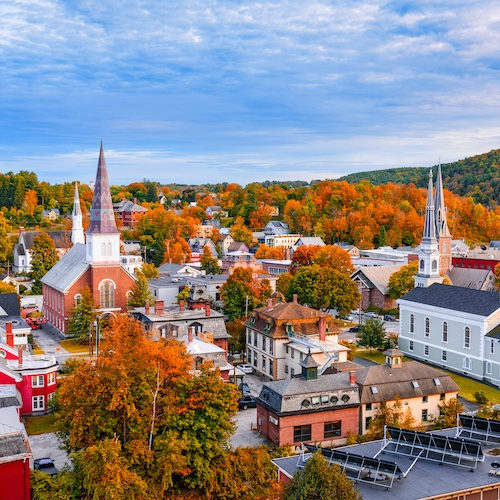
According to data from Redfin and Rocket Mortgage, the average monthly mortgage payment in Vermont is about $2,246 before property taxes and insurance. That puts Vermont above the national average of $2,010 per month, though actual payments can vary widely by town and region.
Known for its small towns, scenic landscapes, and strong appeal to second-home buyers, Vermont’s housing market is shaped by limited inventory and steady demand. While affordability differs across the state, buyers often encounter higher prices in popular mountain and vacation areas.
The Vermont housing market at a glance
As of October 2025, the median home sale price is about $434,200 in Vermont. This price has increased almost 8% over the last year, although it is roughly in line with the national median of almost $440,000. This significant increase is likely due to the high demand for homes in the Green Mountain State paired with low supply.
Here’s some of the recent median sale prices across the state from Redfin:
|
City |
Median Sale Price |
|
Shelburne |
$605,000 |
|
Middlebury |
$775,000 |
|
Burlington |
$527,625 |
|
Montpelier |
$400,000 |
|
Winooski |
$400,000 |
|
Brattleboro |
$371,000 |
|
St. Albans |
$368,750 |
|
Hinesburg |
$310,000 |
|
Bennington |
$285,000 |
|
Rutland |
$244,000 |
See what you qualify for
What influences mortgage payments in Vermont?
Regardless of which state you are buying in,a few factors always affect your mortgage payment:
- Home price and down payment
- Mortgage rate
- Loan term
- Property taxes and insurance
We’ll look into how each of these affects your monthly payments in Vermont specifically. The Rocket Mortgage® mortgage calculator can also help you visualize and understand how changes in each of these areas affects your overall payment.
1. Home price and down payment
Vermont’s home prices sit above the national median for rural states, largely due to limited inventory and strong demand in certain areas. For example, purchasing a $434,200 home with a 20% down payment and a 30-year fixed mortgage at 6.5% results in an estimated principal and interest payment of around $2,196 per month, before taxes and insurance.
A smaller down payment may reduce upfront costs, but it can increase your monthly payment and may require private mortgage insurance (PMI) until enough equity is built.
2. Mortgage rate
Your mortgage interest rate directly affects how much you pay over time. Rates are influenced by credit score, loan type, down payment amount, and debt-to-income ratio (DTI). Current market rates can also affect your monthly payment. Even small rate changes can make big impacts, so keeping an eye on the current market is always a good idea.
3. Loan term
The loan term determines how long you’ll take to repay the mortgage and how much interest you’ll pay overall. A 30-year fixed mortgage typically offers lower monthly payments, while a 15-year fixed mortgage increases monthly costs but reduces total interest. It also builds equity faster. Vermont buyers often compare these options and make a choice based on income stability and long-term housing plans.
4. Property taxes and insurance
Property taxes in Vermont are one of the top five highest rates in the country at 1.71%. On a median-value home, which is about $290,500 in Vermont, property taxes can add up to $4,956 annually based on combined Rocket Mortgage and Redfin data. Breaking it down further adds roughly $413 per month to your average mortgage payment.
However, the higher property taxes are offset a little bit by the cost of homeowners insurance. According to Insurify, Vermont has the lowest average home insurance rates in the country, coming to only about $936 per year, or $78 per month.
Take the first step toward the right mortgage
Apply online for expert recommendations with real interest rates and payments
Average mortgage payment in Vermont compared to neighboring states
Vermont has one of the highest average monthly mortgage payments in the country, although it appears mid-range when compared with its New England neighbors. Here’s how it stacks up against the other states in the region:
|
State |
Average monthly mortgage payment* |
|
Massachusetts |
$2,573 |
|
Connecticut |
$2,477 |
|
Vermont |
$2,246 |
|
New York |
$1,977 |
|
New Hampshire |
$1,943 |
|
Maine |
$1,720 |
Monthly payments by county in Vermont
Mortgage payments vary across Vermont’s counties, reflecting differences in home prices, local property taxes, and demand. Generally, counties with larger population centers or popular resort areas have higher monthly payments, while rural counties tend to be more affordable. The table below highlights the estimated average monthly mortgage payments by county in Vermont based on Q1 2025 median sale prices from the National Association of REALTORS®:
|
County |
Median Sale Price |
Estimated average monthly |
|
Chittenden County |
$496,800 |
$2,920 |
|
Grand Isle County |
$414,090 |
$2,440 |
|
Addison County |
$399,630 |
$2,350 |
|
Washington County |
$351,970 |
$2,070 |
|
Lamoille County |
$341,550 |
$2,010 |
|
Franklin County |
$325,240 |
$1,910 |
|
Windsor County |
$320,230 |
$1,880 |
|
Windham County |
$317,480 |
$1,870 |
|
Bennington County |
$308,260 |
$1,810 |
|
Orange County |
$300,590 |
$1,770 |
|
Rutland County |
$261,550 |
$1,540 |
|
Caledonia County |
$258,560 |
$1,520 |
|
Orleans County |
$255,440 |
$1,500 |
|
Essex County |
$200,590 |
$1,180 |
How to calculate your mortgage payment
Mortgage payments are calculated using a standard formula that factors in loan amount, interest rate, and loan term. If you’d like to see how different home prices or down payment amounts affect your monthly cost, the Rocket Mortgage online mortgage calculator allows you to test multiple scenarios. Additional tools from Rocket Mortgage can also help you explore affordability and long-term costs.
Vermont-specific mortgage resources
Redfin keeps a list of programs for first-time home buyers in Vermont to help explore ways to make homeownership more attainable. Here are a few additional resources that could help you get started:
- Vermont Housing Finance Agency (VHFA) Programs: The VHFA offers a number of programs for both first-time home buyers and repeat home buyers. Most include competitive rates, low down payments, down payment assistance, and more.
- Other non-VHFA programs: Vermont has several local nonprofit and community-driven programs that provide additional help to qualified buyers, including options for a larger second mortgage or shared equity grants through participating lenders.
FAQs on the average monthly mortgage payment in Vermont
Have more questions about the average monthly mortgage payment in Vermont? We have answers!
What is a good mortgage payment in Vermont right now?
As in any state, a “good” monthly mortgage payment is one that fits comfortably within your budget and contributes to your long-term financial goals. Because Vermont’s home prices and property taxes are higher than many other rural states, monthly payments may approach or exceed the national average depending on where you look. Use the Rocket Mortgage home affordability calculator to help you determine what makes the most sense for your situation.
What’s the difference between a 15-year vs. 30-year mortgage in Vermont?
A 30-year mortgage spreads your payments over a longer period, keeping monthly costs lower and providing more flexibility in your budget. In contrast, a 15-year mortgage requires higher monthly payments but allows you to pay off your loan faster and save on interest over time. Vermont buyers often consider factors like income stability, long-term savings goals, and how quickly they want to build equity when choosing between the two options.
How much income is needed to afford a home in Vermont?
Recent U.S. Census data shows the average median household income in Vermont to be about $82,730, but since average monthly payments can vary widely, using a tool like the Rocket Mortgage affordability calculator can help you understand how much you can afford based on your specific income.
The bottom line: What shapes mortgage payments in Vermont
Mortgage payments in Vermont are driven by home prices, interest rates, loan terms, and local property taxes. While limited inventory and higher taxes can push costs upward, many buyers are drawn to the state’s quality of life and long-term stability.
Whether you’re buying a primary residence or considering a move within the Green Mountain State, getting prequalified for a loan with Rocket Mortgage can help you understand your buying power and move forward with confidence.
*Methodology: Average monthly mortgage payment in a region, calculated based on average home purchase price for a fixed 30-year loan and a 52-week average interest rate of 6.68% from Freddie Mac as of August 2025.

Kaitlyn Neitman
Kaitlyn Neitman is a Seattle-based writer and Content Marketer at Redfin. She graduated from the University of Washington with a Bachelor of Arts in Creative Writing and Psychology. She enjoys helping people understand the many aspects of the home-search journey through her work. In her free time, she loves reading, hiking, spending time with her family, and writing her first novel.
Related Resources

7-minute read
What is a silent second mortgage?
A silent second mortgage can mean mortgage fraud if hidden from your lender. Learn the risks, legal DPA options, and what to disclose before you apply.
Read more
7-minute read
Buying a house with well water: What to know first
Buying a house with well water? Learn what to inspect, test, and budget for before closing, plus pros, cons, and maintenance tips. Start here.
Read more
4-minute read
One+ by Rocket Mortgage® is a 1% down payment option
The down payment is one of the biggest obstacles for home buyers. One+ can help you get into a home with as little as 1% down plus a 2% grant from Rocket.
Read more