What is a jumbo loan in Arizona? 2026 limits and requirements
Contributed by Karen Idelson
Updated Sep 6, 2026
•9-minute read

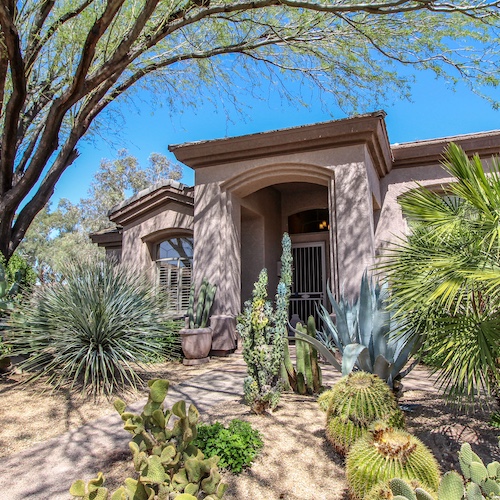
The Arizona housing market has homes available at a wide range of price points. While the median sale price of a home in Arizona sits at $443,611, as of June 2026, there are also homes with a price point that exceeds the 2026 standard conforming mortgage loan limit of $832,750. When this happens, a jumbo loan can help you get the financing you need to buy a pricier home.
You might be eyeing a luxury home in Scottsdale, a growing neighborhood in Phoenix, or a spacious property outside Tucson with room to spread out. If you’re shopping for a home in Arizona, here’s what to know about jumbo loans, the 2026 loan limits, and the qualifications lenders typically look for.
Key takeaways:
- A jumbo loan in Arizona is necessary for any single-family home purchase that requires a mortgage amount greater than the 2026 baseline conforming limit of $832,750.
- Because jumbo loans carry more risk for lenders, borrowers typically need a minimum credit score of 700 to 720, a 10% to 20% down payment, and 6 to 12 months of cash reserves.
- The median sales price for a home in Scottsdale is $959,478 as of June 2026, while the median price for a home in Paradise Valley is $4,197,716.
What is a jumbo loan in Arizona?
A jumbo loan is a mortgage that exceeds the conforming loan limits set each year by the Federal Housing Finance Agency (FHFA). For 2026, the baseline conforming loan limit for a one-unit home is $832,750. Any mortgage above that amount is considered a jumbo loan in most Arizona counties.
Jumbo mortgages are designed for higher-priced homes, whether that’s a newly built property, a home in a competitive market, or one with unique features that drive up value. Because these loans involve larger balances, lenders take a closer look at a borrower’s financial profile to make sure the loan fits comfortably within their long-term budget.
As of June 2026, statewide home prices have increased by 2% year-over-year. As home values rise in popular areas, more buyers may find that their desired loan amount pushes beyond conforming limits. In Scottsdale, the median home sales price is $959,478, well above the conforming loan limit of $832,750.
The Rocket Mortgage Jumbo Smart mortgage option offers loan amounts up to $3 million.
See what you qualify for
Jumbo loan limits in Arizona for 2026
For 2026, the standard conforming loan limit in Arizona starts at $832,750 for a one-unit property. In high-cost counties, the limit can go as high as $1,249,500. However, Arizona does not contain any FHFA-designated high-cost areas where higher conforming limits apply. This means that loan amounts above the local conforming limit are classified as jumbo loans statewide, regardless of county or city.
For professional developers or those using the loan on a purchase that includes multiple houses, the FHFA also sets higher conforming loan limits for multiunit properties. Once those limits are exceeded, the loan moves into jumbo territory.
2026 conforming loan limits in Arizona
Here’s how the 2026 limits break down for all Arizona counties:
- One-unit property: $832,750
- Two-unit property: $1,066,250
- Three-unit property: $1,288,800
- Four-unit property: $1,601,750
Home prices across Arizona have climbed steadily in recent years. As values rise, more buyers may find that their loan amount pushes beyond conforming limits. In those situations, jumbo financing can provide the flexibility needed to move forward with a purchase. You can explore the FHFA conforming loan limit values map for more detailed information by county.
As of January 2026, statewide home prices have decreased slightly in Arizona. Year over year prices statewide have declined 0.54%. However, some Arizona cities have seen double digit price growth year over year. Scottdale’s prices have risen the most with 15.4% year over year growth in home prices. Other cities with double-digit price growth year over year include Sedona and Bullhead City.
Some lenders, such as the Rocket Mortgage® Jumbo Smart loan, offer loan amounts up to $3 million, giving buyers additional options when standard loan limits fall short.
Are jumbo loan limits the same in every Arizona county?
Yes. While the FHFA designates certain areas of the country as high-cost areas with expanded limits up to $1,249,500, Arizona does not currently contain any FHFA-designated high-cost counties This means that the $832,750 threshold applies uniformly statewide, from Maricopa County to Coconino County.
Take the first step toward the right mortgage
Apply online for expert recommendations with real interest rates and payments
Arizona requirements for a jumbo loan
Because jumbo loans carry more risk for lenders, they often come with stricter eligibility requirements than conforming conventional loans. While requirements vary by lender and program, these are some common factors that can influence eligibility.
Property type
Jumbo loans can be used to finance different types of properties, including primary residences, second homes, and investment properties. The specific requirements may vary depending on how you plan to use the home, but jumbo financing often offers flexibility for a wide range of real estate goals.
Credit score
A strong credit history is very important when it comes to qualifying for a jumbo loan. Lenders typically require a minimum credit score of 700 to 720 to secure competitive terms on a jumbo loan. A solid credit profile demonstrates a reliable track record of managing debt.
Jumbo loan down payment
Down payment requirements for jumbo loans often fall between 10% - 20% of the purchase price. The exact amount you’ll need to put down will depend on the loan size, property type, and overall financial profile of the borrower.
Debt-to-income ratio
Your debt-to-income (DTI) ratio compares your gross monthly income to your monthly debt obligations. Lenders typically look for a DTI ratio below 43%, including the new mortgage payment. This helps ensure your income can comfortably support your monthly obligations, even with a larger loan amount.
Steady income
Reliable, well-documented income is key when applying for a jumbo mortgage. Lenders may review W-2 income, tax returns, commission earnings, or self-employment documentation to confirm long-term stability.
Jumbo loan cash reserves
Jumbo loans often require borrowers to have additional cash reserves on hand. Depending on the loan amount, this could mean having 6 – 12 or more months of mortgage payments available after closing. Eligible reserves may include liquid assets, savings, or certain retirement accounts.
For Jumbo Smart loan borrowers, reserve requirements are typically scaled based on the size of the loan.
|
Rocket Mortgage Jumbo Smart Loan Cash Reserves Minimum |
|
|
Loan amount |
Cash reserves |
|
$1 million or less |
6 months |
|
$2,000,001 - $2,500,000 |
12 months |
|
$2,500,001 - $3,000,000 |
18 months |
How to strengthen your jumbo loan application
Here are some steps you can take to proactively boost your eligibility for a jumbo loan:
- Pay down existing debts to reduce your DTI.
- Build up your cash reserves.
- Avoid opening new lines of credit during the application process.
- Save up for a larger down payment.
Jumbo loan rates in Arizona
It is a common misconception that jumbo loans always carry much higher interest rates. These days, jumbo loan rates can be competitive with and occasionally lower than conventional conforming rates, though they depend heavily on the broader market, your financial profile, and your chosen loan structure.
Fixed-rate jumbo loans
A fixed-rate jumbo loan offers payment stability by locking in your interest rate for the entire life of the loan, typically 15 or 30 years. This can be a great option for buyers who plan to stay in the home long-term and want predictable monthly budgeting.
Adjustable-rate jumbo loans
An adjustable-rate mortgage (ARM) offers a fixed introductory interest rate for a set number of years before adjusting periodically based on market conditions. During the introductory period, the interest rate tends to be slightly lower than fixed-rate loans. As a result, ARMs can potentially help you save money if you plan to sell the home or refinance before the introductory rate expires.
How to estimate your Arizona jumbo loan payment
If you’re shopping for a home with a higher price tag, it’s important to understand your future monthly mortgage obligation. A jumbo loan is a bigger financial commitment, so here’s how to understand your monthly payments.
Jumbo loan payment factors
Your monthly jumbo loan payment is made up of four main components – principal, interest, property taxes, and homeowners insurance. Notably, many jumbo loans do not require private mortgage insurance (PMI), even if you put down less than 20%, which can keep your monthly payment more manageable.
Using a mortgage calculator to compare scenarios
To compare how different mortgage sizes and terms will impact your monthly payment for a jumbo loan, you can use our Rocket mortgage calculator. By inputting your target home price, your planned down payment, and current interest rates, you can see how the monthly payment for a 10% down payment compares to a 20% down payment.
Pros and cons of buying a home in Arizona with a jumbo loan
If you’re buying a home in Arizona and need a loan that exceeds the conforming loan limits, it’s important to know the benefits and drawbacks of jumbo loans.
Pros of jumbo loans
Some of the advantages of jumbo loans include:
- Expanded borrowing power: Jumbo loans allow you to purchase high-value properties in competitive markets without having to drain your savings for a massive down payment to reach the conforming limit.
- Competitive rates: Well-qualified borrowers may find that jumbo mortgage rates are comparable to, or sometimes lower than, conforming loan rates. Strong credit and financial stability can help unlock better pricing.
- No PMI: Many jumbo loans don’t require private mortgage insurance, even with a down payment under 20%. This can help keep monthly payments lower.
- Flexible loan options: Jumbo loans are available in fixed-rate and adjustable-rate structures and can be used for primary residences, second homes, or investment properties. Some buyers may also qualify for FHA or VA jumbo loan options1, depending on eligibility.
Cons of jumbo loans
- More detailed financial review: Jumbo loans involve closer scrutiny of your finances. While this helps ensure long-term affordability, borrowers with higher debt or recent credit issues may need more preparation time.
- Higher upfront costs: Because home prices are higher, down payments and closing costs typically involve larger dollar amounts, even when percentages are like conforming loans.
- Large cash reserve requirements: Jumbo loans require borrowers to have more cash on hand after closing, which can limit liquidity for even the wealthiest borrowers.
Is a jumbo loan right for me?
A jumbo loan may make sense if the home you want to buy exceeds Arizona’s conforming loan limits. Deciding whether it’s the right fit often comes down to your comfort level and long-term financial goals.
- Monthly payment consideration: Choose a payment that fits your lifestyle and leaves room for other priorities.
- Interest rates and loan structure: Fixed and adjustable rates, as well as different loan terms, can affect your payment over time. Look at current mortgage rates in Arizona to see what type of mortgage fits your budget.
- Closing costs: While percentages are similar to conforming loans, higher loan amounts usually mean higher total costs, including closing costs.
- Tax considerations: Mortgage interest deductions may change at higher loan balances. A tax professional can help you understand the full picture.
Find out how much you can afford
Your approval amount will give you an idea of the closing costs you’ll pay
FAQ
Let’s look at the answers to some frequently asked questions about jumbo loans.
Is $400,000 considered a jumbo loan?
No, a $400,000 mortgage is not considered a jumbo loan. In Arizona, the 2026 conforming loan limit for a one-unit property is $832,750. That means you could be able to get a $400,000 conforming conventional loan.
Do you have to put 20% down on a jumbo loan?
No, you do not always have to put 20% down on a jumbo loan, but it often depends on your credit score and loan amount. Many lenders offer jumbo loans with a down payment as low as 10% - 15% to borrowers with good credit who are seeking loan amounts around $1.5 million or lower.
Can I refinance a jumbo loan in Arizona?
Yes, you can refinance a jumbo loan in Arizona. Whether you want a rate-and-term refinance2 to secure a lower interest rate or a cash-out refinance to access your equity, jumbo refinancing operates similarly to conventional refinancing, though you will still need to meet strict credit and reserve requirements.
Are jumbo mortgage rates higher in Arizona?
Jumbo mortgage rates in Arizona are not inherently higher than rates in other states. Jumbo rates can occasionally be lower than conforming rates, but your specific rate will depend heavily on your credit score, down payment, and chosen lender.
How much are closing costs on a jumbo loan?
Closing costs on a jumbo loan typically range from 3% – 6% of the total loan amount. While this is the same percentage range as a conventional loan, the actual dollar amount will be much higher because the loan principal is significantly larger.
The bottom line: A jumbo loan could be a smart option for Arizona home buyers
Jumbo loans come with higher expectations around credit, income, and reserves, but they also open the door to homes that better match your needs and long-term plans. With the right preparation and loan structure, a jumbo mortgage can be a helpful tool as you navigate Arizona’s housing market.
If you’re ready to explore your options, you can consider applying for a Jumbo Smart loan.
This article is for informational purposes only and is not intended to provide financial, investment, or tax advice. You should consult a qualified financial or tax professional before making decisions regarding your retirement funds or mortgage.
1 Rocket Mortgage is a VA approved lender, not endorsed or sponsored by the Dept. of Veterans Affairs or any government agency.
2 Refinancing may increase finance charges over the life of the loan.

Rory Arnold
Rory Arnold is a Los Angeles-based writer who has contributed to a variety of publications, including Quicken Loans, LowerMyBills, Ranker, Earth.com and JerseyDigs. He has also been quoted in The Atlantic. Rory received his Bachelor of Science in Media, Culture and Communication from New York University.
Related resources

8-minute read
Jumbo loan guide: How jumbo mortgages work
Learn more about what a jumbo loan is, how limits work, common requirements, and key costs, then see how to prepare before you apply for a larger mortgage.
Read more

9-minute read
Jumbo loan limits and requirements for 2026: A guide
If you need to borrow more than the conforming loan limit, you likely need a jumbo loan. Learn more about the 2026 jumbo loan limits and requirements.
Read more

8-minute read
How to buy a house in Arizona
Thinking of moving to the Copper State? Here’s what buyers should know about the market and how to prepare to buy a house in Arizona.
Read more