Grants for home improvements
Contributed by Sarah Henseler
Updated Jul 25, 2026
•10-minute read

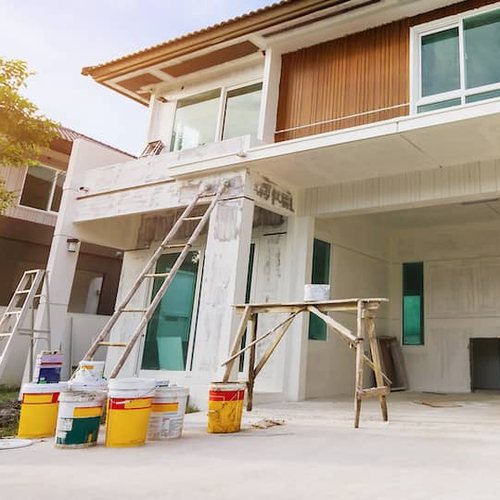
If it feels like an uphill battle to fix and maintain your home, you’re not alone. Across the country, Americans spend thousands of dollars on home repair – and for many homeowners, the repairs that matter most are also the ones that can eat into a budget.
But you may not have to cover the bill alone. Federal government programs – alongside state and local assistance – help fund home improvement grants for those most in need. These grants aren’t like home loans; you won’t ever have to pay them back. Home renovation grants are especially worth exploring if you have a fixed or limited income, live in a rural area, or are part of a priority population.
Some grants can even be combined with other loans or financing, giving you more flexibility. You may even be able to deduct the cost of some home improvements on your taxes. Below, we’ll cover what kind of home improvement grants are available, what they’re for, and who is eligible to apply.
Key takeaways:
- Usually certain homeowners with the greatest financial need qualify for home improvement grants.
- These grants are provided through federal programs, but most state and local governments offer programs as well.
- Don't limit yourself to one grant – look at every program you may qualify for, since some can be combined with other grants or financing.
What are home improvement grants?
Home renovation grants provide money to help you update the house you live in. These grants are reserved for homeowners in need, with funding aimed at making homes safer, healthier, or more accessible, and don’t cover luxury renovations like swimming pools.
Federal, state, and local governments back several home improvement grant programs, also known as home repair grants, to help underserved communities. But these grants aren’t for everyone. You’ll need to meet strict eligibility requirements, and funds are limited and competitive. Researching programs early and planning ahead can give you a better shot at receiving assistance.
See what you qualify for
House renovation grants: At a glance
Grant programs vary widely in what they cover, how much you can receive, and who qualifies. Here's a quick overview of the most common options:
|
Type of grant |
Possible award amount |
What it covers |
Who's eligible |
|
HOME Investment Partnerships Program |
Varies by local program |
● Repair, rehabilitation, or reconstruction of an owner-occupied home |
● Homeowners with income at or below 80% of the area’s median income ● The home is used as a primary residence |
|
Section 504 home repair program |
$10,000, or $15,000 in a declared disaster area |
● Repairing or modernizing home ● Replacing or fixing essential features ● Removing health or safety issues |
● Live in a rural area ● Aged 62 or older ● Family income at or below 50% of the area's median income ● Unable to obtain or afford credit from other lenders |
|
Native American ousing Improvement Program (HIP) |
$7,500 for fixing health and safety issues, $60,000 for fixing building code issues |
● Fixing health and safety issues ● Meeting building code standards. ● Obtaining replacement or new housing |
● Member of a federally recognized Native American Tribe or an Alaskan Native ● Live in an approved Tribal service area ● Meet low income thresholds |
|
VA Specially Adapted Housing (SAH) grant |
$126,526 |
● Buying a home ● Building a home ● Improving a home |
● Veterans who own or will own home ● Qualifying disability due to service |
|
VA Special Home Adaptation (SHA) grant |
$25,350 |
● Buying a home ● Building a home ● Improving a home |
● Veteran or a family member on their behalf who owns or will own a home. ● Qualifying disability due to service |
|
Temporary Residence Adaptation grant |
$50,961 for an SAH grant, $9,100 for an SHA grant |
● Improving a temporary home |
● Veteran that is temporarily staying in a family member’s home that doesn’t accommodate disability needs ● SAH or SHA grant qualified |
Take the first step toward the right mortgage
Apply online for expert recommendations with real interest rates and payments
Where to find government grants for home improvement
Most home renovation grants come from government sources, but there are also private grants from nonprofits and nongovernmental organizations (NGOs) that can be discovered within local communities, online, or through specific websites.
These are a few ways of finding available home improvement grants:
- HUD website: The Department of Housing and Urban Development has an ongoing database of federal housing assistance programs.
- Department of Veterans Affairs offices: VA representatives can walk veterans through their options in person.
- Local nonprofits: Community organizations often have both state and locally funded grant programs available.
- Community newspapers and bulletins: Smaller, local grants are sometimes only advertised in qualifying neighborhoods.
- Regional government websites: Many states, counties, and cities run their own home improvement assistance programs beyond federally funded grants.
- Social media: Nonprofit and government organizations are increasingly announcing grant opportunities through their social channels.
Federal home improvement grants
Federal home repair grants are funded and managed at the national level, while state grants are run by individual states and usually target more specific local needs. The biggest difference you'll likely encounter between the two: federal programs tend to have stricter criteria and require much more paperwork.
While state home improvement grants vary by where you live, the federal programs share requirements nationally
HOME Investment Partnerships Program
The HOME Investment Partnerships Program is run by HUD. It gives money to state and local governments, which may work with nonprofits, to help create affordable home renovation and rehabilitation opportunities for lower-income households. Homeowners don't apply to HUD directly, but instead apply through the city, county, or state.
How the money can be used
- Home repairs or rehabilitation on a primary residence
- Bringing an owner-occupied house up to local code
- Essential improvements
How to qualify
Eligibility depends on the program and where you live, but generally for renovation grants you must:
- Own and live in the home as your main residence
- Have a lower household income – at or below 80% of the local median income
- Make sure the home’s value after repairs stays within the HUD’s local price limits
Section 504 home repair program
The Section 504 Home Repair Program helps rural homeowners pay for important home repairs. Backed by the USDA, it offers grants of up to $10,000 for homeowners who are low income, meet the age requirements, and cannot afford to repay an entire loan. Unlike the Home Repair Program loan, which lends low-interest funds to applicants age 18 and older, only senior adults qualify for the home repair grant.
How the money can be used
- Removing health or safety hazards
- Making the home more accessible for residents
- Improving safety and livability
How to qualify
- Be a U.S. citizen or legal permanent resident
- Be at least 62 years old and unable to repay a loan
- Own and live in the home
- Live in a rural area
- Have a very low income for your area
- Be unable to get affordable credit elsewhere
Native American Housing Improvement Program
The Housing Improvement Program (HIP) helps eligible members of federally recognized Tribes pay for needed home repairs or housing. Run by the Bureau of Indian Affairs, the program offers up to $7,500 for health and safety repairs and up to $60,000 for bringing a home up to code. In some cases, it may also help pay for new, more suitable living arrangements.
How the money can be used
- Fix health and safety hazards
- Make repairs or renovations to meet building codes
- Get replacement or new housing
How to qualify
- Be a member of a federally recognized Tribe or be an Alaska Native
- Live in an approved Tribal service area
- Have income at or below the program’s limit
- Live in housing that does not meet livability standards
- Be unable to get other housing assistance
- Have not received your current housing through another federal housing program
Weatherization Assistance Program
The Weatherization Assistance Program (WAP) is geared toward low-income households and aims to improve energy efficiency in homes. Run by the U.S. Department of Energy and distributed through local agencies, the grant can help lower heating, cooling, and energy costs while improving long-term comfort and safety.
How the money can be used
- Add insulation and seal air leaks
- Repair or replace heating and cooling systems
- Add weatherstripping or caulking
- Install energy-efficient lighting or appliances
- Fix health and safety issues related to weatherization
How to qualify
Available services and requirements can differ depending on where you live, so contact your local WAP agency to check your eligibility and what’s offered in your area. Usually, the program requires you to:
- Have a lower household income (200% at or below poverty level), or 60% of your state’s median income
- Own or rent your home
- Get landlord approval for modification if you rent
- Not have received WAP services in the past 15 years
Home improvement grants for seniors
The Older Americans Act of 1965 was started to help older adults stay healthy, independent, and supported as they age. Through the act, federal programs were formed that fund local services for seniors, including help with housing needs.
Some home improvement grants for seniors are designed to make homes safer and easier to live in. These programs can help pay for accessibility updates, safety modifications, or needed repairs, so older homeowners can stay in their homes longer. Eligibility depends on age, income, and the type of repair or improvement you need.
To find programs near you, start with the Administration for Community Living’s Eldercare Locator or contact your local Area Agency on Aging. These offices can help connect you with more senior-focused grants and other available resources.
Home improvement grants for veterans
Veterans and active-duty service members might need special housing requirements due to a service-related disability. The Department of Veterans Affairs has grants available that help you buy, build, or update a home so it accommodates your needs. Depending on the program and your situation, grant amounts can be large, sometimes reaching well into the six figures, and you may be eligible for multiple grants.
VA Specially Adapted Housing (SAH) grant
The Specially Adapted Housing (SAH) grant gives up to $126,526 to veterans and service members with severe service-connected disabilities to buy, build, or update a home to meet their needs – like wider doorways or access ramps. The grant can be used up to six times, as long as you stay within the total limit.1
How the money can be used
- Buy an adapted home
- Build an adapted home
- Modify a home you already own or plan to own
How to qualify
- Own or plan to own the home
- Have a qualifying service-connected disability: such as loss of more than one limb or their use; severe burns; or blindness in both eyes
VA Special Home Adaptation (SHA) grant
Similarly, veterans and active service members that need certain accommodations in their home can apply for up to $25,350 in funds through the Special Home Adaption (SHA) grant. The money can be used to improve your current or soon-to-be permanent home to help make it a better long-term living situation.
How the money can be used
- Buy an adapted home
- Build an adapted home
- Modify a home you or a family member owns or plans to own
How to qualify
- Have a qualifying service-connected disability, like breathing restrictions or loss of use of your hands
- Use the grant for a home you plan to live in long term
Temporary Residence Adaptation grant
The Temporary Residence Adaptation (TRA) grant helps veterans who are temporarily living in a family member's home that doesn't meet their needs. If you're already eligible for an SAH or SHA grant, you may be able to use TRA funds to cover modifications to that home.
- If you qualify for an SAH grant: up to $50,961 in funding
- If you qualify for an SHA grant: up to $9,100 in funding
Additional financing for home improvements
Grants are a great place to start, but they don't always cover the full cost of a renovation. Some home improvement grants can be paired with low-interest loans, local assistance programs, or personal savings to cover repair costs that go beyond the grant amount. Other options might be refinancing to renovate or using your home’s equity to fund home repairs and improvements.
Cash-out refinance
A cash-out refinance2 replaces your current mortgage with a new, larger loan, then you receive the difference in cash. That money can be used for renovations, repairs, or other upgrades to your home.
Because it replaces your existing mortgage instead of adding a second loan, you’ll only have one monthly payment to manage. This can make a cash-out refinance simpler than a second mortgage or home equity line of credit, especially if you have gained equity in your home. Equity is an increase in your home’s value – whether through market conditions, renovations, or other notable features – minus what you still owe on your mortgage.
A home equity calculator can help you estimate how much equity you might have, which can give you a better sense of whether a cash-out refinance could be an option for your project.
HELOCS and home equity loans
Both a home equity line of credit and a home equity loan let you borrow against the value you've built in your house and can be used to fund renovations. The main difference between them is how you access and repay the funds.
A HELOC works more like a credit card. You can take out funds as needed during a set period of time, with variable interest rates on what you borrow. This flexibility can be useful for renovation projects that might be ongoing or have unpredictable costs. A home equity loan, on the other hand, gives you a lump sum upfront at a fixed interest rate, with predictable monthly payments over the life of the loan. It can be a better fit if you know exactly how much your project will cost.
Both options add a second mortgage to your existing loan, meaning you'll carry two monthly payments. While Rocket Mortgage does not currently carry HELOCs, we do offer Home Equity Loans for qualified borrowers.3
The bottom line: Home improvement grants can help lower renovation costs
Home improvement grants can help homeowners – especially those with limited income, disabilities, or in underserved communities – pay for repairs that make their homes safer, more functional, and more livable. From federal programs like the HOME Investment Partnerships Program and Section 504 to VA grants and local assistance programs, there are plenty of funding options available to those in need.
Make sure to start your search early, review each program’s eligibility rules, and be aware if grant funds can be combined with other financing. If grants don’t cover the full cost of your project, options like a home equity loan, HELOC, or cash-out refinance may be able to help fill the gap – and Rocket Mortgage can help you compare options to find a financing path that works with your renovation goals.
1Rocket Mortgage is a VA-approved lender, not endorsed or sponsored by the Dept. of Veterans Affairs or any government agency.
2Refinancing may increase finance charges over the life of the loan.
3Home Equity Loan Product is a second standalone lien and may not be used for piggyback transactions. Valid for loan amounts between $45,000.00 and $500,000.00 (minimum loan amount for properties located in Michigan is $10,000.00). Not available on Ameriprise products. Additional restrictions, terms, and conditions apply. Must meet qualification requirements. This is not a commitment to lend.
Rocket Mortgage is a trademark of Rocket Mortgage, LLC or its affiliates.

Ashleigh Potter
Ashleigh Potter is a PNW-based content writer at Rocket Mortgage and Redfin with more than five years of experience in digital marketing, content, and editorial strategy. She aims to help readers understand the nitty-gritty of home buying, selling, and lending – so big topics feel a little less overwhelming.
Related resources

8-minute read
VA housing grants for disabled veterans
VA housing grants can provide nonrepayable financial help to make homes more accessible for disabled veterans. Learn more about how these programs work.
Read more

8-minute read
How much does it cost to renovate a house?
The amount it costs to remodel a house can vary depending on the scale of the project. Learn the average costs associated with various kinds of remodels.
Read more

7-minute read
A guide for understanding home improvement loans
Home improvement loans can help you finance anything from a few cosmetic changes to a major renovation. Figure out what loan option is right for you.
Read more