FHA commercial loans: Rules, uses, and eligible properties
Contributed by Sarah Henseler
Updated Sep 19, 2026
•9-minute read

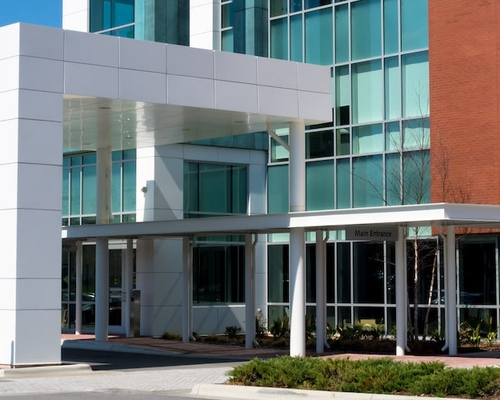
Borrowers typically use loans insured by the Federal Housing Administration (FHA) to finance primary residential homes.1 Because standard FHA loans allow down payments as low as 3.5% for borrowers with credit scores of 580 or higher, they’re a mainstay for first-time home buyers. However, business owners and investors often wonder if FHA commercial loans are available to finance commercial real estate.
While the FHA does not offer mortgages for purely commercial properties like standalone office buildings or retail strip malls, you can use FHA financing for properties with commercial elements if specific residential and zoning rules are met. Additionally, HUD’s Office of Multifamily Housing programs provide FHA-insured loans for larger residential rental developments and healthcare facilities. Understanding these program distinctions and guidelines can help you choose the right path for your property investment.
Key takeaways:
- FHA-insured loans can finance mixed-use or commercial properties, provided the real estate meets strict residential space requirements and local zoning laws.
- For two- to four-unit mixed-use properties, borrowers must occupy one unit as their primary residence for at least 12 months.
- Larger commercial and multifamily properties fall under HUD’s Office of Multifamily Housing programs and do not require owner occupancy.
What is an FHA commercial loan?
The phrase "FHA commercial loan" can be slightly misleading because the FHA does not issue traditional business loans or finance purely commercial real estate. Instead, this term generally refers to FHA-insured mortgages used to purchase mixed-use properties or larger multifamily homes and healthcare properties.
Under FHA guidelines, any property financed with standard residential loan programs must include a primary residential component. For commercial projects without a residential aspect, borrowers must look outside single-family residential lending and explore institutional HUD multifamily financing or non-FHA commercial business loans.
FHA commercial loans vs. standard FHA loans
Standard FHA single-family loans are designed for one- to four-unit residential properties where the borrower intends to live in one of the units as a primary residence. These loans follow familiar underwriting rules, such as standard debt-to-income (DTI) ratio limits and flexible credit requirements.
When a one- to four-unit property includes commercial space (such as a ground-floor retail shop), it becomes a mixed-use property. While it still utilizes the single-family FHA loan framework, it must meet extra criteria, including square footage limits for the commercial space and income verification rules to ensure the commercial use does not undermine the property's primary function as housing.
FHA commercial loans vs. business loans
It’s crucial to distinguish real estate-backed FHA loans from standard commercial business loans. Business loans, such as those offered through private banks or guaranteed by the Small Business Administration (SBA), provide working capital, equipment financing, or funds to purchase purely commercial real estate like warehouses, offices, and standalone retail centers.
In contrast, FHA-insured financing always revolves around residential housing or specialized healthcare accommodations. An FHA-insured loan cannot be used to fund business startup costs, inventory, or commercial property that lacks residential units.
See what you qualify for
FHA commercial property loan basics
Navigating FHA-insured commercial and mixed-use financing requires understanding how government mortgage insurance works and how private lenders participate.
How FHA loan insurance works
The FHA is not a direct lender; it does not originate, review, or fund loans directly to consumers. Instead, private mortgage lenders originate and service the loans, while the FHA provides mortgage insurance.
This government-backed insurance protects the private lender against financial loss if a borrower defaults on their mortgage payments. Because of this safety net, lenders can offer more accessible qualifying terms, lower down payment options, and competitive fixed interest rates.
Owner-occupancy rules for smaller multifamily properties
Many real estate investors use single-family FHA loans to buy two- to four-unit residential properties (duplexes, triplexes, or quadplexes). FHA rules allow buyers to classify properties with up to four units under standard residential guidelines.
To qualify, the borrower must live in one of the residential units as their primary residence for at least 12 months, moving in within 60 days of closing. The borrower can rent out the remaining units to generate rental income, making this a popular real estate investment strategy.
Down payment, credit score, rates and mortgage insurance basics
Borrowers applying for FHA-insured loans on one- to four-unit properties can take advantage of manageable up-front credit requirements:
- Down payment and credit score: A borrower with a minimum FICO® Score of 580 can qualify for a down payment as low as 3.5%. Borrowers with credit scores between 500 and 579 generally require a 10% down payment.2
- Interest rates: FHA loan rates are typically competitive with conventional loans because the government guarantee reduces lender risk.
- Mortgage insurance premium (MIP): FHA loans require both an upfront mortgage insurance premium (UFMIP), which can usually be rolled into the total loan amount – and an annual MIP paid in monthly installments as part of the mortgage payment.
Take the first step toward the right mortgage
Apply online for expert recommendations with real interest rates and payments
FHA loan requirements for mixed-use properties
Buying a mixed-use building with an FHA loan is a practical option for business owners who want to live above their store or investors seeking multiuse real estate. However, HUD sets clear limits on how the space is configured.
The 51% residential-use rule
The cornerstone requirement for financing a mixed-use property with an FHA loan is the floor area ratio. At least 51% of the building’s total square footage must be dedicated exclusively to residential space.
The remaining floor area (up to 49%) can be used for commercial purposes, provided the commercial activity does not create health, safety, or noise hazards for the residents.
Primary residence and occupancy requirements
Just like single-family residential purchases, buying a mixed-use property with standard FHA financing requires owner occupancy.
- You must intend to occupy one of the residential units as your primary residence.
- You must move into the unit within 60 days of the closing date.
- You must maintain primary residency in that unit for a minimum of 1 year (12 months) before converting the property into a full rental investment.
The FHA self-sufficiency test
When financing a three-unit or four-unit property (including mixed-use buildings), the FHA applies a financial safety screening called the self-sufficiency test.
This test requires that 75% of the total estimated fair market rental income from all units, including the unit occupied by the owner, must equal or exceed the total monthly mortgage payment (principal, interest, taxes, and insurance, or PITI). If the property’s projected rents fail this calculation, the loan cannot be approved under FHA guidelines.
How to buy a mixed-use property with an FHA loan
Purchasing a mixed-use building requires balancing standard home-buying preparation with commercial property due diligence.
Prepare for a two- to four-unit mixed-use property
Before making an offer on a mixed-use property, take these preparatory steps:
- Verify local zoning laws: Ensure local municipal zoning permits both commercial and residential operations on the parcel.
- Confirm square footage ratios: Measure or request floor plans to confirm that residential living quarters account for at least 51% of the total usable space.
- Review existing leases: Examine current commercial and residential lease agreements to confirm rental income history and lease terms.
- Get preapproved: Work with an approved mortgage lender to verify your credit score, income, and debt-to-income ratio.
Example of an FHA mixed-use property
Consider a two-story building in a town center. The ground floor features a 1,200-square-foot retail boutique, while the second floor consists of two residential apartments totaling 1,800 square feet.
- Total floor area: 3,000 square feet
- Residential ratio: 1,800 sq. ft. ÷ 3,000 sq. ft. = 60% residential space
Because 60% of the building is residential, it satisfies the 51% residential-use requirement. If the buyer moves into one of the upstairs apartments, uses the ground-floor space for their business (or leases it to a commercial tenant), and passes standard credit and income underwriting, the transaction can qualify for FHA financing.
Can you use an FHA 203(k) loan to rehab mixed-use property?
Yes, buyers can utilize an FHA 203(k) rehabilitation loan to purchase and renovate an eligible mixed-use property. An FHA 203(k) loan combines the purchase price of the property and the cost of necessary repairs or modernization into a single mortgage.
However, FHA 203(k) funds can only be used to rehabilitate the residential portions of the building or address structural components (such as a roof or HVAC system) that support the whole structure. 203(k) loan proceeds cannot be used for commercial-only buildouts or specialized commercial equipment additions.
Commercial properties that qualify for FHA financing
For large-scale commercial real estate investors, nonprofit organizations, and care providers, HUD administers specialized FHA commercial and multifamily programs through its Office of Multifamily Housing Programs and Office of Healthcare Programs. Unlike small multiunit properties, these institutional loan programs do not require owner occupancy.
Healthcare facilities
Administered under Section 232 of the National Housing Act, HUD provides FHA mortgage insurance for residential care facilities. Eligible property types include nursing homes, assisted living facilities, intermediate care facilities, and board-and-care homes.
This program allows both for-profit and nonprofit borrowers to finance the construction, substantial rehabilitation, acquisition, or refinancing of facilities containing 20 or more beds.
Existing multifamily rental housing
Under Section 207 and Section 223(f), the FHA insures mortgages for purchasing or refinancing existing multifamily rental properties.
- Properties must contain at least five residential units with complete kitchen and bath facilities.
- Loans are fully amortizing with long terms of up to 35 years (or up to 75% of the property’s remaining economic life).
- These programs offer high loan-to-value ratios, making them popular among commercial multifamily investors.
Rental and cooperative housing
Through Section 221(d)(3) and Section 221(d)(4), the FHA insures mortgage loans for the ground-up construction or substantial rehabilitation of multifamily rental and cooperative housing.
Section 221(d)(4) is widely used by commercial developers because it allows up to 85% loan-to-cost (LTC) financing for profit-motivated sponsors and offers fixed-rate construction-to-permanent loans with terms up to 40 years plus the construction period.
Rental housing for elderly residents
The Section 231 program specifically insures mortgages used to build or rehabilitate multifamily rental housing designed for elderly residents (ages 62 and older) and persons with disabilities. Properties financed under Section 231 must consist of at least five residential units and can be owned by for-profit or nonprofit entities.
Nonprofit elderly and special needs housing
The FHA and HUD also provide capital advances and supportive housing programs tailored to non-profit entities:
- Section 202: Provides capital advances to finance supportive housing projects specifically designed for low-income elderly individuals.
- Section 811: Offers funding to develop affordable, accessible rental housing for low-income adults with severe disabilities.
How the FHA commercial loan application process works
Securing an FHA-insured loan for a commercial or multifamily property involves specific steps and rigorous regulatory reviews.
Working with FHA commercial loans lenders
To apply for institutional HUD multifamily or healthcare loans, borrowers must work with specialized HUD-approved MAP (Multifamily Accelerated Processing) lenders. These approved lenders evaluate project proposals, prepare underwriting submissions, and coordinate directly with local HUD regional offices.
For smaller multiunit mixed-use properties, buyers can work with standard FHA-approved residential mortgage lenders.
Documentation, compliance reviews, and closing
Applying for commercial-scale FHA financing requires an extensive documentation phase, including:
- Detailed financial statements and operational history for the last 3 years
- Environmental Site Assessments (Phase I ESA) to verify environmental compliance
- Comprehensive architectural and engineering reviews for construction or rehab projects
- Full commercial real estate appraisals and market demand studies
Once HUD completes its compliance review and issues a firm commitment, the lender and borrower finalize loan docs and proceed to closing.
FAQ
Here are the answers to some common questions about FHA loans intended for a commercial property.
Can you get an FHA loan for commercial?
You cannot get an FHA loan for a purely commercial property like an office building, retail store, or industrial warehouse. However, you can use an FHA loan for mixed-use properties with a residential component or specialized multifamily and healthcare facilities.
What disqualifies you from an FHA loan?
Factors that can disqualify a borrower from an FHA loan include a credit score below 500, delinquent federal debt (such as unpaid taxes or defaulted student loans), a debt-to-income ratio that exceeds program limits, or a lack of verifiable income. For mixed-use properties, a building with less than 51% residential space will also fail to qualify.
Can FHA commercial loans be used for mixed-use properties?
Yes. FHA loans can be used to buy mixed-use properties as long as at least 51% of the building’s gross floor area is dedicated to residential space and the buyer occupies one of the residential units as their primary residence for at least 12 months.
What properties qualify for FHA commercial financing?
Qualifying properties include two- to four-unit mixed-use buildings (with owner occupancy), existing five-plus unit apartment buildings, newly constructed or renovated multifamily complexes, assisted living centers, nursing homes, and senior housing facilities.
What are the benefits of using an FHA loan for commercial real estate?
Key benefits include lower down payment requirements, competitive fixed interest rates, long repayment terms (up to 35 or 40 years for HUD multifamily loans), and non-recourse debt options for institutional multifamily developments.
Is an FHA commercial loan the same as a business loan?
No. Business loans provide funds for general commercial activities, inventory, or non-residential commercial real estate. FHA commercial and multifamily loans are mortgage instruments tied strictly to real estate with residential units or healthcare housing.
The bottom line: FHA commercial loans come with caveats
While FHA financing is not available for purely commercial real estate, it provides flexible opportunities for mixed-use properties, multifamily developments, and healthcare facilities. If you plan to buy a small mixed-use building, living in one unit while running a business or renting out commercial space below allows you to leverage residential FHA terms. For larger commercial residential endeavors, HUD’s Office of Multifamily Housing programs offer long-term financing options.
Always confirm property eligibility, zoning rules, and floor ratios before making an offer. Ready to take the next step toward your property goals? You can start an application with Rocket Mortgage today to explore your home financing options.
1Rocket Mortgage is not acting on behalf of FHA or HUD.
2To qualify for this offer, you must meet all standard FHA eligibility requirements. In addition, your total mortgage payment, including taxes and insurance, cannot exceed 38% of your income, your debt-to-income (DTI) ratio cannot exceed 45%, and you must have 12 months of verifiable housing history immediately prior to your application, no late payments 30 days or greater in the last 12-months, and no derogatory marks on your credit report. Not available on jumbo loans. Asset statements may be needed, no more than 1 day of non-sufficient fund fees are allowed in the most recent 2 months prior to application. Additional restrictions/conditions may apply.
Rocket Mortgage is a trademark of Rocket Mortgage, LLC or its affiliates.

Holly Hooper
Holly Hooper is a content marketing specialist at Redfin dedicated to making the home-buying and selling process easier to understand. She specializes in turning complex real estate concepts into clear, accessible guides that help readers feel supported at every step. As a military spouse who moves every few years, Holly has lived through countless transitions and brings a unique perspective on relocation, finding community, and learning new markets quickly. She’s passionate about creating content that meets people where they are—whether they’re first-time buyers, relocating families, or anyone navigating a big move.
Related resources
6-minute read
FHA-approved condos: The approval process and where to find them
Learn what FHA-approved condos are, how to find this less common type of homes, and how to secure FHA financing as you begin your condo buying process.
Read more

10-minute read
FHA multifamily loans: Requirements, limits and options
Learn how FHA multifamily loans work for 2- to 4-unit homes, including occupancy rules, loan limits, down payments and alternatives. Explore your options.
Read more

4-minute read
Can FHA loans be used for investment properties?
Want to use an FHA loan for investment property? Occupancy requirements for FHA loans can make it challenging. Learn how to invest with an FHA loan.
Read more