Jumbo loan Massachusetts: 2026 limits and requirements
Contributed by Tom McLean
Updated Sep 4, 2026
•9-minute read

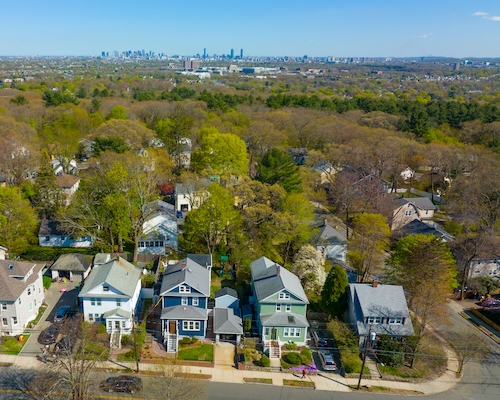
You need a jumbo loan if you’re looking to buy a home in Massachusetts and need to borrow more than the conforming loan limit. A jumbo mortgage has different qualifications to meet than other loan types because you’re borrowing more money. Learn more about 2026 jumbo loan limits in Massachusetts, the difference between jumbo and conforming mortgages, and what you need to qualify for one.
Key takeaways:
- A jumbo loan in Massachusetts is a conventional mortgage that exceeds the 2026 FHFA conforming loan limit for the county where the home is located.
- Conforming limits in Massachusetts range from $832,750 up to $1,249,125.
- Qualifying for a jumbo loan requires stronger financial credentials, including credit scores around 680 or higher, cash reserves, and documented income stability.
What is a jumbo loan in Massachusetts?
A jumbo loan is a conventional mortgage that exceeds the conforming loan limits established annually by the Federal Housing Finance Agency (FHFA).
The conforming loan limit varies based on how a county’s median home value compares with the baseline conforming loan limit. Counties with a higher average home cost have a higher limit. High-cost counties in Massachusetts include Dukes (Martha’s Vineyard), Suffolk (Boston), Middlesex (Cambridge, Lowell, Newton), Nantucket, Norfolk (Brookline, Quincy), Essex (Salem, Lynn), and Plymouth (Brockton).
Lenders cannot sell nonconforming loans, including jumbo mortgages, to Fannie Mae or Freddie Mac, and take more risk in making these loans. As a result, lenders have stricter underwriting requirements for jumbo loans. Lenders will assess your credit, income, existing debt, and liquid assets to ensure you can afford the payments on a jumbo loan.
Jumbo Smart loan from Rocket Mortgage
The Rocket Mortgage Jumbo Smart loan can help borrowers buy or refinance a one- or two-unit home with a loan of up to a maximum of $3.5 million in all states.
For loan amounts exceeding $3.5 million, Super Jumbo loans are available up to $5 million.
See what you qualify for
Conforming loan limits in Massachusetts for 2026
Massachusetts' 2026 conforming loan limits vary by county. The baseline conforming loan limit that applies in most counties is $832,750 for a one-unit home. High-cost counties can have a limit of up to $1,249,125 for a one-unit home.
You only need a jumbo loan if you’re borrowing more than the conforming loan limit.
Buyers interested in properties with multiple dwelling units should recognize that conforming limits increase progressively for two-, three-, and four-unit homes.
Here are the conforming loan limits in each of Massachusetts’ 14 counties.
|
County Name |
One-Unit Limit |
Two-Unit Limit |
Three-Unit Limit |
Four-Unit Limit |
|
Barnstable |
$832,750 |
$1,066,250 |
$1,288,800 |
$1,601,750 |
|
Berkshire |
$832,750 |
$1,066,250 |
$1,288,800 |
$1,601,750 |
|
Bristol |
$832,750 |
$1,066,250 |
$1,288,800 |
$1,601,750 |
|
Dukes |
$1,249,125 |
$1,599,375 |
$1,933,200 |
$2,402,625 |
|
Essex |
$962,550 |
$1,232,250 |
$1,489,500 |
$1,851,100 |
|
Franklin |
$832,750 |
$1,066,250 |
$1,288,800 |
$1,601,750 |
|
Hampden |
$832,750 |
$1,066,250 |
$1,288,800 |
$1,601,750 |
|
Hampshire |
$832,750 |
$1,066,250 |
$1,288,800 |
$1,601,750 |
|
Middlesex |
$962,550 |
$1,232,250 |
$1,489,500 |
$1,851,100 |
|
Nantucket |
$1,249,125 |
$1,599,375 |
$1,933,200 |
$2,402,625 |
|
Norfolk |
$962,550 |
$1,232,250 |
$1,489,500 |
$1,851,100 |
|
Plymouth |
$962,550 |
$1,232,250 |
$1,489,500 |
$1,851,100 |
|
Suffolk |
$962,550 |
$1,232,250 |
$1,489,500 |
$1,851,100 |
|
Worcester |
$832,750 |
$1,066,250 |
$1,288,800 |
$1,601,750 |
Massachusetts housing market at a glance
Massachusetts has one of the nation's most competitive housing markets, with sustained appreciation in metro areas. June 2026 data shows Massachusetts home values climbed 1.2% year over year statewide. Boston suburbs like Brookline recorded appreciation exceeding 18%.
This robust price growth pushes more properties beyond conforming limits, particularly in communities with strong schools, employment centers, and cultural amenities.
Take the first step toward the right mortgage
Apply online for expert recommendations with real interest rates and payments
How to know if you need a jumbo loan in Massachusetts
Determining whether you need a jumbo loan involves a straightforward calculation based on property location, purchase price, down payment, and unit count.
Find your county limit
Start by checking the specific 2026 conforming loan threshold for the county where the property is located. For instance, a home in Worcester has an $832,750 single-unit limit, whereas a home in Plymouth carries a $962,550 threshold.
The FHFA offers a conforming loan limit map displaying exact thresholds for each Massachusetts county. This resource helps buyers compare properties in different counties.
Compare your loan amount
Calculate your total required mortgage amount by taking the contract purchase price and subtracting your planned cash down payment.
For example:
- Scenario A (Conforming): You buy a single-family home in Middlesex County for $1,100,000 and put down 15% ($165,000). Your total loan amount is $935,000. Because $935,000 is lower than Middlesex County's $962,550 limit, you qualify for a conforming loan.
- Scenario B (Jumbo): You buy the same $1,100,000 home in Middlesex County with a 10% down payment ($110,000), leaving a loan amount of $990,000. Because $990,000 exceeds the $962,550 county cap, you need a jumbo mortgage.
Account for the number of units
If you are buying a multifamily property, make sure to evaluate the higher threshold assigned to multiunit structures.
A duplex purchase in Boston (Suffolk County) with a $1,100,000 loan amount falls below the two-unit conforming cap of $1,232,250, keeping you in conforming territory even though a $1,100,000 loan for a single-family home in Suffolk County would be jumbo.
Find out how much you can afford
Your approval amount will give you an idea of the closing costs you’ll pay
Requirements for a jumbo loan in Massachusetts
To qualify for a jumbo loan, you’ll need to meet stricter eligibility standards compared to conventional mortgages. While exact eligibility criteria will vary depending on the lender, here are some benchmarks you can expect.
Property type
Jumbo loans finance diverse property types, including primary residences, vacation homes, and investment properties. Qualification standards may shift based on property usage, but borrowers generally maintain flexibility across residential categories.
Jumbo Smart loans from Rocket Mortgage can be used to finance one- and two-unit properties.
Credit score
Credit history is a significant factor in determining whether you’ll be issued a jumbo loan approval and the interest rate you’re offered. Most lenders require a credit score of at least 680, though you may need a credit score of at least 740 to get a competitive mortgage interest rate.
Rocket Mortgage requires a credit score of at least 680 for a loan up to $2 million, and a credit score of 700 for a loan of up to $3.5 million.
Down payment
Down payment requirements for jumbo loans typically fall within the 10% - 20% range. Your specific requirement can depend on your total loan size, property type, and credit score.
Rocket Mortgage requires a down payment of more than 10% for loans up to $2 million and 20% if you’re borrowing up to $3.5 million.
Debt-to-income ratio (DTI)
Your DTI is a figure that reflects how much of your income is needed to pay off your total debts. It’s calculated by adding up your minimum monthly mortgage payments and dividing that number by your gross monthly income.
Because jumbo loans involve larger monthly payments, this metric helps lenders verify your income can adequately cover the payments.
Lenders generally prefer a DTI of less than 43% to qualify for a jumbo loan.
Rocket Mortgage has a maximum DTI of 50% for Jumbo Smart loans.
Steady income
Lenders need to confirm that you have consistent, provable income that will give you the funds you need to keep up with your mortgage payments. Standard documentation includes W-2 statements, recent pay stubs, and income tax returns from the past 2 years. Self-employed applicants, commission-based professionals, or business owners must supply profit-and-loss statements and business tax filings to demonstrate stability.
Cash reserves
Jumbo lenders generally require post-closing cash reserves – liquid assets remaining in your accounts after closing costs and down payments are settled. These reserves guarantee you can navigate unexpected financial disruptions while staying current on mortgage payments.
Jumbo loan programs typically require borrowers to preserve substantial cash reserves after closing, often 12 months or more of mortgage payments, with exact amounts determined by loan size and lender guidelines. Eligible reserves can include liquid savings, investment accounts, retirement funds, or a combination of assets meeting liquidity standards.
For Jumbo Smart borrowers, reserve requirements are generally scaled based on the loan amount.
|
Jumbo Smart loan cash reserves minimum |
|
|
Loan amount |
Cash reserves minimum |
|
$1 million or less |
6 months |
|
$1,000,001 - $2 million |
12 months |
Jumbo loan rates and loan options in Massachusetts
Jumbo financing can come in several different loan structures to match your financial strategy and how long you plan on owning the home.
Checking today's mortgage rates in Massachusetts regularly helps you track market movements when preparing your application.
Fixed-rate jumbo loans
A fixed-rate jumbo mortgage maintains a constant mortgage rate and principal-and-interest payment across the entire loan term, typically over 15-year or 30-year terms. This structure offers total payment predictability, protecting buyers from increased monthly payments if market rates increase over time.
Adjustable-rate jumbo loans
An adjustable-rate mortgage (ARM) provides a lower introductory interest rate for a fixed period – typically 5, 7, or 10 years. After that, your mortgage rate will adjust once a year based on financial indexes. Once the fixed period ends, your payment will likely increase. Borrowers who intend to sell or refinance before the initial fixed period ends can leverage ARMs for short-term monthly savings.
Jumbo loan refinancing
Massachusetts homeowners with existing jumbo loans can refinance1 to reduce interest costs, change loan terms, or access home equity via a cash-out refinance. Refinancing requires updated property appraisals and asset re-verification. Keep in mind that refinancing can save you money, but it also comes with up-front costs. Whether you’ll save from a refinance will depend on current market rates, your original interest rate, and how long it will take you to break even.
Pros and cons of buying a home with a jumbo loan
Let’s look at some of the pros and cons of buying a home with a jumbo loan.
Pros
Some of the advantages of a jumbo mortgage include:
- Greater purchasing power: Jumbo loans allow you to buy a more expensive home in Massachusetts if the price exceeds the conforming loan limits.
- Attractive interest rates: Well-qualified borrowers may find current Massachusetts jumbo mortgage rates comparable to or occasionally lower than conforming loan rates. Strong credit, stable income, and sufficient reserves can improve pricing.
- No private mortgage insurance (PMI): Many jumbo programs do not require PMI, even with less than 20% down, which may reduce costs compared with conforming loans with mortgage insurance.
- Flexible loan terms: Jumbo loans are available in fixed-rate and adjustable-rate structures and can be used for primary residences, second homes, or investment properties. Some borrowers may also qualify for FHA jumbo or VA jumbo2 options, depending on eligibility.
Cons
Jumbo loans also come with downsides and potential risks to be aware of:
- Stricter eligibility requirements: Jumbo loans involve closer scrutiny of credit, income, and assets. Borrowers with recent credit issues or higher debt levels may need additional time to qualify.
- Higher costs for down payments or closing: Larger loan amounts typically mean higher dollar amounts for down payments and closing costs.
- Large cash reserve requirements: Jumbo programs usually require more cash on hand after closing, which can limit liquidity.
For example, on a $1.5 million home, a 15% down payment equals $225,000. Closing costs ranging from 3% – 6% could add $45,000 to $90,000 in upfront expenses.
Is a jumbo loan right for me?
A jumbo loan may be worth considering if the home you want to purchase exceeds Massachusetts' conforming loan limit for your county. Evaluating the broader financial impact can help determine whether this type of mortgage aligns with your goals.
- How comfortable are you with higher monthly payments? Jumbo loans represent a larger financial commitment, so affordability should feel sustainable beyond lender qualification standards.
- Will the interest rate structure work for you? Jumbo loans are available in both fixed-rate and adjustable-rate options, and the difference in pricing can be more pronounced at higher loan amounts. Reviewing current mortgage rates in Massachusetts can help clarify how each structure fits your budget.
- Can you handle high closing costs on larger loans? While percentages are similar to conforming loans, the total dollar amount for closing costs is higher. Planning ahead can reduce surprises at closing.
- Have you considered the tax implications? Mortgage interest deductions may differ at higher loan balances. A tax professional can help you understand how a jumbo mortgage fits into your overall financial plan.
FAQ
Here are answers to questions about jumbo loan limits in Massachusetts.
Is $400,000 considered a jumbo loan?
No. A $400,000 loan amount is well below the 2026 Massachusetts baseline conforming loan limit of $832,750, making it a standard conforming loan in all Massachusetts counties.
Do you have to put 20% down for a jumbo loan?
No. Many modern jumbo programs allow down payments of 10% or 15% – and occasionally 5% for highly qualified buyers on specific loan balances.
Can I refinance a jumbo loan in Massachusetts?
Yes, homeowners can refinance existing jumbo loans to reduce interest rates, shorten loan terms, or access home equity. Note that refinancing may increase finance charges over the life of the loan.
Are jumbo loans available for second homes or investment properties in Massachusetts?
Yes. Jumbo loans can finance vacation homes on Cape Cod or investment units in Boston. However, lenders may require larger down payments, higher credit scores, or additional cash reserves for non-primary properties.
The bottom line: A jumbo loan may help Massachusetts buyers finance higher-priced homes
Jumbo loans come with higher expectations around credit, income, and reserves, but they also provide access to financing that matches higher-priced homes. With careful planning and a loan structure that aligns with your budget, a jumbo mortgage can be a valuable tool for achieving your homeownership goals in Massachusetts. If you're ready to explore your options, applying for a Jumbo Smart Loan can be a strong next step.
1 Refinancing may increase finance charges over the life of the loan.
2 Rocket Mortgage is a VA-approved lender, not endorsed or sponsored by the Dept. of Veterans Affairs or any government agency.
This article is for informational purposes only and is not intended to provide financial, investment, or tax advice. You should consult a qualified financial or tax professional before making decisions regarding your retirement funds or mortgage.

Rory Arnold
Rory Arnold is a Los Angeles-based writer who has contributed to a variety of publications, including Quicken Loans, LowerMyBills, Ranker, Earth.com and JerseyDigs. He has also been quoted in The Atlantic. Rory received his Bachelor of Science in Media, Culture and Communication from New York University.
Related Resources

8-minute read
How to buy a home in Massachusetts
Are you looking for a house in the Bay State? Buying a home in Massachusetts can be complicated, but the Rocket Mortgage guide is here to walk you through it.
Read more

9-minute read
Jumbo loan limits and requirements for 2026: A guide
If you need to borrow more than the conforming loan limit, you likely need a jumbo loan. Learn more about the 2026 jumbo loan limits and requirements.
Read more

6-minute read
Jumbo loan vs. conventional loan: What's the difference?
Jumbo loans are designed for high-value homes and differ from conventional loans in size, rates and requirements. Find out which loan type fits your needs.
Read more