Is buying a house a good investment?
Contributed by Karen Idelson
Updated Jul 4, 2026
•7-minute read

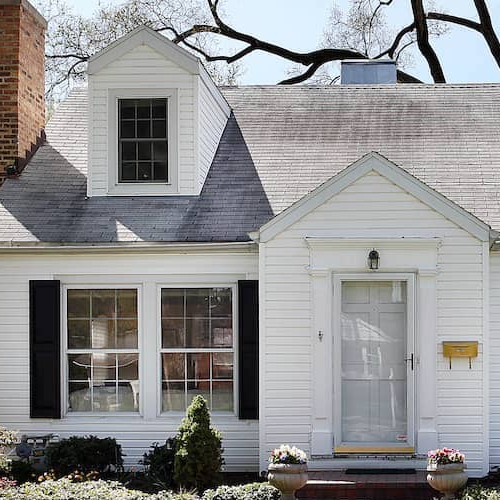
Homeownership has long been considered part of the American dream, but it's important to carefully evaluate whether buying a house is a wise investment that meets your goals. There are several key factors to consider when determining if purchasing a home is a good investment, including the local housing market, your financial situation, and your long-term plans. In this article, we'll explore the pros and cons of homeownership as an investment to help you decide whether becoming a first-time home buyer or a repeat homeowner is the best choice for you.
Why buying a house is a good investment
Homes are valuable assets that you can hold and use for a long time. There are many reasons that buying a house may be a good investment.
Long-term home and equity appreciation
Real estate is valuable, so buying property is one way to acquire a valuable asset. Usually, people use a mortgage to buy a home and make payments toward that mortgage each month, slowly paying it off. In a way, this functions as a sort of forced saving mechanism. Each month you have to pay your mortgage bill, reducing your debt and increasing the amount of equity you have.
However, this only works over the long run. Because of the way loans amortize, early payments go primarily toward paying interest rather than reducing your loan’s balance.
Historically, homes have also increased in value over time. In 1940, the median home in the United States cost $2,938. By 2000, it had increased to $119,600, a massive increase of 3,970%. During that same period, rents rose 2,129% from $27 to $602 per month.
|
Year |
Median Home Value |
Median Monthly Rent |
|
1940 |
$2,938 |
$27 |
|
1950 |
$7,354 |
$42 |
|
1960 |
$11,900 |
$71 |
|
1970 |
$17,000 |
$108 |
|
1980 |
$47,200 |
$243 |
|
1990 |
$79,100 |
$447 |
|
2000 |
$119,600 |
$602 |
See what you qualify for
Keep in mind that no investment is guaranteed, and in many cases housing values have been volatile and fallen. For example, between the beginning of 2007 and the beginning of 2009, the median home sales price fell from nearly $260,000 to less than $210,000.
Money saved on rent
When you buy a home, you still have to make a monthly payment for housing until you pay off your mortgage. However, you effectively get to keep some of that money in the form of equity in your home. If you have a fixed-rate mortgage, you also don’t have to worry about your payment rising in the same way renters can see rent increases.
In 2024, the median rent was $1,325, while the average was $1,523. That same year, the median monthly mortgage payment on a new home was $2,225, but the median for all mortgages was $1,521. The longer you live in your home, the more benefit you see from not having to deal with rent increases.
You can use this rent vs. buy calculator from Rocket Mortgage to help you determine if renting or buying makes more sense for you.
Greater financial stability
Buying a home can provide greater financial stability over the long run. Locking in the cost of housing for up to thirty years by getting a long-term fixed-rate mortgage can be a huge boon. On top of that, homes tend to be appreciating assets that you can leave to heirs or sell in the future, creating generational wealth. However, keep in mind that home equity isn’t particularly liquid, so it can be hard to access that wealth.
The power of homeownership at providing financial stability can be seen in the disparity in wealth between renters and homeowners. In 2022, the typical homeowner’s net worth was $430,000 compared to the average renter’s net worth of just $10,000.
Tax deductions
Another benefit of homeownership comes in the form of homeowner tax deductions. You can deduct many of the costs of homeownership, such as property taxes and mortgage interest, on your federal income taxes. That reduces the amount that you have to pay in tax.
Keep in mind that you must itemize your taxes to be eligible for these deductions, and only about 10% of taxpayers do so.
Lifestyle benefits
Buying a home doesn’t have to be a purely financial decision. It also has lifestyle implications. You may decide to make improvements to increase your home’s value. You might consider buying a home because you want to live in a specific community with a good school system, have space for aging relatives, want a garden you can grow over many years, or for other reasons too.
As you consider the costs of having a home, you may have to decide whether to buy a home or a car first. You may also have to decide whether to pay off debt or save for a house.
Take the first step toward the right mortgage
Apply online for expert recommendations with real interest rates and payments
Why you might not think of a house as a good investment
Buying a home isn’t always a good financial decision, so keep these drawbacks in mind.
Short-term ownership may not build enough equity
In general, mortgage payments are higher than monthly rent payments. In the long run, you come out ahead because some of your payment each month builds equity, but over a short period, you may not build enough equity or increase your home value enough to come out ahead.
It can take ten years or more before buying is a better deal than renting, depending on rents, housing costs, and interest rates. You might be tempted to save up, try to time the market, and buy when homes are cheap to avoid this, but odds are just as good you’ll miss an opportunity and find that prices rise.
Buying and selling properties also comes with costs that can eat into the benefit of homeownership. Expect to pay closing costs, moving fees, and more.
Your lifestyle priorities
Buying a home is a big commitment, and it might not be right depending on your lifestyle and priorities.
For example, renting is a far better choice if you want the flexibility to move to a better apartment or another city. In 2024, renters were more than twice as likely to move when compared to homeowners.
Ongoing costs of home maintenance
When you rent, you can think of your monthly rent bill as the maximum you’ll pay for housing. Your landlord is responsible for repairs and maintenance. A homeowner’s mortgage payment is the minimum they’ll pay because they also have to handle maintenance. Often, homeowners can expect to spend between 1% and 2% of their home’s value for repairs each year, which can add up to thousands of dollars.
Some hidden costs of homeownership include:
- Landscaping/gardening service
- Homeowners insurance
- Property tax
- Repairs
- Appliance replacement
- Routine maintenance
- HOA fees
You prefer urban living where renting is easier
In major cities, renting is often easier than buying a home due to high housing prices and the ability to rent an individual room and have roommates, reducing your costs.
For example, in Boston, the median home is listed at $899,000, while the median rent is $3,400. At 6% interest, assuming a generous 20% down payment and, ignoring property taxes, the mortgage on an $899,000 home would be nearly $1,000 more per month at $4,311.
Why location matters
Where you live also plays a significant role in whether renting or buying is a better choice.
Some things to consider when deciding whether to rent or buy include:
- Local rents and housing values. The closer the typical rent is to the typical mortgage payment, the better buying is.
- Job market. If the local job market is strong or looks to be getting stronger, home values may rise as people move looking for jobs, making buying more appealing than renting. If the market is weakening, renting might be a better choice.
- Population trends. There are only so many homes out there. If the population in an area is still rising, homes will likely get more expensive, making buying a good deal.
For example, Florida has seen significant population increases recently and that is reflected in housing prices, which have risen by 46% in the past five years, more than the national average of 39%.
Should you buy a home?
There is no single answer to whether you should buy a home because it depends on too many factors.
To start with, you should think about whether it’s a good lifestyle choice. Do you even want to own a home and deal with all the associated responsibilities? Are you willing to give up the ease of movement afforded by renting?
If so, you can then start considering the financial aspects. Can you afford a home, including the down payment, closing costs, and monthly mortgage payment? If so, think about your time horizon and do the math to see if you’ll come out ahead by buying as compared to renting. These factors will help you know when to buy a house.
FAQ about investing in a house
Before buying a house, it’s important to consider it from every angle. Keep these questions in mind.
Is buying a house worth it?
Whether buying a house is worth it depends on your goals and finances. Some people love the idea of homeownership while others prefer the flexibility of renting. If you do plan to buy, make sure you have a long enough time horizon to see the financial benefits, such as keeping your housing costs fixed and building equity. Also consider giving yourself enough time to save for a down payment.
Is owning a house a good investment?
Historically, owning a home has been a good investment given a long enough timeline. You can keep your monthly payment fixed by getting a fixed-rate mortgage and build equity while seeing your home’s value appreciate.
Is buying a house a tax write-off?
If you itemize your taxes, which most people don’t, you may be able to write off some of the costs of homeownership on your taxes. These costs include things like property tax and mortgage interest.
Is buying a second house a good investment?
Buying a second home or vacation home may be a good investment. An investment property might also be an especially good investment if you can consistently rent it out. It can be complicated to understand the pros and cons of an investment property vs. a second home, so you need to do your due diligence to figure out if a specific deal has potential to be profitable.
The bottom line
Over the long run, buying a home can be a good financial investment, but homeownership is far more than a simple financial question. Buying a property means accepting several lifestyle changes, including giving up the flexibility to move easily and taking on the responsibility of handling home maintenance.
If you live in an area that is seeing a growing population or strengthening job market, that can be a good sign that buying a home will be a good investment. You can use Rocket Mortgage’s home affordability calculator to help you decide if you’re financially ready to buy a home. If you think the time is right to buy a home, you can reach out to Rocket Mortgage online to get approved for a loan.

TJ Porter
TJ Porter has ten years of experience as a personal finance writer covering investing, banking, credit, and more.
TJ's interest in personal finance began as he looked for ways to stretch his own dollars through deals or reward points. In all of his writing, TJ aims to provide easy to understand and actionable content that can help readers make financial choices that work for them.
When he's not writing about finance, TJ enjoys games (of the video and board variety), cooking and reading.
Related resources

5-minute read
Buying a flipped house: What you need to know
Watching experts flip a house is exciting, but would you want to actually move in? Learn what to look for before buying a flipped property.
Read more
6-minute read
Should I pay off debt or save for a house?
Are you wondering if it’s better for you to pay off debt or save for a house first? Read this article for some key factors to consider before moving fo...
Read more

7-minute read
Should you buy a car or house first?
Buying a car before buying a house? Discover how this decision could impact your finances, credit, and home-buying options.
Read more