How much does it cost to build a house?
Contributed by Tom McLean
Updated Sep 20, 2026
•12-minute read

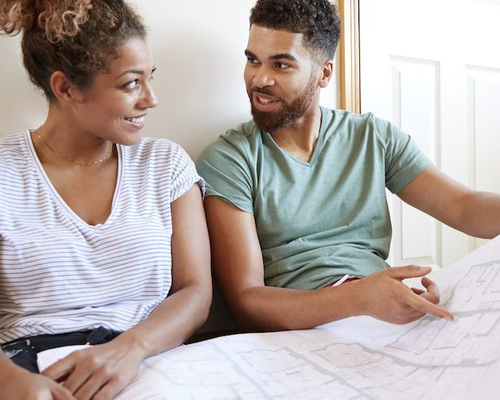
The cost to build a house will vary significantly based on location, size, materials, and other factors. Angi.com finds the average cost to build a house is $322,924, with construction costs alone ranging from $138,769 to $530,862. Expect the all-in cost to run higher once land, site preparation, permits, and financing are accounted for. Another estimate from the National Association of Home Builders puts the average sales price of a newly built single-family home at $665,298, of which construction accounts for 64.4% and the finished lot another 13.7%.
Building gets you exactly what you want. It also means a longer timeline, more decisions, and a financing path that works differently from a standard mortgage. Here is what you can expect to pay at every stage.
Key takeaways
- Estimates of the average cost to build a house range from $323,000 to $665,000. Costs vary significantly depending on location, size, materials, and land costs, including purchase and construction preparation.
- Utility hookups, permits, impact fees, and construction financing sit outside most build estimates and are significant.
- Interior finishes, mechanical rough-ins, and framing make up about 60% of a construction budget, which makes them the best places to look for savings.
How much does it cost to build a house per square foot?
Builders usually price a job by the cost per square foot to build a house, and most new construction falls between $100 and $500 per square foot, with an average around $150.
NAHB, working from a sample of custom and production builders, calculated construction costs at roughly $162 per square foot of finished floor space on an average home of 2,647 square feet.
What cost per square foot includes
The cost per square foot covers the house itself. It includes the foundation, framing, exterior and interior finishes, and the plumbing, electrical, and HVAC systems inside it.
It assumes finished, heated square footage, so garages, unfinished basements, and covered porches are usually priced separately.
Land, site preparation, utility hookups, permits, landscaping, and construction loan interest usually are not included in the cost per square foot.
Ask any builder which spaces their number covers before you compare bids.
Cost to build a house by size
Square footage is the single biggest driver of your total cost. The cost to build a 1,500 sq. ft. house and the cost to build a 3,000 sq. ft. house can differ by hundreds of thousands of dollars. Here is how build costs scale by home size:
|
Home size |
Average cost |
Typical range |
|
1,000 sq. ft. |
$150,000 |
$100,000 – $500,000 |
|
1,500 sq. ft. |
$225,000 |
$150,000 – $750,000 |
|
1,750 sq. ft. |
$262,500 |
$175,000 – $875,000 |
|
2,000 sq. ft. |
$300,000 |
$200,000 – $1,000,000 |
|
2,200 sq. ft. |
$330,000 |
$220,000 – $1,100,000 |
|
3,000 sq. ft. |
$450,000 |
$300,000 – $1,500,000 |
See what you qualify for
A breakdown of the average cost to build a house
Seeing where the money goes, stage by stage, helps you spot which line items you can influence.
The NAHB tracked how builders split a construction budget across eight stages for the following breakdown:
|
Construction stage |
Share of budget |
Average cost |
|
Interior finishes |
24.1% |
$103,391 |
|
Major system rough-ins |
19.2% |
$82,319 |
|
Framing |
16.6% |
$70,982 |
|
Exterior finishes |
13.4% |
$57,510 |
|
Foundations |
10.5% |
$44,748 |
|
Site work |
7.6% |
$32,719 |
|
Final steps |
6.5% |
$27,710 |
|
Other |
2.1% |
$8,835 |
Buying and prepping land
Before anything gets built, you need land.
Buying a plot of undeveloped land can run anywhere from $3,000 to $150,000 or more, driven mostly by size and location.
Preparing that land adds more. For example, land clearing can run $1,400 to $6,200, while excavation can cost $1,500 to $10,000, grading prices run $1,000 to $3,300, and surveying costs between $1,800 and $6,500.
If you need to finance the land purchase, a land loan can cover it separately from your construction loan.
If you have not bought a lot yet, our guide to buying land and building a house walks through what to check before you commit.
Drawing up plans and getting permits
There are a few ways to get plans for a home.
You can buy stock plans online for $500 to $5,000. Custom plans drawn up by an architect can cost $5,000 to $20,000.
You may also need building permits, which can run from $500 to $2,000, and a new construction inspection adds $300 to $400.
Requirements vary by municipality, so budget more if you are building somewhere with a lengthy review process.
Site work and foundation
Site work covers clearing, grading, and breaking ground, accounting for about 7.6% of a construction budget, according to the NAHB. Foundations account for about 10.5%, averaging $44,748.
Your foundation choice drives that number. A concrete slab is the most economical, a crawl space costs more, and a full basement costs the most. However, it buys storage, easier access to mechanical systems, and potential living space, though finishing the basement will cost more.
Framing and truss installation
Framing is the building of the skeleton of the house, and includes floors, walls, sheathing, and the roof trusses.
It represents about 16.6% of a construction budget and averages $70,982, with framing and roof work alone at $49,763 and trusses at $12,903, according to the NAHB.
Because lumber is the dominant input, lumber prices have a significant effect on the cost at this stage.
Exterior shell finishes
Exterior finishes make up about 13.4% of the budget and average $57,510, broken into exterior wall finish at $24,450, roofing at $16,732, and windows and doors at $15,990, the NAHB says.
Your material choices matter here, since vinyl siding, brick, and stucco sit at very different price points.
Major mechanical systems
With the house weatherproofed, your contractor can rough in the systems for water, electricity, and heating and cooling.
This stage runs about 19.2% of the budget and averages $82,319, split fairly evenly between plumbing at $27,180, electrical at $27,383, and HVAC at $26,938, NAHB says.
Fixtures come later, so this step is about pipes, wiring, and ductwork going in before the walls close up.
Interior finishes
Interior finishes are the largest single expense in NAHB’s home building budget study at 24.1% of a construction budget, averaging $103,391. That covers insulation, drywall, trim, paint, lighting, cabinets, countertops, appliances, flooring, and plumbing fixtures. Cabinets and countertops lead at $19,056, followed by flooring at $15,388 and drywall at $13,962.
This is where your preferences most affect the cost. The same floor plan can finish out at wildly different costs depending on what materials you choose.
Outdoor space
The final steps account for about 6.5% of the budget and average $27,710. NAHB estimates average landscaping costs at $9,269, a driveway at $9,635, outdoor structures such as decks, patios, and porches at $4,722, and final cleanup at $3,183.
Larger features like an in-ground pool or an outdoor kitchen fall are usually excluded from a standard build budget entirely.
Take the first step toward the right mortgage
Apply online for expert recommendations with real interest rates and payments
‘Hidden’ costs of building a house
These extra, “hidden” costs rarely appear in a headline build estimate, and they are common reasons why a budget goes sideways.
Infrastructure hookups
If your lot is not already connected to municipal services, you pay to bring them in.
Installing a sewer line runs $1,400 to $5,800, and running an electrical line to a new home costs $4,000 to $20,000, NAHB says. Choosing a lot that already has utility and sewer access can save you $6,500 to $30,000.
Construction financing costs
A construction loan is a short-term loan that funds the build in stages, and you carry interest on it for the months your house is being built. Because these loans are short-term and the collateral does not exist yet, they are priced differently from mortgages. Ask your lender for the rate, the draw schedule, and whether payments during construction are interest-only or include principal.
Permits, fees, and design costs
Municipal charges add up. In NAHB’s survey, building permit fees averaged $7,640, impact fees cost $6,367, water and sewer fees and inspections were $6,260, and architecture and engineering came to $6,480. These reflect a builder’s full project cost, which is why they run higher than a single homeowner permit application.
Unexpected expenses
Material prices shift, and you should expect surprises that will add to your cost. Set a firm budget before you meet your contractor, then leave a 5% to 10% buffer. Temporary housing during construction is another line item, averaging $8,600 to $11,900, Angi finds.
Find out how much you can afford
Your approval amount will give you an idea of the closing costs you’ll pay
Factors that affect the cost of building a house
All the figures in this article are estimates based on national averages, and your costs will differ. Here is what moves the number most.
Location
Where you build drives land values, labor rates, and material costs.
The cost to build a house in California averages $458,000, and in New York it's $395,000, Angi finds. Compare that with the cost to build a house in Texas, which averages $293,000, or in Georgia, where it’s $291,000.
Rural and suburban lots generally cost less than urban ones, though they can require more utility work. If cost is your main constraint, it helps to look at the cheapest places to build a house and compare them against the median home price by state or home construction cost per SF by state.
Home size and design complexity
A larger footprint costs more, and so does complexity. Multiple stories, irregular rooflines, and architectural detail all add to your cost. Angi finds that each additional bedroom adds $20,000 to $80,000 or more, once you account for the extra square footage, additional bathrooms, and greater utility capacity. The type of home you build, whether stick-built, modular, or a manufactured home, matters as much as its size.
Materials, finishes, and labor
Labor represents 30% to 50% of the cost of building a custom home, according to Angi. You will hire a general contractor at 10% to 20% of the construction cost, plus a construction manager and architect at 5% to 15% each. On the materials side, premium finishes cost 25% to 100% more than builder-grade options.
Time of year and construction timeline
Weather affects site work, foundation pours, and framing, so a winter start in a cold climate can extend your timeline. A longer schedule also means more months of carrying costs on your construction loan.
How to afford building your own home
If you don’t have the cash to fund your home build, you’ll need a home construction loan. This is a short-term loan used to fund the building of a new home.
You can use a construction loan to cover the total cost of building the home, including the land, labor, materials, and permits. Once approved, you’ll be able to start accessing the funds in conjunction with each phase of construction. You can get a home construction loan that converts to a traditional mortgage loan once the construction has been completed.
You can also get a construction-only loan that covers the costs of construction. Then, once the project is completed, you’ll need to apply for a traditional mortgage to pay off the construction loan.
Rocket Mortgage currently doesn’t offer construction loans.
Construction loan vs. standard mortgage
A standard mortgage funds the purchase of a finished home in one lump sum at closing. A construction loan is short-term financing that releases money in draws as each phase of the build finishes, with the lender managing disbursements to your builder. Fannie Mae requires that single-closing construction periods run no longer than 12 months at a stretch and no more than 18 months total for the loan to be eligible for sale.
Construction-to-permanent loan
A construction-to-permanent loan converts into a long-term mortgage once the house is finished. In a single-closing transaction, you close once on both the construction loan and the permanent financing, and it converts automatically at completion. Because the documents already spell out the permanent terms, you pay only one set of closing costs.
Construction-only loan
A construction-only loan covers the build and nothing more. When the house is done, you typically would apply for a traditional mortgage to pay it off. Fannie Mae treats this as a two-closing transaction, which means two separate loan closings with two sets of legal documents and two sets of closing costs.
Ways to reduce the cost of building a house
Building a home is expensive, so anything you can do to save money can make the project more affordable.
Choose a simpler design
A smaller, simpler home design is a reliable way to cut costs.
Building up rather than out costs about 10% to 30% less per square foot than widening the foundation.
Factory-built approaches are worth pricing too, including modular home prices, panelized home construction, and a prefab home, all of which can undercut a traditional site-built home.
If you are open to going much smaller, look at what a tiny house costs as well.
Compare materials and finishes
Interior finishes are your largest cost category, so this is where comparison shopping can save you money. Flooring, cabinets, countertops, windows, and appliances all come in wide price tiers. Choosing stock design plans over custom ones can cut costs by 10% to 25%. Our guide to the cheapest way to build a house covers more options.
Get local contractor estimates
National averages are a starting point, not a quote. Talk to at least three highly rated local contractors and compare their estimates line by line. An experienced local builder can save 5% to 20% through trade discounts, fewer mistakes, and knowledge of local permitting.
Budget for unexpected costs
Build a cushion into your budget before you start, not after something goes wrong. A 5% to 10% contingency gives you room to absorb material price shifts and mid-project changes without derailing the whole project.
When to consider building a house
Make sure you’re ready for the process before deciding to build a home.
Length of the building process
Buying an existing home is faster. Census data shows single-family homes averaged 8.3 months from construction start to completion, and contractor-built homes averaged 10.1 months. Add permitting and design on the front end, and you are often looking at a year, plus a steady stream of decisions along the way if you build instead of buy.
Customization and quality
Building means you get the home you want instead of compromising on someone else’s choices. Buyers of existing homes frequently start renovating right away, and home renovation costs can climb fast. A new build also means new structural components and mechanical systems, so a roof replacement or a failing furnace is not waiting for you a year in.
Should you build or buy a house?
Cost is only part of the decision.
Building offers control and a home with no deferred maintenance, at the price of a longer timeline, more decisions, and more complicated financing.
Buying is faster, and the mortgage process – including figuring out how much money you need to buy a house – is far more straightforward than lining up construction financing.
If you want new construction without managing a build yourself, buying a new-construction home from a production builder splits the difference.
Run the numbers before you commit. Our comparison of building versus buying a house can help you weigh cost, time, and stress side by side.
FAQ
Here are answers to common questions about how much it costs to build a house.
Is $300,000 enough to build a house?
A budget of $300,000 is close to the $322,924 national average and enough for a roughly 2,000-square-foot home at typical pricing. Whether it covers your project depends on land costs, such as site preparation and finish level, any of which can push your all-in total past that figure.
How much down payment is needed to build a house?
There is no single figure, because down payment requirements depend on the lender and loan program. For conventional construction-to-permanent financing, Fannie Mae applies its standard loan-to-value limits, and borrowers generally must use their own funds for the minimum contribution unless the loan-to-value ratio is 80% or lower or they qualify to use gift funds, grant funds, or employer assistance on a one-unit principal residence. Expect construction lenders to ask for more money down than a standard purchase mortgage.
Do I need to own land before getting a construction loan?
Not necessarily. Under Fannie Mae guidelines, a single-closing construction-to-permanent loan can be structured as a purchase transaction, where you use the construction financing itself to buy the lot and fund the build. If you already hold title to the lot, it is structured as a limited cash-out refinance instead. Either way, the lot must be part of the transaction.
What is the difference between hard costs and soft costs?
Hard costs cover construction, including the foundation, framing, roofing, systems, and finishes. Soft costs are everything else, including architecture, engineering, permits, impact fees, inspections, financing, and insurance. Hard costs make up most of a budget, but soft costs are the ones most likely to be missing from an early estimate.
The bottom line on how much it costs to build a home
The average cost to build a house is $322,924, with most construction budgets falling between $138,769 and $530,862. Land and site preparation sit on top of that, which is why all-in costs for a finished new home run considerably higher. A cost to build a house calculator gets you in the neighborhood, but only local contractor estimates will help you estimate what your house will actually cost.
Weigh the extra time and decision-making against getting exactly what you want. If you land on buying instead, financing an existing home is far simpler, and you can start your mortgage application today with Rocket Mortgage.
This article is for informational purposes only and is not intended to provide, and should not be relied on for, medical, legal, financial, or tax advice. You should consult with a qualified professional for advice specific to your situation. Consumers should independently verify that any services, products, or programs referenced meet their needs and comply with applicable requirements.
Rocket Mortgage is a trademark or service mark of Rocket Mortgage LLC or its affiliates.

Jasica Usman
Jasica is a Licensed Real Estate Agent (Texas #795679), a writer, and marketing professional with hands-on experience guiding buyers and sellers through contracts, negotiations, and new-construction transactions. She brings a practical, market-informed perspective to real estate and mortgage topics, with a focus on clear, consumer-first education.
Related resources
7-minute read
Cheapest ways to build a house: 12 tips for affordable home building
Building a home doesn’t have to break the bank. Explore these 12 ways to build a budget-friendly house, from a simpler layout to opting for cheaper materi...
Read more
11-minute read
Building vs. buying a home: Which is cheaper?
In the market for a new home? The costs of building vs. buying depend on your market, building supplies, and more. Learn how to compare new vs. existing homes.
Read more
6-minute read
10 best places to build a house during the 2021 building boom
Are you interested in building a house on a budget? Learn about the 10 cheapest places to build a house in 2023 and other factors to consider when building.
Read more