Adding value to your home with an outbuilding
Contributed by Sarah Henseler
Mar 8, 2026
•4-minute read

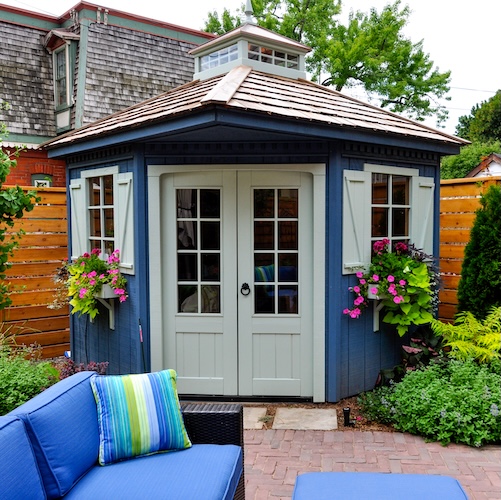
If you want to increase your property value, a popular way is to add upgrades to your existing home. However, you can also boost your property value by adding more square footage.
Here's the thing: The square footage you tack on doesn't need to be attached to your main house in order to increase your home value. Instead, you can add an outbuilding to your property.
Wondering if an outbuilding is the right move for you? We'll walk you through the ins and outs of an outbuilding, the different types, and how much value one could potentially add.
What’s an outbuilding?
Essentially, an outbuilding is a structure that sits on your property and is entirely separate from your main house. For example, it can be a garage, shed, or additional workspace.
Note that this is different from a home addition, which usually extends your main house by way of adding additional rooms. An outbuilding is a type of home improvement that can boost the value of your home, and can mean adding:
- Storage
- Additional living space
- Workspace
- Recreational space
See what you qualify for
Types of outbuildings
As you might expect, there are different types of outbuildings. The right one for you depends on your lifestyle, goals, and preferences for making this addition to your property. Let's look at some of the common ones:
Garage
If a garage is an independent, stand-alone structure, it’s considered an outbuilding. Think of a type of garage that requires you to leave your home and walk a short distance to a building that's altogether separate. In some cities and counties, a garage might be formally known as a "nonhabitable accessory structure."
Shed
Because it stands independently, a shed is considered an outbuilding. Sheds can serve a lot of purposes, but are commonly used for lawn care storage or as a she-shed workspace.
Depending on where you live, you might be able to build a small shed without getting a permit. However, a larger shed will likely require you to jump through more hoops with more things to consider.
ADU
Short for an accessory dwelling unit, an ADU is also called a granny flat or in-law suite. ADUs are growing in popularity. In fact, in 2024 ADU production saw an increase of 14.3% from the previous year. Besides using it for family members or close friends to live in, an ADU can be a way for you to generate rental income, especially if the ADU has its own kitchen and bathroom.
Some states have limitations on the number of ADUs you can have. For example, in California, a single-family home can generally have three dwellings total: one primary property, an ADU, and one junior ADU (a space of 500 feet or less). You'll want to check the restrictions and rules in your area to see what's possible.
Pole barn
A pole barn is commonly found in rural areas and is a type of post-frame construction. Metal steel, wood poles and cross beams are used to build these structures. They typically have high ceilings and a lot of empty space.
They can also come insulated or uninsulated. Insulated pole barns may use materials such as foam spray, foam board, and fiberglass.
Take the first step toward the right mortgage
Apply online for expert recommendations with real interest rates and payments
How much value does an outbuilding add?
So how much value outbuildings add depends on a couple things, namely, the type and the size.
According to data from Angi, here are common types of outbuildings with what you can expect on a typical return on investment (ROI):
- Garage: A garage can cost $12,000 – $33,000 to build, and typically has a 75% to 85% return on investment.
- Shed: Depending on size and quality, a shed can have an ROI between 30% – 60%. The cost to build is about $800 – $8,000, with an average cost of $4,000.
- ADU: An ADU costs an average of $180,000 to build and has about a 50% ROI if not rented out. If you do rent it out, you could have an ROI above 100%.
- Pole barn: In rural communities, an insulated pole barn could net a 50% ROI and up. This especially rings true if pole barns are a common sighting where you live. For example, you could increase the ROI by renting it out for events.
The price tag to build a pole barn ranges from $10,000 to $120,000, with the average hovering at $27,000.
Meet the requirements and ready to refinance?
Apply online for expert-recommended options customized to your budget
Outbuilding permit basics
Before you jump in with both feet and get started, it's important to know that outbuildings require permits from local authorities. The exact permit requirements will vary, and depend on where you live, as well as the size and type of the type of outbuilding you had in mind. It's a good idea to reach out to your local planning or building department, or to do your homework beforehand on their website.
For instance, in California, you'll need a permit for a shed that's 120 square feet or larger. However, smaller sheds don’t require a permit. In Pennsylvania, you need a building permit for a detached garage only if it's over 1,000 square feet.
Because an unpermitted structure has a potential crop of issues that need to be fixed, outbuilding without a permit will likely not add the same return on investment.
The bottom line: Outbuildings can add significant value to your property
If done with proper permits and you're doing your due diligence on what kind of outbuilding is a good fit for your budget, financial goals, and lifestyle, outbuildings can add a lot of value to your property. If you're thinking about tapping into your home equity to add an outbuilding, consider applying for a Home Equity Loan with Rocket Mortgage.

Jackie Lam
Jackie Lam is a seasoned freelance writer who writes about personal finance, money and relationships, renewable energy and small business. She is also an AFC® financial coach and educator who helps creative freelancers and artists overcome mental blocks and develop a healthy relationship with their finances. You can find Jackie in water aerobics class, biking, drumming and organizing her massive sticker collection.
Related Resources
10-minute read
What is an ADU?
An accessory dwelling unit is a separate living space located within your home or on your property. Find out more about ADUs and how one might work for you.
Read more
7-minute read
How to increase your home value: 9 tips
You can increase your home's value and maximize your return on investment with several renovation and remodeling projects. Learn about nine strategies.
Read more

6-minute read
What do americans believe adds the most home value?
Which features and upgrades add the most value to a home? Over 1,000 survey respondents share their perceptions of the most important aspects of a home.
Read more