South Carolina property tax guide
Contributed by Karen Idelson
Jun 19, 2026
•6-minute read

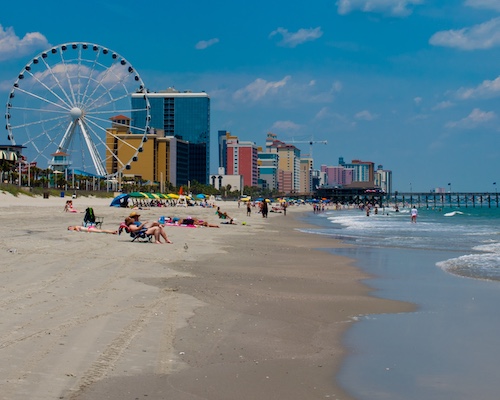
South Carolina has some of the nation's lowest property tax rates. But keep in mind that what you'll pay depends on several factors, from which county you call home to your property's assessed value. Whether you're thinking about a move to the Palmetto State or just exploring your options, understanding how South Carolina's property tax system works is essential. This guide breaks down everything you need to know, including county-by-county rates, calculation methods, available exemptions, and payment options.
How much are property taxes in South Carolina?
According to the Tax Foundation’s latest data (2024), South Carolina has a 0.49 percent effective property tax rate on owner-occupied homes. That means when you rank property taxes by state, South Carolina offers homeowners less of a financial burden since the state ranks fourth lowest for property taxes in the nation (per 2022 data).
Of course, where you live in the state matters when it comes to property taxes. Homeowners in Calhoun County, for example, pay a state-low effective property tax rate of 0.36%, versus a state-high 0.71% in Bamberg County.
Note that South Carolina raises tax revenue primarily via property taxes (accounting for 29.9 percent of total state and local tax revenue), followed by general sales taxes (25.2 percent) and individual income taxes (21.7 percent).
Let’s say you purchased a home in South Carolina for the current median sale price of $348,849. If so, you might pay about $1,709 annually in property taxes (or around $142 per month if you escrowed this into a monthly mortgage payment), assuming the effective tax rate of 0.49%. Where you live will also impact your average closing costs in South Carolina.
South Carolina property taxes by county
Curious how much South Carolina charges for property taxes in different counties? Here’s a chart displaying the latest available data.
|
County |
Median housing value 2024 ($) |
Median property taxes paid, 2024 ($) (5-year estimate) |
Effective property tax rate (2024) |
|
Abbeville County |
$178,800 |
782 |
0.42% |
|
Aiken County |
$218,000 |
897 |
0.47% |
|
Allendale County |
$76,200 |
669 |
0.50% |
|
Anderson County |
$231,900 |
1043 |
0.50% |
|
Bamberg County |
$97,800 |
811 |
0.71% |
|
Barnwell County |
$106,000 |
775 |
0.60% |
|
Beaufort County |
$455,600 |
2174 |
0.50% |
|
Berkeley County |
$310,300 |
1400 |
0.49% |
|
Calhoun County |
$172,100 |
704 |
0.36% |
|
Charleston County |
$489,100 |
1901 |
0.40% |
|
Cherokee County |
$142,000 |
614 |
0.50% |
|
Chester County |
$158,300 |
890 |
0.50% |
|
Chesterfield County |
$116,200 |
487 |
0.41% |
|
Clarendon County |
$158,000 |
883 |
0.52% |
|
Colleton County |
$162,500 |
900 |
0.54% |
|
Darlington County |
$158,200 |
652 |
0.46% |
|
Dillon County |
$85,400 |
452 |
0.44% |
|
Dorchester County |
$329,300 |
1851 |
0.60% |
|
Edgefield County |
$202,700 |
875 |
0.47% |
|
Fairfield County |
$151,200 |
776 |
0.44% |
|
Florence County |
$177,900 |
756 |
0.47% |
|
Georgetown County |
$289,500 |
1190 |
0.41% |
|
Greenville County |
$299,000 |
1512 |
0.51% |
|
Greenwood County |
$180,500 |
964 |
0.54% |
|
Hampton County |
$112,000 |
897 |
0.63% |
|
Horry County |
$287,700 |
944 |
0.38% |
|
Jasper County |
$325,500 |
1852 |
0.55% |
|
Kershaw County |
$217,100 |
1013 |
0.51% |
|
Lancaster County |
$329,900 |
1657 |
0.54% |
|
Laurens County |
$170,600 |
698 |
0.43% |
|
Lee County |
$104,600 |
599 |
0.49% |
|
Lexington County |
$234,500 |
1151 |
0.48% |
|
Marion County |
$93,200 |
436 |
0.44% |
|
Marlboro County |
$82,000 |
496 |
0.51% |
|
McCormick County |
$168,700 |
948 |
0.52% |
|
Newberry County |
$173,300 |
1154 |
0.53% |
|
Oconee County |
$237,100 |
899 |
0.38% |
|
Orangeburg County |
$115,800 |
749 |
0.58% |
|
Pickens County |
$231,900 |
866 |
0.43% |
|
Richland County |
$242,800 |
1637 |
0.64% |
See what you qualify for
How are property taxes in South Carolina calculated?
Exactly how much are property taxes in South Carolina? The property tax rate in this state is determined by using the following formula:
Appraised value x Assessment ratio x Millage rate
While this formula uses the term “appraised value,” understanding the meaning of appraisal vs. assessment is important here. When you buy a house with a mortgage, your lender may require that an appraisal be done by a licensed appraiser to determine the fair market value of the home. This protects the lender from loaning more money than the property is worth.
Many buyers choose to include an appraisal contingency to guard against having to come up with a larger down payment if the property doesn’t appraise at a high enough amount. The assessed value of your home is determined by a local government tax assessor who may use a mass-appraisal formula to calculate your annual tax bill.
When you buy a home, it’s important to consider factors that lead to a property tax increase over time. Your home will likely increase in value over the years, and you may make improvements to it. Both things – as well as other factors – can lead to an increase in the value of your home.
The assessment ratio is a fixed percentage established by state law that local assessors use to calculate a property's taxable worth. To find this amount, the assessor first determines your home's fair market value and then applies the state-specific ratio to that figure. Because tax laws vary, each state maintains its own distinct assessment ratio. South Carolina state law says that owner-occupied real property has a 4% assessment ratio.
The millage rate is a local tax rate used to calculate your property taxes based on your home's assessed value. It represents the specific amount of tax owed per every $1,000 of that assessed value (with one "mill" equal to one-tenth of a cent, or $1 of tax per $1,000 of value). For example, a millage rate of 10 means you would pay $10 in taxes for every $1,000 of assessed value, directly determining your final annual property tax bill. Millage rates will vary by county based on the types of things the county needs to pay for, such as schools and waste services.
Let’s say you purchased a home in the town of Donalds in Abbeville County, and the appraised value of your property is $200,000; you would then multiply that by 4% (the assessment ratio for owner-occupied homes in South Carolina), then multiply that number by 0.200 (the millage rate for Donalds), which means your annual property tax bill would be $1,600.
Fortunately, some counties in South Carolina, including Beaufort, have a tax calculator that helps you determine your tax bill.Take the first step toward the right mortgage
Apply online for expert recommendations with real interest rates and payments
South Carolina property tax exemptions and relief
Some South Carolinians can qualify for a lower property tax bill through property tax exemptions and other programs.
First, if you occupy your owned property as your primary residence, you should apply for the Legal Residence classification. This status drops your assessment ratio to 4% and exempts you from school operating taxes, while state law puts a ceiling on reassessment increases, capping them at 15% over a five-year period. To apply, you’ll need to complete a form and provide proof of residency to your local county tax assessor by their deadline; your classification will then be approved per local rules.
Many jurisdictions offer an additional homestead exemption to seniors (those 65 or older). In South Carolina, this completely removes the first $50,000 of your home's market value from your tax bill. However, this homestead exemption is not automatic when you reach 65: You must apply once and provide proof of age, and you must already qualify for the 4% primary residence status. South Carolina is one of many states that offer property tax relief for seniors.
If you are a past military member with a 100% permanent and total service-connected disability, you are eligible for a complete property tax exemption on your South Carolina home and up to five acres of land. Also, Medal of Honor recipients and former Prisoners of War (POWs) from WWI, WWII, the Korean Conflict, or the Vietnam Conflict are eligible for a full property tax exemption. This benefit applies to their home and up to one acre of land, as well as up to two private passenger vehicles. Unremarried surviving spouses of these veterans may also qualify for the tax relief.
Likewise, if you are a non-veteran with a qualifying permanent disability, you are eligible for the same $50,000 homestead exemption reduction offered to seniors.
Lastly, while South Carolina does not offer standard income-based exemptions, your local county tax office may permit property tax installment payment plans or special relief programs if you meet specific criteria. Prepare to provide proof of age, disability, or military status to your local county to see what localized programs are available.
Paying South Carolina property taxes
In the Palmetto State, property taxes can typically be paid in one of two ways:
- Pay your county directly, either in full by the due date or in installments if your county allows it.
- Pay via an escrow account managed by your mortgage lender, who will make the payment automatically on your behalf. With this option, your property taxes become a part of your monthly mortgage payment.
In most South Carolina counties, property taxes are paid once per year and due by January 15 each year for the prior year. Many counties in South Carolina allow you to pay online.
The bottom line: South Carolina’s property taxes are lower than those of most states
If you’re considering a move to or within South Carolina, you can take advantage of one of the nation’s lowest property tax rates. What you will pay can vary from county to county, based on your home’s value and other factors, using a particular formula. You can pay once a year by the January 15 due date, monthly via an escrow account, or in installments if your county permits it. You may be able to lower your property tax bill if you qualify for an exemption, too.
If you’d like to buy a home in South Carolina or elsewhere, you can apply for a loan with Rocket Mortgage today.

Erik J Martin
Erik J. Martin is a Chicagoland-based freelance writer whose articles have been published by US News & World Report, Bankrate, Forbes Advisor, The Motley Fool, AARP The Magazine, USAA, Chicago Tribune, Reader's Digest, and other publications. He writes regularly about personal finance, loans, insurance, home improvement, technology, health care, and entertainment for a variety of clients. His career as a professional writer, editor and blogger spans over 32 years, during which time he's crafted thousands of stories. Erik also hosts a podcast (Cineversary.com) and publishes several blogs, including martinspiration.com and cineversegroup.com.
Related Resources

6-minute read
Property taxes by state: Ranked from highest to lowest for 2026
Property taxes vary by state and are based on the value of your home. Compare 2026 tax rates across the country, sorted from highest to lowest.
Read more

5-minute read
What is property tax and how to calculate it
Property taxes are paid to local governments to help cover the cost of community services we receive. Discover how to calculate property taxes with our guide...
Read more

5-minute read
Property tax exemptions: Seniors, veterans and others who qualify
Property tax exemptions help qualifying property owners by reducing or eliminating their property tax bill. Learn who qualifies for these exemptions and more...
Read more