Neighbors want deeper connections. What's holding them back?
Contributed by Tom McLean
Feb 19, 2026
•3-minute read

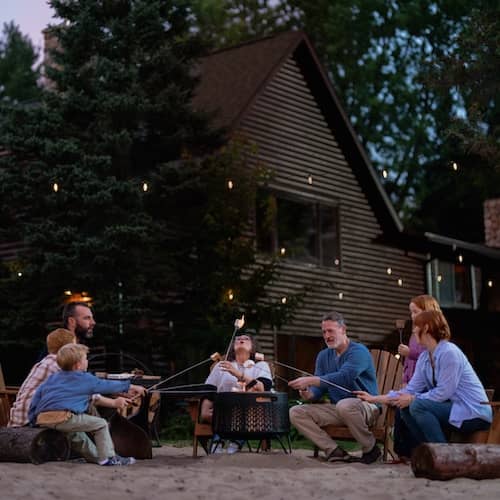
New surveys by Rocket Mortgage find that only 30% of Americans know their neighbors beyond a casual level. At the same time, a majority of people say they want their neighborhood to feel more connected.
So, what's the barrier? Why are people unable to connect with their neighbors the way they want to? And how can we foster stronger neighborhoods? We'll take a closer look at some of the more surprising results of these surveys – and offer some tips on how you can be more neighborly.
How do we connect?
Changes in society and the way we all connect have created some distance between us and the people who live close by.
While the internet connects us with people across the globe, it's less effective at helping us connect with people nearby. Only 25% say digital spaces like Facebook and Nextdoor facilitate interaction with their neighbors.
People also are protective of their time and privacy, which can make it more difficult to form connections.
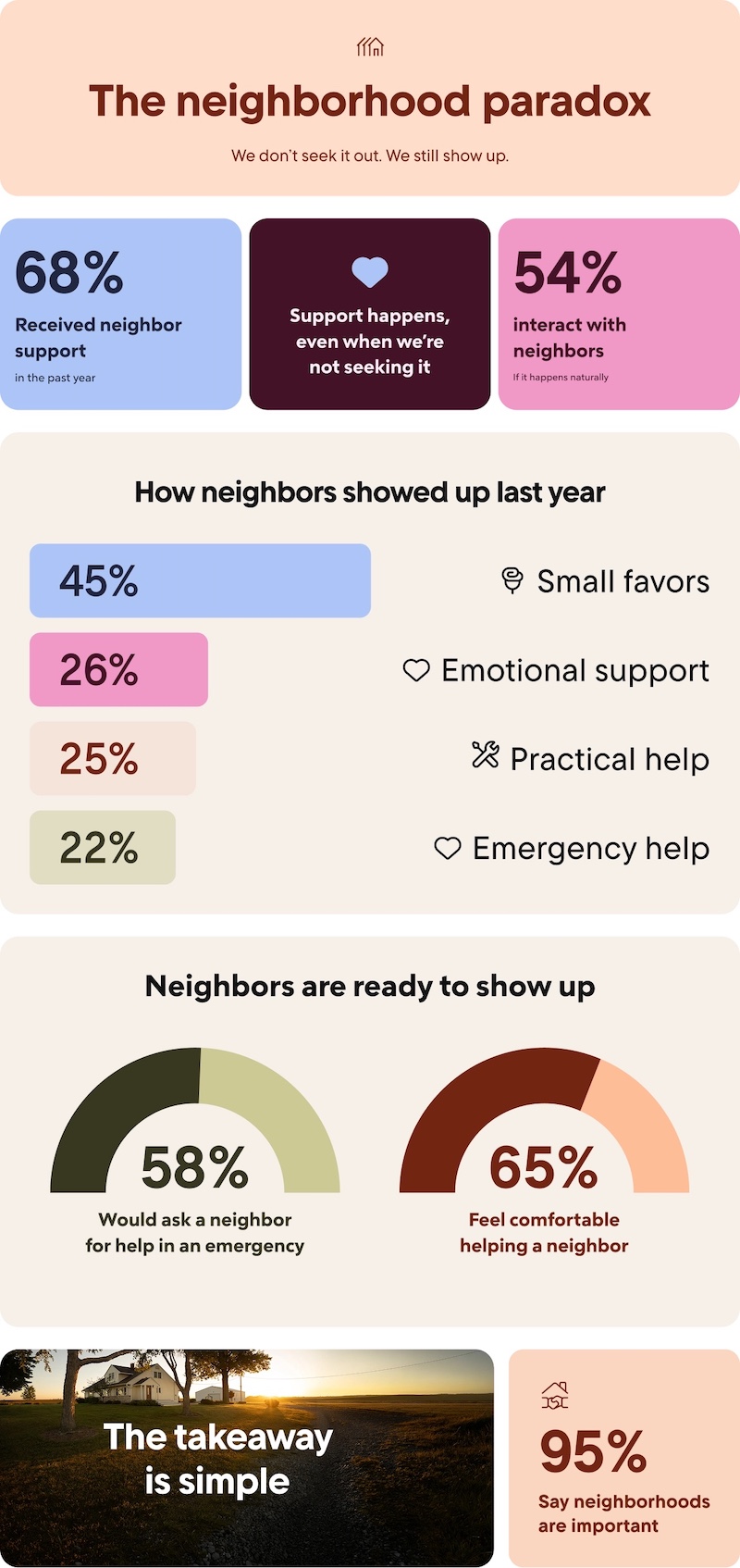
The study shows people are open to connecting with their neighbors, but they don't prioritize initiating contact. Only 17% say they actively seek out neighborly interaction. In comparison, 54% say they interact with neighbors if it happens naturally, but they don't seek it out.
Other obstacles are emotional. Many people prefer to keep to themselves and don’t want to bother or intrude on their neighbors' privacy. Forty-two percent of respondents say others tend to keep to themselves, making it difficult to connect. This also can make it challenging to make the first move, as 22% say they feel awkward reaching out to neighbors.
There are, of course, instances where it just might not be the right time to stop for a neighborly chat. Almost one-third (29%) of respondents say they sometimes avoid socializing with neighbors. It’s not always personal – you just might be running late or having a bad day. Being a good neighbor involves staying considerate and not taking it too personally.
How to be a better neighbor
Despite these obstacles, nearly 80% of respondents say strong neighborhoods improve their quality of life. And people do want to connect, perhaps more than they have in a long time.
“After COVID, I had more clients citing the importance of a neighborhood feel than I ever remember before,” says Jo Chavez, a Redfin Premier Agent in Kansas City, Missouri. “More people are making an effort to know their neighbors, or want to know their neighbors, than 7-plus years ago.”
It’s never easy being the new kid – or family – on the block. It doesn’t take a grand gesture to make a difference. Even just a friendly greeting or simple gift can help make your new neighbors feel welcomed.
“Whether you’re new to the neighborhood or have lived there for years, kindness goes a long way,” says Tamara Mattox-Kabat, a Redfin Premier Agent in Denver.
It’s also the little moments that help build a stronger community. Over half (53%) say that repeated interactions every day create connection – more so than planned activities or events. So whether it's through simple greetings, quick chats, or returning a stray package, consistency is the key to meaningful relationships with your neighbors.
10 ways to be a good neighbor
It makes a real difference in the neighborhood when people look out for each other and are there if you need help. So how do you get started?
Of all the ways you can reach out to a neighbor, 37% say knocking on their door is the best way, followed by sending a text message (23%), or making a phone call (15%). Almost half (47%) of respondents don’t think of knocking as a bold act, while 41% say they do.
Here are 10 ways you can be more neighborly:
- Drop off a welcome note or gift if someone new joins the neighborhood.
- Return misdelivered mail or packages.
- Help your neighbor carry groceries.
- Keep an eye on the neighborhood and let people know if anything seems amiss.
- Invite a neighbor over for coffee or a meal.
- Help each other with quick repairs.
- Offer to share tools or equipment.
- Help your neighbor prepare their home for bad weather or clean up after a storm.
- Check on a neighbor who’s going through an illness or difficult time.
- Organize events or block parties.
“Make the first move,” Chavez says. “Your neighbors are already curious about who is moving in, so stop by and introduce yourself. If that feels too intimidating, drop off a note at their door to introduce yourself and share something about yourself. It opens the door for a conversation when you see them in person.”
Methodology
Rocket Mortgage conducted two online surveys in January 2026 among Americans ages 18–75 to better understand their perceptions and experiences of neighborhoods.
The first survey included 2,002 respondents and explored how Americans experience and behave with their neighbors today. The second survey included 3,000 respondents and examined how Americans think and feel about neighborhoods as sources of belonging, stability, and community.
Both studies balanced sample recruiting to fall within about 5% of census-representative demographics.
Rocket Mortgage is a trademark of Rocket Mortgage, LLC or its affiliates.

Rory Arnold
Rory Arnold is a Los Angeles-based writer who has contributed to a variety of publications, including Quicken Loans, LowerMyBills, Ranker, Earth.com and JerseyDigs. He has also been quoted in The Atlantic. Rory received his Bachelor of Science in Media, Culture and Communication from New York University.
Related resources
6-minute read
How to be a good neighbor
New to the neighborhood? Being a good neighbor improves quality of life for everyone in an area, and it could even keep your property safer. Here are some ti...
Read more
8-minute read
Housing market predictions for 2026: What can buyers and sellers expect?
Next year will mark the start of a slow, steady recovery for the housing market. Here’s what you can expect if you’re buying or selling a home in 20...
Read more
5-minute read
First-time home buyers are redefining the starter home
The definition of a starter home is changing because today’s buyers expect to stay in their first home longer – and what they’re looking fo...
Read more