What is rental property depreciation and how does it work?
Contributed by Tom McLean
Updated Jun 1, 2026
•7-minute read

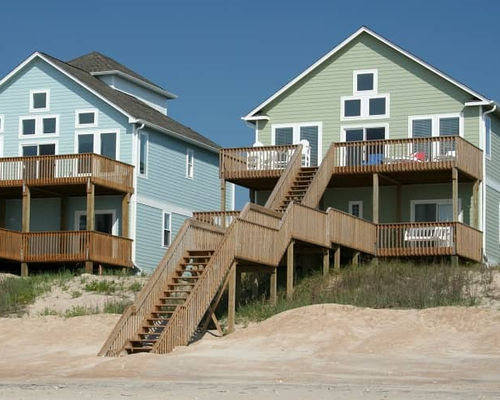
Thinking about investing in real estate and want to learn more about the advantages, especially the potential tax benefits? It’s important to understand the concept of rental property depreciation. Rental property depreciation is a straight-line, annual tax deduction on your building’s cost basis over a 27.5-year schedule that can significantly reduce your taxable rental income. Learn how it works, how to calculate it, and how to file.
What is rental property depreciation?
A tangible asset, such as a rental property, will deteriorate from use and decay, reducing its value over time. Depreciation recognizes this reduction in value for tax purposes.
If you own and manage a rental property, for example, you can deduct the property's depreciation for as long as you own it and rent it out. The amount of real property depreciation you can deduct depends on many factors, including the property’s cost basis, when it was offered for service, and the recovery period. Depreciation deductions can reduce your taxable income and save you money on taxes.
“Most people think rental income is the big win in real estate. But the real win is depreciation,” says Andrew Lokenauth, a personal finance expert in Tampa, Florida. “The IRS lets you deduct the cost of your rental property over time, essentially treating the building like a car that loses value each year. You didn’t spend that money in the current year, but you still get the tax deduction – which reduces your taxable rental income and keeps more cash in your pocket.”
See what you qualify for
How does depreciation work on rental property?
Investing in a rental property requires investing a significant amount of money to buy a property that will decrease in value over time.
The IRS assumes a rental property will lose a certain amount of value every year, usually around 3.6%, allowing you to deduct a portion of this cost.
However, the IRS won’t allow you to take the tax deduction all at once. Typically, the IRS permits owners to depreciate their property – including any renovations – annually over 27.5 years.
What is the depreciation recovery period?
The depreciation recovery period is the time during which property owners can claim depreciation, typically 27.5 years for residential buildings.
This period can vary depending on the property type. For example, property used for business or farming for longer than 1 year ¸ be depreciated over a longer period, typically 39 years. Office equipment or furniture can be depreciated over 7 years.
How do you calculate annual depreciation?
Depreciation is calculated by dividing the cost basis and the property's value by the recovery period. Only a physical structure can be depreciated, because only structures have a useful lifespan. Land never loses value to depreciation. As a property owner, you can depreciate your property until your total cost basis has been fully depreciated (the end of the recovery period) or until you sell it.
Keep in mind that when service begins in a calendar year that has already started, the depreciation available to you is prorated for the first year.
Take the first step toward the right mortgage
Apply online for expert recommendations with real interest rates and payments
Who is eligible to claim real estate depreciation?
To claim depreciation on your rental properties, you must:
- Own the property. Only property owners can depreciate property and claim the deduction.
- Use the property to generate income. “This is the key requirement, as the property must be placed in service as a rental and expected to produce income rather than being held purely for personal use,” says Dennis Shirshikov, a professor of finance and economics at City University of New York-Queens College.
- Have a property with a determined useful life, the value of which must decrease over time.
- Have a property with a useful life of more than 1 year.
“Almost every residential landlord qualifies for depreciation," Lokenauth says. "But there are passive activity rules the IRS uses to limit how much of your depreciation loss you can use against your regular income each year, especially if you earn over roughly $100,000 to $150,000.”
How to calculate rental property depreciation
It’s helpful to know how to calculate rental property depreciation, especially if you are seeking to reduce your taxable income on investment properties, such as a rental building. Here are the steps involved.
Step 1: Determine your cost basis for the building
For rental properties, cost basis is not the same as the purchase price. When a property is bought, the cost basis is the total capital expense of the property minus the value of the land it sits on. Also, only some expenses are considered capital expenses, such as legal and recording fees and debts you have agreed to pay.
Note, too, that the costs of any improvements to your property are added in the same year they are incurred to determine the adjusted cost basis. Certain credits, like insurance payments and energy subsidies, meanwhile, are subtracted from your cost basis. Ongoing cost basis adjustments like these must be made to your original purchase cost basis, regardless of whether the impact on your taxable income is positive or negative.
Step 2: Calculate the amount of annual depreciation
For residential or commercial properties placed in service after 1986, the Modified Accelerated Cost Recovery System (MACRS) is used. These properties also use the General Depreciation System (GDS) for annual depreciation calculations, which follows the 27.5-year recovery period for rental properties and a 39-year recovery period for commercial properties. Depreciation calculations are a bit more simplistic when using the GDS: You divide your property value by the recovery period.
“This process creates a consistent yearly deduction that continues for the life of your depreciation schedule,” Shirshikov says.
If you own a building that has been in operation since before 1987, you’ll use the Accelerated Cost Recovery System (ACRS), and you'll need an experienced accountant familiar with using it.
Note, however, that you must use a different system – called the Alternative Depreciation System (ADS) – if you own a property that is:
- Only used as a qualifying business 50% or less (during the year)
- Designated as a tax-exempt use
- Financed through tax-exempt bonds
- Used primarily for agricultural or farming use
If you need to use the ADS, partner with a knowledgeable tax professional, and be aware that the 2017 Tax Cuts and Jobs Act also revised the recovery period for residential rental property from 40 years to 30 years.
Deductions vs. depreciation
Deductions are paid expenses that can be deducted from your income taxes within the same year they are incurred, which may put you in a lower tax bracket. Deduction examples include mortgage interest, healthcare, and business-related expenses.
Depreciation, on the other hand, refers to a loss of value of property; this loss also serves as a deduction. The total amount is depreciated over your property's given recovery period. It can reduce your taxable income by an allowable portion in that year. But depreciation is allocated over time, whereas some other deductions may be taken in whole within a single year.
“Regular deductions reduce your income dollar for dollar in the year you spend the money,” Lokenauth says. “Depreciation, meanwhile, is a non-cash deduction – meaning you keep the money but still get the tax benefit.”
Think of depreciation as a way to receive the benefits of incurring an expense without actually paying any more money out of pocket or writing a check. Depreciation essentially lets you take tax deductions on the perceived decrease in value of your real estate holdings over time.
What is an operating expense vs. a capital expense?
An operating expense is a cost associated with your day-to-day business, such as maintenance or utilities. A capital expense is a cost you incur to create future benefits, and it must have a life benefit greater than one year. Capital expense examples include improvements like purchasing new computer software or replacing the roof on your rental property.
This distinction is important because capital expenses can be added to your depreciation cost basis, thereby increasing your tax write-off, but operating expenses cannot.
FAQ
Here are answers to common questions about rental property depreciation.
When can I start taking depreciation?
Depreciation begins immediately after a property becomes available for rent or is put into commercial use. For example, if you buy a rental property on March 1 but don't begin renting it out until March 15, you can begin depreciating the property on March 15. Note that when service begins in a calendar year that has already started, the depreciation available to you is prorated for the first year. Read through the monthly residential rental property percentages from the IRS Publication 527 table:
| January |
3.49% |
|
February |
3.18% |
|
March |
2.88% |
|
April |
2.58% |
|
May |
2.27% |
|
June |
1.97% |
|
July |
1.67% |
|
August |
1.36% |
|
September |
1.06% |
|
October |
0.76% |
|
November |
0.46% |
| December |
0.15% |
How long does depreciation last?
The recovery period, during which residential rental property owners can write off depreciation, ends when the cost basis (including any adjustments) is depleted. Real estate investors who continue to improve their properties can continually adjust their cost basis as they go.
If I deplete my cost basis with depreciation, won’t I have to pay capital gains taxes on the proceeds from a future sale of the property?
If you want to reinvest the proceeds into a new investment property, the IRS allows you to defer taxes on capital gains through a 1031 exchange. If the 1031 exchange is executed incorrectly, you could face depreciation recapture and a hefty tax bill.
What IRS forms do I file to claim depreciation?
To claim rental property depreciation, you’ll file IRS Form 4562 to get your deduction. Review the instructions for Form 4562 if you're filing your tax return on your own, or consult a qualified financial advisor or tax accountant for assistance.
What if I buy new appliances for my rental properties?
New appliances would not qualify as expenses because they have an expected useful life of 5 years. You can either depreciate the appliances over 5 years or add their cost to their cost basis and continue depreciating them against the new adjusted cost basis.
The bottom line: Rental property depreciation helps reduce your taxable income
Rental property depreciation is a valuable tax benefit that allows you to gradually deduct the cost of a property from your taxable income, potentially lowering your overall tax bill and saving you more money. But remember that only the building itself can be depreciated, not the land, and your cost basis must be adjusted over time as you make improvements.
Eager to begin investing in rental property and take advantage of these tax benefits? Explore different financing options and a mortgage preapproval with Rocket Mortgage today.

Erik J Martin
Erik J. Martin is a Chicagoland-based freelance writer whose articles have been published by US News & World Report, Bankrate, Forbes Advisor, The Motley Fool, AARP The Magazine, USAA, Chicago Tribune, Reader's Digest, and other publications. He writes regularly about personal finance, loans, insurance, home improvement, technology, health care, and entertainment for a variety of clients. His career as a professional writer, editor and blogger spans over 32 years, during which time he's crafted thousands of stories. Erik also hosts a podcast (Cineversary.com) and publishes several blogs, including martinspiration.com and cineversegroup.com.
Related resources
9-minute read
Buying a foreclosed home: Pros, cons and a step-by-step guide
If you're wondering how to buy a home in foreclosure, read this step-by-step guide detailing what to check before you buy and how to finance your purchase.
Read more

3-minute read
What is passive real estate investing and how does it work?
Passive real estate investing allows you to earn a financial return without a lot of elbow grease. These investment options range from REITS to rentals.
Read more
7-minute read
Understanding the BRRRR method of real estate investment
The BRRRR Method is a real estate investment strategy that involves flipping distressed property. Learn about the steps involved in the BRRRR strategy.
Read more